
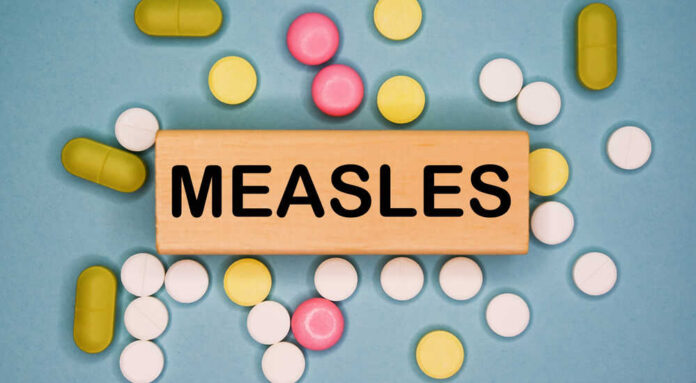
The Americas’ top health authority stripped the United States of its measles-elimination status after year-long spread turned imported sparks into steady flames.
Story Snapshot
- Pan American Health Organization removed U.S. measles-elimination status after sustained transmission over the review window.
- Federal data show more than 5,400 confirmed U.S. measles cases in 2026, the most in decades.
- Elimination means no ongoing domestic spread, not zero cases; the U.S. first achieved it in 2000.
What PAHO Decided And Why It Matters
The Pan American Health Organization concluded that endemic measles transmission was reestablished in the United States and accepted a commission recommendation to withdraw the country’s elimination status. That decision followed outbreaks that began in January 2025 and continued through 2026, with evidence of sustained spread. The commission invited the United States to a formal review and set the timetable for deliberations and a final report, which serves as the official record. The loss signals a gap in stopping chains of transmission.
🇺🇸 The U.S. has officially LOST its measles elimination status after 26 years, prompting a warning from Bristol Myers Squibb CEO Chris Boerner about America's commitment to science.
The Pan American Health Organization confirmed yesterday that measles had spread continuously in… pic.twitter.com/uJKC7fLCd7
— Mario Nawfal (@MarioNawfal) November 18, 2026
The Centers for Disease Control and Prevention reported 5,412 confirmed measles cases in 2026 as of mid-November, far above recent years. Those numbers tell only part of the story. What tipped the balance was not one big spike, but repeated spread inside the country after introductions. That pattern meets the threshold for reestablished endemic transmission under regional standards. The change does not mean the vaccine stopped working. It means public health failed to halt spread fast enough.
What “Elimination” Really Means
Global and regional rules define measles elimination as no endemic transmission for at least 12 months, with strong surveillance to prove it. Verification often requires 36 months of documentation with genetic evidence that old domestic lineages are gone. Countries can log imported cases and keep elimination status if those sparks die out quickly. They lose the status when spread continues long enough to count as reestablished endemic transmission. The United States crossed that line during the review period.
This distinction matters for common sense policy. Parents hear “eliminated” and think “gone.” Health systems hear “eliminated” and think “prove every chain is cut.” Both views shape behavior. When confidence slides and vaccination slips, pockets of risk grow. Then a traveler brings in the virus, and it finds those gaps. The status loss does not punish the country; it flags where to focus: fast case finding, reliable lab work, and closing immunity holes before school outbreaks start.
How The U.S. Slipped And What Reversing Course Takes
Several forces drove the slide. Local vaccination gaps allowed clusters to form. Delayed diagnosis let the virus move before isolation. Public health teams faced uneven resources and seasonal travel that seeded new chains. The Pan American Health Organization urged countries to fix cold-chain weak spots, target vulnerable groups, and lock in accurate population denominators to track real coverage. These are execution issues, not mysteries. They can be fixed with clear leadership and accountability that respects parental choice while stressing civic duty.
Brazil shows the path back. It lost elimination in 2019, then regained it in 2024 after nationwide vaccination pushes, strong surveillance, and quick responses to new cases. The United States can do the same by aiming at three goals: raise two‑dose measles, mumps, and rubella coverage, shorten the time from symptom report to isolation, and surge contact tracing when clusters pop up. That is basic blocking and tackling, rooted in community trust and transparent data.
What Parents And Policymakers Should Do Next
Parents should check that children and adults are up to date on measles, mumps, and rubella shots, especially before travel or school terms. Schools and clinics should verify records and offer convenient, no‑nonsense vaccine access. State leaders should support rapid testing capacity and fund local teams to respond within hours, not days. Federal leaders should publish weekly dashboards that show coverage, cases, and response times, so the public sees progress and holds systems to account. That approach aligns with common sense and American conservative values: empower families with facts, keep government focused on core duties, and measure results.
Sources:
paho.org, reliefweb.int, cdc.gov, npr.org, wlns.com, iris.who.int, who.int, applications.emro.who.int