
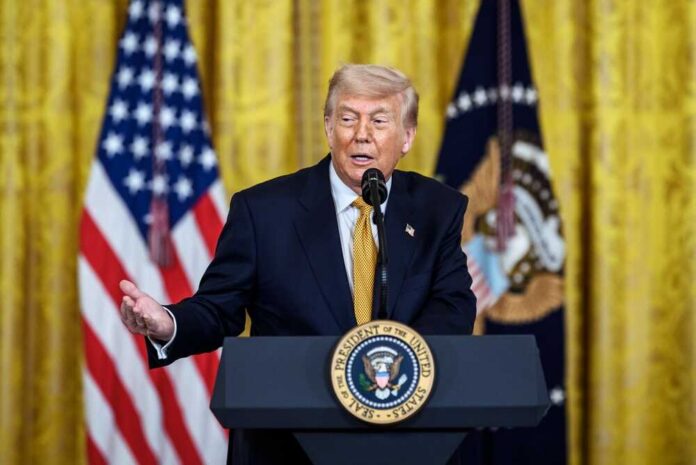
President Trump said he wants to “get Cuba done” before leaving office and would consider using force to do it.
Story Snapshot
- Trump told radio host Hugh Hewitt he aims to resolve Cuba policy before his term ends.
- He said he would consider a short military operation if needed.
- He framed the goal as helping Cubans and Cuban-Americans who fled the regime.
- He named Secretary of State Marco Rubio as central to the effort.
What Trump Said, Where He Said It, And Why It Matters
President Trump said he wants to “get Cuba done before I leave” during an interview on The Hugh Hewitt Show. He tied the push to long-standing concerns about Cuba’s communist government and to support for Cuban-Americans. The interview drew quick coverage across major outlets the same day and the day after, underscoring the weight of a president speaking about force and regime change near America’s shores.
PRESIDENT TRUMP: I want to get Cuba done before I leave, yeah. We have a very good, talented guy for Cuba named Marco. pic.twitter.com/BLJILtcsAl
— Department of State (@StateDept) November 12, 2026
Hewitt asked if a short campaign, “a little bit of military force, a week campaign,” should be on the table. Trump replied, “I would be, I would certainly consider that, yes.” That language does not announce an operation or a date. It does plant a public marker that he is open to limited military action if he believes it would achieve the goal. The words carry clear meaning for allies, rivals, and Cuban leaders who track U.S. signals.
The Humanitarian Rationale And The Rubio Factor
Trump said he would “love to be able to do it for the people,” citing Cubans who “were treated really badly” and fled to the United States. That framing highlights political repression, economic collapse, and large Cuban communities in Florida and elsewhere that watch Havana closely. He also said Secretary of State Marco Rubio, whose parents emigrated from Cuba, “would love to do it,” and suggested Rubio would play a key role in any effort to drive change on the island.
Reports after the interview emphasized Rubio’s relevance because of his long record on Cuba policy and influence in South Florida politics. Politico highlighted Rubio’s central role as described by Trump. That matters because State Department leadership shapes sanctions, diplomacy, funding for civil society, and how any pressure campaign links to allies in the region. A strong State lead offers non-military tools even as the president keeps all options open.
What “Get Cuba Done” Could Mean In Practice
“Get Cuba done” remains a broad phrase. It could mean tougher sanctions, tighter maritime interdictions, more support for opposition voices, or a diplomatic push with regional partners. It could also mean military options if non-military tools fail to move the regime. Crisis bargaining research shows presidents sometimes talk tough to build leverage without locking in a specific action. Public threats can raise reputational costs if walked back, but the costs often depend on how clear and specific the threat was in the first place.
A short operation, if ever chosen, would demand clear objectives. That includes the target set, expected resistance, and the desired end state. Force without a plan for what follows can create a longer conflict or leave a vacuum. The administration’s rhetoric, so far, signaled willingness to consider force, not a set operation. That distinction matters to service members, Cuban civilians, American travelers, and businesses that would feel any shock first.
How Congress And Law Fit Into The Picture
Congressional action can shape the lanes for Cuba policy, including sanctions and authorizations for the use of force. House Democrats earlier floated a War Powers Resolution aimed at stopping any unauthorized military action against Cuba, reflecting the stakes around separation of powers. The State Department and the White House would also weigh legal justifications if they ever moved from words to action. Those steps mark the difference between a signal and a decision.
For now, the takeaway is simple and direct. Trump set a public goal to deal with Cuba before he leaves office, and he said he would consider limited force to do it. He tied the push to a humanitarian purpose and put Secretary of State Marco Rubio at the center of the policy lane. That package—clear goal, open options, named lead—raises pressure on Havana while keeping Washington’s choices flexible.
Sources:
cnbc.com, nbcnews.com, politico.com, ny1.com, independent.co.uk, democrats-foreignaffairs.house.gov