
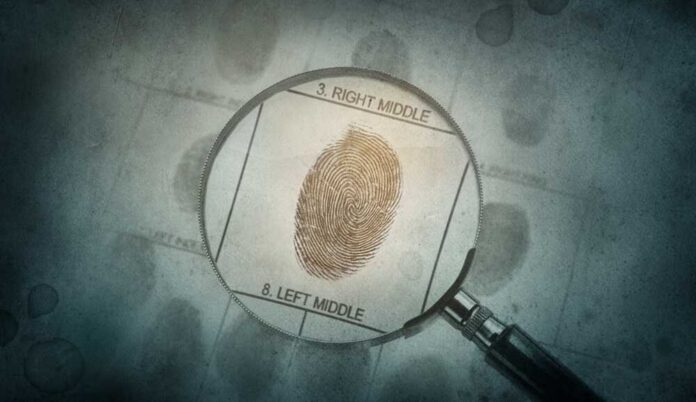
Nine fingerprints from the Bundy Drive murder scene were never matched, and modern tools could finally test them.
Story Snapshot
- Nine latent prints from the scene reportedly went unmatched in 1994–1995.
- An expert says current databases and methods can search more widely and read more detail.
- Los Angeles Police Department says the case is open and detectives will pursue new leads.
- No public record shows these prints have been retested with today’s tools yet.
Nine Unmatched Prints And Why They Matter Now
Defense fingerprint specialist Gilbert Aguilar told the court in 1995 that nine prints from the Bundy Drive scene did not match known samples taken in the case. Those impressions went into the case file as “unidentified.” That status alone never proves guilt or innocence. It does mark a gap. A modern search could test whether those nine belonged to a known offender, a visitor, or a worker whose records now sit in a larger system than Los Angeles had in 1994.
Aguilar later explained that searches in the mid-1990s ran through local and regional files, not every national repository that exists today. That matters because more than thirty years of arrests and civil recordings have expanded databases. A print that returned no candidate in a city system back then could now surface a lead in a state or federal file. Scope, not only skill, limits what any search can return.
What Has Changed In Fingerprint Technology
Automated systems now compare far more candidates at once and handle poorer quality images better than in the past. Research shows top-tier systems can find the true match among large databases at rates that would have been rare in the 1990s, though performance still depends on print quality and expert markup. That means a clear, well-preserved latent can produce a strong candidate today, while a smeared, partial ridge may still go nowhere even with new software.
Nine fingerprints recovered from the scene where Nicole Brown Simpson and Ron Goldman were murdered in 1994 have never been matched to O.J. Simpson, the victims, or 58 friends and relatives who were tested.
Now, more than 30 years later, the co-director of the docuseries "OJ's… pic.twitter.com/reHYXc6iFw
— Fox News US (@FoxUSNews) November 7, 2026
Manual judgment still anchors the work. Examiners choose features and decide if a candidate is a match. Studies highlight that error rates vary with difficulty, and independent review reduces mistakes. Better tools do not replace discipline; they elevate good practice. For the Bundy prints, the key question is simple: are the images clear and complete enough to benefit from these gains?
The Status From Law Enforcement
Los Angeles Police Department has stated that the O.J. Simpson case remains an open and ongoing investigation and that detectives will pursue leads if new evidence emerges. That stance allows, but does not guarantee, a renewed search. The department also said it had no further details to release. A brief caveat applies here: public reports have not shown that these nine prints have been re-run through today’s databases yet.
Filmmaker Ari Mark, who helped drive new attention, said analysts can now study latent prints “in a way that you couldn’t before,” urging a reexamination. That request tracks with common cold-case practice. Agencies often revisit old items when new methods arrive. The move is straightforward: verify the chain of custody, assess each print’s quality, run authorized database searches, and have an examiner review any candidates using current standards.
How A Proper Reexamination Would Work
Detectives would first confirm preservation and documentation. They would log the lift cards, photos, and worksheets, then scan at high resolution. An accredited unit would mark features, run searches in the Los Angeles, California, and Federal Bureau of Investigation (FBI) systems, and record candidate lists. Two qualified examiners would compare top candidates to the latent and to each other’s conclusions. That workflow protects against bias and meets modern expectations for quality control.
If a search returns a strong candidate, the team would seek new elimination prints from lawful sources, confirm identity, and map how that person could have touched the item. If no candidates appear, detectives would close the loop with a formal report. Either outcome adds value: it narrows the field or opens a lead. Families and the public deserve that clarity, even decades later.
What This Could Answer — And What It Cannot
A confirmed identification could place a hand at the scene. It could point to a contractor, a neighbor, a friend, or someone with a record not in local files in 1994. It would not, by itself, prove involvement in the murders. Time, location on an item, and context matter. Conservative common sense applies here: follow facts, not fame. Run the prints, document the process, and let the evidence speak without spin.
Cold-case work rewards patience. Technology has improved, databases are larger, and review standards are stronger. The public record shows nine prints remain unmatched and that a modern check is feasible and responsible. The path forward is clear, simple, and testable. Start the search, report the results, and add one more piece of truth to a case that still grips the country.
Sources:
foxnews.com, breakingnewsnation.com, nij.ojp.gov