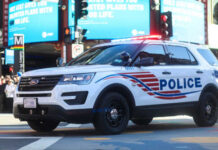


A kidnapping call on a jammed Brooklyn highway ended with officers smashing van windows, firing Tasers, and finally gunfire that left the driver dead.
Quick Take
- New York Police Department (NYPD) officers shot and killed a man suspected of kidnapping after he rammed police and civilian cars on the Belt Parkway.
- The confrontation happened near Exit 8 in Brooklyn after a 911 call reported a girl inside a white van.
- Officers broke the van’s windows and used Tasers before firing their guns, according to police accounts.
- No child was found in the van, and the man died at a hospital a short time later.
What Police Say Triggered The Chase
The chain of events started just when someone called 911 to report a girl inside a white van. That call sent officers racing to the eastbound Belt Parkway, where traffic had slowed the van down near Exit 8. What followed turned a routine highway stop into a violent standoff caught partly on video.
NYPD Assistant Chief Charles Minch said the driver refused to stop. Instead, he rocked the van back and forth, ramming it into police cars and civilian vehicles stuck in the same traffic. Minch described the ramming as indiscriminate, meaning the driver did not appear to aim for any single target but struck whatever vehicles sat in his path.
Window Smashes, Tasers, Then Gunfire
Video from the scene shows officers surrounding the van and breaking its windows in an apparent effort to reach the driver or force him out. Reports describe officers deploying Tasers at this stage, a less-lethal option meant to stop the driver without gunfire. When the van kept ramming vehicles, officers opened fire.
After the shooting, officers pulled the driver from the van and called for an ambulance. He was taken to a hospital and pronounced dead a short time later. Reporting on exactly which hospital treated him has varied slightly between outlets, a detail that will likely get cleared up as the investigation continues.
No Child Found, But The Alarm Was Real
Despite the kidnapping report that launched the police response, no child was found inside the van once the standoff ended. That detail does not erase the seriousness of the original 911 call. It does mean the full story behind who called, what they saw, and why they believed a child was in danger remains part of the ongoing investigation.
How New York Law Treats Deadly Force Against Vehicles
Court rulings dating back to the 1985 Supreme Court case Tennessee v. Garner set the standard for when police can use deadly force. Officers must reasonably believe a suspect poses an immediate threat of death or serious injury to themselves or others. A vehicle actively ramming occupied cars in heavy traffic fits squarely within that legal framework.
Similar cases around the country echo this one. California’s Department of Justice cleared officers after a driver struck an officer and sideswiped a patrol car before being shot. New York’s Attorney General has likewise reviewed cases where a driver’s continued aggression, not mere flight, justified officers firing their weapons.
Pursuits Carry Real Risk For Everyone On The Road
A recent academic study of NYPD pursuit policy between 2022 and 2025 found that crashes tied to police chases rose and fell directly with how many pursuits officers were allowed to run. Collisions dropped sharply after the department tightened pursuit rules in February 2025, underscoring how dangerous these high-speed confrontations become once a vehicle refuses to stop.
NYPD fatally shot a man in his 30s during a police-involved shooting tied to a potential kidnapping on the Belt Parkway in Brooklyn Saturday night.
Cops were alerted to a white cargo van with New Jersey plates suspected in a kidnapping. When officers tried to stop it, the…— Summer (@EclipeByDeath) November 15, 2026
That research matters here because the Belt Parkway incident was not a high-speed chase through open road. It was a standoff in stalled traffic, where a van ramming other cars put bystanders at risk simply by sitting in their own vehicles. Officers faced a suspect who turned a traffic jam into a weapon, leaving little room for a slower resolution.
What Comes Next For The Investigation
The NYPD’s Force Investigation Division typically reviews officer-involved shootings, examining body-camera footage, radio traffic, and physical evidence before issuing findings. Those records have not yet been made public. Until they are, the public account rests on police statements and witness video, both of which describe a driver who kept escalating until officers had no safe alternative left.
Sources:
nypost.com, yahoo.com, silive.com, the-aporia.com, nbcnewyork.com, ground.news, link.springer.com, oag.ca.gov