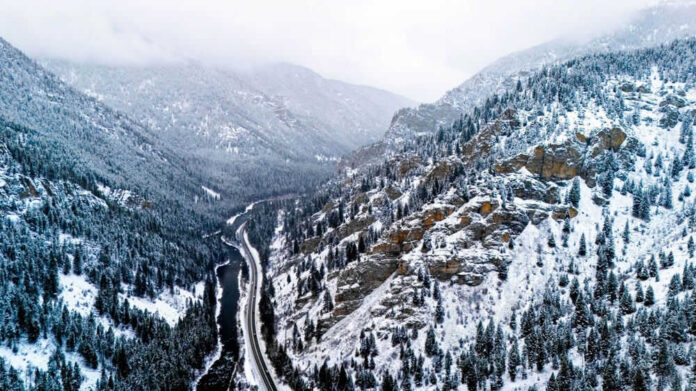
One 60-year-old man walks into the Lake Tahoe backcountry with a water bottle and a day-hike plan—and vanishes so completely that nearly 200 rescuers, aircraft, drones, and dogs cannot find a trace of him after a week.
Story Snapshot
- A 60-year-old solo hiker, Jason Coughran, disappeared in the Desolation Wilderness after setting out from Fallen Leaf Lake on May 25.
- Search teams from multiple counties, along with the California Governor’s Office of Emergency Services, deployed nearly 200 people at peak effort.[1]
- Crews have scoured thousands of miles of rugged Sierra Nevada terrain using aircraft, drones, and search dogs, yet he remains missing.[1]
- The case exposes how dependent the public is on terse sheriff statements and fragmented media reports to understand life-and-death search operations.[1]
A routine holiday hike that never ended
Memorial Day around Lake Tahoe pulls people into the mountains the way a porch light pulls moths, and 60-year-old hiker Jason Coughran was one of them.
Authorities say he set out alone from the Fallen Leaf Lake area on May 25, heading into the federally designated Desolation Wilderness southwest of Lake Tahoe.
He was described as tall and lean, wearing shorts and a light shirt, carrying only a water bottle—classic day-hiker gear, not a multi-day survival kit.[1]
The El Dorado County Sheriff’s Office says Coughran was last believed to be near Angora Peak late that morning and last heard from around 4 p.m. that afternoon.
That detail matters because search operations are built around the “last known point” and the timeline; every hour that passes dramatically widens the possible search radius.
By the time the family realized he was overdue and authorities mobilized a formal search, darkness and mountain weather had already erased many of the easy clues.[1]
The search explodes into a major rescue operation
Within days, what began as a missing-hiker call became a full-scale rescue mission spanning a 63,000-acre maze of granite and forest. Reports describe nearly 200 search-and-rescue personnel at the peak of the operation, drawn from El Dorado, Douglas, and Alpine counties, among others, along with specialized teams and volunteers.[1]
The California Governor’s Office of Emergency Services joined the effort, signaling that this was no casual weekend sweep but a serious, resource-intensive push to find one man alive.[1]
Desperate search for missing hiker after 60-year-old vanishes into the wilderness near Lake Tahoe https://t.co/dcKxphdm1h
— Daily Mail (@DailyMail) May 31, 2026
Crews used helicopters, fixed-wing aircraft, drones, ground teams, and search dogs to comb the terrain around Fallen Leaf Lake, Half Moon Lake, Gilmore Lake, and nearby peaks.[1]
One televised update cited more than 3,000 miles of terrain covered on foot and by air as teams fanned out along ridges, drainages, and likely travel corridors.[1]
As days passed with no sign of Coughran, the operation shifted from blanket coverage to targeted grids, a standard search-and-rescue tactic once the probability of detection drops and fatigue, cost, and risk to rescuers mount.
When “ongoing search” actually means “triage under uncertainty”
Local news clips and brief written updates all repeat the same core facts—solo hiker, Memorial Day, Fallen Leaf Lake, Angora Peak, still missing—while revealing almost nothing about the day-to-day decisions inside the command trailer.[1]
That pattern is common: sheriffs and emergency managers release minimal, carefully controlled information so they do not create false hope, invite armchair second-guessing, or compromise a potential criminal investigation.[1][2] For the public, that can create the illusion of either incompetence or indifference when neither may be true.
Hundreds of taxpayer-funded personnel and aircraft can saturate a wilderness for days, yet the public mostly hears “search continues” and a phone number for tips.[1]
That communication gap fuels suspicion among some observers, but the evidence here points to a large, sustained rescue attempt rather than a half-hearted response.[1]
What this disappearance reveals about modern wilderness risk
Desolation Wilderness is not a city park; it is steep, rocky, and unforgiving, with snow patches, cold lakes, and cliffs that do not care how fit or experienced a hiker is.
Media reports describe Coughran as athletic, which fits the all-too-familiar pattern: capable, confident adults underestimate how quickly a wrong turn, a slip on granite, or sudden weather can turn a holiday outing into a survival problem.
A light shirt and water bottle are fine until temperatures drop, winds rise, or an injury pins you overnight.[1]
Search intensifies for missing hiker Jason Coughran in Desolation Wilderness; nearly 200 personnel join rescue efforts. https://t.co/bGzxgzNahs
— NEWSRADIO 630 WLAP (@630WLAP) June 2, 2026
Search professionals routinely stress basic precautions: never hike solo deep into unfamiliar backcountry, leave a detailed route plan, carry navigation tools and emergency gear, and respect how far your body can travel before fatigue and judgment fail.
Coughran’s disappearance, despite his apparent fitness and the enormous rescue response, argues strongly for personal responsibility rather than faith in a cavalry of rescuers. The government can throw 200 people at a problem and still lose the race against time and terrain.[1]
Sources:
[1] Web – Search ongoing for 60-year-old hiker missing for over a week in Lake …
[2] Web – Cal OES Joins Search for Missing Hiker in Desolation Wilderness