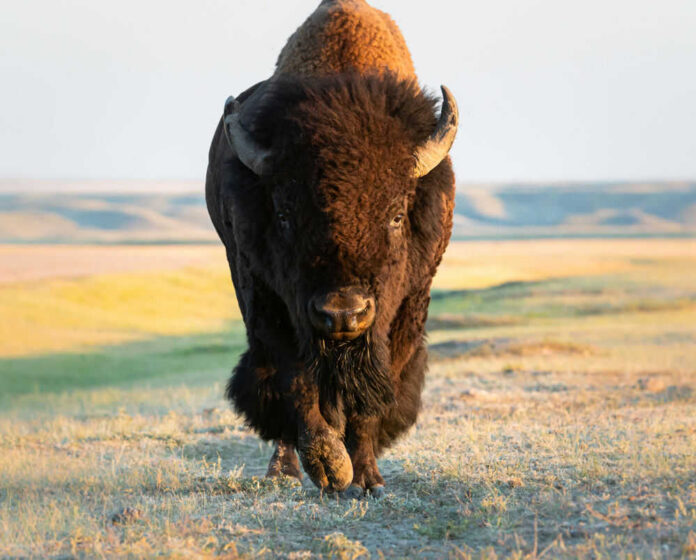
A 2,000‑pound wild animal just reminded America who really controls Yellowstone’s selfie zones.
Story Snapshot
- A 12-year-old was injured by a bison near Yellowstone’s Mud Volcano boardwalk, and details are still being kept tight.[6]
- Park rules require people to stay at least 25 yards from bison, yet history shows many injuries happen within a few yards.[2]
- Since 1980, bison have injured more visitors in Yellowstone than any other animal, even more than bears.[7]
- The investigation is ongoing, but the bigger story is how human behavior keeps colliding with clear warnings and common sense.[6]
What Happened Near Mud Volcano That Morning
Yellowstone National Park says a 12-year-old visitor was injured by a bison around 9:15 a.m. near the Mud Volcano area, just north of Fishing Bridge.[6]
Rangers and emergency medical staff took the child to a nearby hospital, but officials have not shared the nature of the injuries or the child’s condition.[4]
The park has also held back key details about what led up to the encounter, stating only that the incident remains under investigation.[6] That silence leaves room for guesses, but not firm conclusions.
12-year-old hospitalized after being injured by bison in Yellowstone National Park https://t.co/CLJoovR849 pic.twitter.com/IpuzbVvlQ7
— New York Post (@nypost) June 28, 2026
The spot matters. Mud Volcano is a short, popular boardwalk loop that runs right through active thermal features and open bison country.[6] Visitors often see massive animals grazing very close to developed paths there.
The area feels “managed” and safe because of railings and pavement, yet the park still classifies those bison as wild, not zoo exhibits. When a large animal steps onto the walkway, people face a simple choice: back off or push the limits for a closer look.
The Rules Are Clear, Even If People Ignore Them
Yellowstone’s own regulations require visitors to stay at least 25 yards from large animals such as bison, elk, deer, moose, bighorn sheep, and coyotes, and at least 100 yards from bears, wolves, and cougars.[9]
Rangers repeat the same message: if wildlife move toward you, you move away to keep that distance.[4] The park does not hide the stakes.
It warns that bison have injured more people than any other animal in Yellowstone and can run three times faster than humans when they feel threatened.[4]
Those rules are not just fine print. They are backed by science and hard experience. A Centers for Disease Control and Prevention report found that every documented bison injury during a recent period occurred because people failed to maintain the required 75-foot distance.[7]
Many victims were taking photos three to six feet from animals, sometimes with their backs turned for selfies.[7]
That pattern undercuts the idea that most of these incidents are freak accidents. They follow a common script: a wild animal acts like a wild animal after a human acts like the rules do not apply.
Bison Are Not the Villains in This Story
For decades, bison have been the number-one cause of injuries to visitors in Yellowstone.[7] They are not predators stalking people; they are massive herd animals protecting their space. Research on bison injuries shows that most injuries to visitors result from either approaching the animal or failing to retreat when it approaches.[2]
Many were in groups that crowded bison or tried to take close-up photos.[2] These are not random charges out of nowhere; they are natural reactions when people push into a wild animal’s comfort zone.
Yellowstone has responded with education campaigns, flyers, signs, and strict viewing-distance rules.[7] Those efforts cut the average number of bison injuries down to less than one per year over some recent periods.[8] That drop suggests the system works when people cooperate.
From this viewpoint, that aligns with a basic principle: the government can set reasonable guardrails, but individuals still bear responsibility for their own choices. A rule cannot reach across the boardwalk and drag someone 25 yards back from a 2,000-pound animal.
The Missing Details And The Fair Question of Blame
Right now, we do not know exactly what this child or the adults nearby were doing in the seconds before the bison struck.[6]
Was the group well outside the recommended distance and surprised by a sudden charge? Were they too close for photos or simply refusing to move back as the animal approached?
Until the investigation concludes and more facts emerge, no honest observer can say with certainty that visitor behavior caused this specific injury.
‼️ BISON INJURY: A 12-year-old was hospitalized after being injured by a bison on Friday morning while visiting Yellowstone National Park. This is the first reported bison attack in Yellowstone this year.
Read more: https://t.co/gV7bIICZGQ pic.twitter.com/OEoNg3N7F6— FOX Weather (@foxweather) June 27, 2026
However, the park’s public record and federal health data show a strong base rate: bison injuries almost always involve people too close to the animals.[2]
Media coverage often leans toward framing these events as park failures or “attacks” on helpless tourists, especially children, rather than as hard reminders that wild places demand adult judgment.
From this perspective, the more serious question is not whether Yellowstone needs another sign. It is whether families will respect the warnings already in place when nature stands right in front of them.
Sources:
[2] Web – 12-year-old injured by bison at Yellowstone National Park – 6ABC
[4] YouTube – Bison injures 12 year old visitor in Yellowstone near Mud Volcano
[6] Web – A child visiting Yellowstone National Park in Wyoming was injured …
[7] Web – Yellowstone – (NEWS RELEASE) A 12-year-old visitor was injured …
[8] Web – 12-year-old injured by bison in Yellowstone National Park. https …
[9] X – Yellowstone National Park