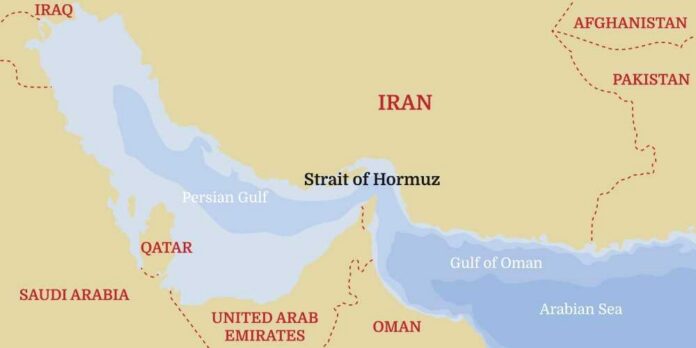
The United States just turned quiet ceasefire paperwork into exploding proof that Iran’s attacks on tankers in the Strait of Hormuz carry a heavy price.
Story Snapshot
- U.S. Central Command launched “powerful strikes” after Iran hit three commercial ships in the Strait of Hormuz.
- American aircraft targeted Iranian missile, drone, radar, and small boat assets tied to attacks on global shipping.
- Iran denies direct blame for the ship strikes and claims it is defending its right to control traffic through the strait.
- The clash shatters a fragile ceasefire, jolts oil markets, and reopens big questions about U.S. power and deterrence.
U.S. Retaliation After Tankers Are Hit
U.S. Central Command said it launched a “series of powerful strikes” on Iran after Iranian forces targeted three commercial vessels in the Strait of Hormuz.
American officials described the ship attacks as a clear violation of a ceasefire deal meant to calm the Iran war and reopen the vital waterway to normal traffic. The United States framed the operation as a direct defense of civilian crews and global trade, not an optional adventure. That message matters to both allies and markets.
The trigger for these strikes was a series of one-way drone attacks on tankers, including the Singapore-flagged cargo ship Ever Lovely on June 25 and a second vessel the next day.
Central Command said those drones hit ships that were following internationally recognized routes, not sneaking through forbidden lanes. From a common-sense view, protecting the lawful passage of commercial ships is not a favor; it is a basic duty for a superpower that guarantees trade lanes.
What And Where U.S. Forces Hit
The Pentagon and Central Command reported that U.S. aircraft struck Iranian missile and drone storage sites, coastal radar systems, air defenses, and so-called minelayer capabilities positioned near the Strait of Hormuz.
Later strikes expanded the target list to include more than 60 small boats used by Iran’s Islamic Revolutionary Guard Corps to harass or threaten shipping. These targets were chosen to cut into Iran’s ability to hit ships again, not to topple the regime. That narrow focus tracks with a strategy of firm but limited deterrence.
BREAKING: U.S. Central Command says American forces launched a new wave of strikes Tuesday, hitting more than 80 targets across Iran after Tehran’s latest attacks on commercial vessels in the Strait of Hormuz. The operation targeted Iranian air defenses, command-and-control… pic.twitter.com/cqiZ3wNsMt
— Breaking911 (@Breaking911) July 8, 2026
Central Command confirmed that some strikes were along Iran’s southern coastline, including areas near key port and military hubs such as Bandar Abbas and Sirik. However, the U.S. did not publish precise coordinates for every hit, likely to protect operational security and avoid feeding Iranian propaganda.
Iran’s Story, Ceasefire Strains, And The Gray Zone
Iranian officials and state media offered a different story. Tehran insisted it has the right to control shipping through the Strait of Hormuz and claimed one vessel ignored its warnings, suggesting it was enforcing rules, not attacking innocent ships.
At the same time, Iran did not openly admit carrying out the specific strikes on the three tankers, keeping formal deniability. That dodge fits a familiar pattern of low-level maritime coercion, where Iran tests limits while trying to duck direct blame.
Iran also said a projectile struck its port area at Sirik and claimed its naval forces then hit U.S. military targets in response. The Revolutionary Guard bragged about targeting American positions and warned it would respond harder to any new U.S. action.
These statements aim to paint the United States as the treaty breaker and Iran as a victim defending its coast. For many Americans, the picture looks different: a hostile regime uses ambiguity and half-truths to undermine a ceasefire, then cries foul when called to account.
Oil Markets, Allies, And What Comes Next
The strikes immediately shook global oil markets, with reports of rising prices after the attacks and counterattacks around the strait. About a third of the world’s seaborne crude moves through this narrow choke point, so even a few missiles or drones can hit wallets far from the Gulf.
Higher energy costs give critics at home a new talking point against any escalation, even when the facts show Iran is the one firing at civilian ships.
Outside the United States, the picture is mixed. Some Gulf states, including Qatar, condemned the tanker attacks and pointed at Iran as the culprit, backing the U.S. narrative. European and NATO countries, however, have not moved as one.
While they are quick to punish Russia for attacks in Europe, they show less united force when Iran targets ships and bases linked to NATO members. That gap raises a hard question: how long can U.S. power alone keep key trade routes open when rivals are willing to push and allies hesitate?
Sources:
cnbc.com, cbsnews.com, centcom.mil, reuters.com, bbc.com, youtube.com, facebook.com, en.wikipedia.org