Oil is back near pre-war prices even after an Iran conflict and Hormuz shutdown, and that should make every driver and investor ask who is really steering this market.
Story Snapshot
- OPEC+ approved a new 188,000 barrel per day August increase as prices slid and shipping recovered
- Seven core producers have restored nearly 800,000 barrels per day since April, unwinding earlier cuts
- Oil now trades around the low-$70s, down sharply from war-driven peaks near $120–$126 a barrel
- Analysts warn that weak demand, sanctions, and electric vehicles could turn “cautious” supply into a glut
OPEC+ adds barrels while prices sink back toward normal
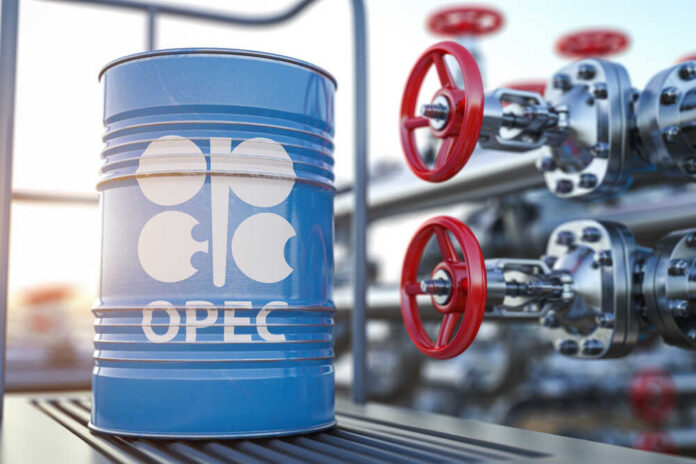
OPEC+ just signed off on another “modest” oil output increase, but the backdrop looks anything but modest. Seven core members approved a 188,000 barrel per day hike starting in August, marking the fifth straight month the cartel has nudged production higher.
That group includes Saudi Arabia, Russia, Iraq, Kuwait, Algeria, Kazakhstan, and Oman, the same players who have quietly walked back voluntary cuts they put in place in 2023. They are adding supply even as prices drift back down, not up.
Prices tell the story in plain numbers. Brent crude surged into the $120s when the United States–Israel war on Iran closed or choked off the Strait of Hormuz, the world’s most important oil route.
Now, as tankers again move through Hormuz and exports rebuild, Brent has slid to roughly $72 a barrel, near where it traded before shots were fired. That slump is one reason OPEC+ says more supply is safe. The cartel argues the market has stabilized and the supply crunch has eased.
From deep cuts to slow but steady restoration
The August increase is not a random number pulled from a hat. It fits into a careful sequence. In 2023, OPEC+ stacked multiple layers of voluntary cuts on top of earlier pandemic reductions, including an extra 1.65 million barrels per day from eight members and another 2.2 million barrels per day from the broader group.
Those cuts were meant to prop up prices when demand looked shaky. Since April, the seven core producers have restored almost 800,000 barrels per day of that lost output, brick by brick. The 188,000 barrels for August is the latest brick in that wall.
The official line sounds calm. In its statements, OPEC+ repeats that it will “continue to closely monitor and assess market conditions” and follow a “cautious approach,” with full flexibility to increase, pause, or reverse these unwinds. That language matters.
It positions the cartel as a responsible adult in the room, ready to tap the brakes if the market wobbles. This is classic cartel messaging: project control, promise stability, and keep options wide open.
Recovering shipments meet uneasy demand reality
On paper, the case for adding supply looks straightforward. Crude exports through the Strait of Hormuz, hammered by conflict, have been recovering as shipping lanes reopen and damaged facilities come back online.
Fox Business and others frame the August move as a response to “recovering crude supplies and easing geopolitical concerns,” with prices hovering near pre-conflict levels. That narrative says the worst of the crisis has passed and extra barrels will simply meet rebuilding flows rather than flood the world with oil.
Oil prices decline as OPEC+ output increase raises supply expectationshttps://t.co/l31mYg3Qlb#OilPrices #OPEC #OPECPlus #CrudeOil #EnergyMarket #GlobalEconomy #MarketUpdate #CommodityNews pic.twitter.com/xDWPt97ClJ
— Bangladesh Textile Journal (@journal_textile) July 7, 2026
But “recovering supplies” is still more story than hard math. OPEC’s statements talk about market stability, not specific volumes restored, and the group has not released detailed data on how many Hormuz barrels are truly back online.
Analysts point to the lack of transparent numbers, and to lingering tensions in places like Nigeria and Venezuela, as reasons to stay skeptical of the idea that geopolitical risk has faded. Common sense says if you cannot see the numbers, you do not blindly trust the narrative.
Capacity doubts, demand shifts, and the risk of a glut
There is also the question of whether all these promised barrels can actually be produced. Sanctions on Russian giants like Rosneft and Lukoil have bitten into Russia’s ability to ramp output, and past episodes show OPEC+ often falls short of its stated targets.
A Columbia Energy Policy analysis found the group missed quotas by about 2.7 million barrels per day in April 2022, even while announcing higher goals. That history backs the analyst view that some of today’s increases may be more political signal than physical supply.
On the demand side, the picture is even more complicated. The International Energy Agency expects global oil demand growth to slow compared to recent years, while electric vehicle adoption and efficiency gains chip away at gasoline use.
TradingKey and other market watchers describe 2026 as a year of “supply-demand mismatch,” with big non-OPEC+ growth from the United States, Guyana, Brazil, and others adding to OPEC+ barrels. That combination creates a real risk: what OPEC+ sells as cautious normalization could morph into a price-crushing glut if demand underperforms.
How this plays out for American wallets and politics
For American households, the near-term effect of these moves is simple. Lower crude prices tend to mean cheaper gasoline, diesel, and jet fuel, at least in the absence of new shocks.
A slide from $120-plus oil to the low $70s is the difference between pain at the pump and something closer to normal. From a kitchen-table view, that is welcome. Stable or falling energy costs help families stretch paychecks and keep inflation in check.
The deeper issue, though, is control. Every time OPEC+ tweaks quotas, it reminds the world that a small circle of governments still wields major power over a key input to the global economy.
The latest August increase shows that even after a war and a chokepoint shutdown, the cartel is confident enough to keep unwinding cuts, signaling it believes Western producers and consumers will live with its pace.
For investors and voters alike, the question is whether the United States will continue to lean on foreign supply games, or double down on domestic production and diversification so that the next crisis does not hinge on a meeting of seven countries half a world away.
Sources:
finance.yahoo.com, reuters.com, gulfnews.com, facebook.com, linkedin.com, cnbc.com, sciencedirect.com