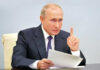


The man who led the government’s most aggressive immigration crackdown in Chicago says he didn’t quit — he was pushed out the door.
Story Snapshot
- Gregory Bovino, who ran the “Midway Blitz” immigration operation in Chicago, retired from Customs and Border Protection (CBP) in March while under an active misconduct investigation.
- An internal email dated March 2 told Bovino that investigators were looking into claims tied to his credibility in a federal court case and an alleged antisemitic remark to a Minnesota prosecutor.
- Bovino says the inquiry was launched to force him out, calling it a “retaliatory witch hunt” led by CBP Commissioner Rodney Scott.
- CBP’s official position is that Bovino voluntarily retired, sixteen days after the investigation notice, and left the agency on March 31.
An Email, Then An Exit
On March 2, an internal CBP investigator emailed Bovino to notify him of an “official Inquiry into allegations of misconduct reported to CBP.”
The message demanded truthful answers to a set of pointed questions. Sixteen days later, Bovino filed retirement paperwork. He announced his departure publicly on March 16 and was gone by March 31.
Bovino doesn’t dispute the timeline. He disputes the meaning behind it. He told a Chicago television station he was “forced to leave,” and in a direct message to the Chicago Tribune he went further, saying he was placed under investigation “to CAUSE me to retire.” An attorney speaking on his behalf called the process politically motivated and “weaponized”.
A tranche of emails released by the federal government show Gregory Bovino was under investigation when he announced his retirement last March. He told the I-Team he was "forced to leave." https://t.co/jOzSJ3qm6l
— ABC 7 Chicago (@ABC7Chicago) September 2, 2026
What The Investigation Actually Targeted
The misconduct questions sent to Bovino centered on two specific issues. First, allegations that he lacked credibility in a federal court case in Chicago, tied to his role overseeing immigration enforcement operations.
Second, a claim that he made an antisemitic remark to a prosecutor in Minnesota. Neither allegation has been publicly resolved through a released final finding, and the full investigative file has not surfaced in reporting.
Bovino pointed the finger squarely at CBP leadership. He accused Commissioner Rodney Scott of orchestrating what he called a retaliatory witch hunt, insisting the misconduct claims were funneled to the agency’s internal oversight office specifically to squeeze him out before he was ready to go.
CBP’s public statement, by contrast, describes his exit in the plainest bureaucratic terms available: a voluntary retirement.
Voluntary On Paper, Contested In Practice
Federal employment law creates a built-in tension in cases like this. Retirements are presumed voluntary unless an employee can show real coercion, deception, or that no reasonable alternative existed.
That legal standard matters here, because it means the burden falls on Bovino, not the agency, to prove his exit wasn’t simply his own choice.
That legal backdrop explains why agencies often prefer a “voluntary” label even when an employee is under heavy internal pressure. A voluntary retirement closes the door on formal removal proceedings, appeals, and public disciplinary findings. It’s tidier for the institution.
For someone like Bovino, though, it means his claim of coercion has to be argued in public opinion rather than settled by a clean administrative record.
A Career Built On High-Profile Enforcement
Bovino wasn’t a background figure. He was the public face of Operation Midway Blitz, the aggressive immigration enforcement push in Chicago that drew sustained pushback from Illinois Governor JB Pritzker and repeated scrutiny from federal courts, including orders requiring him to report enforcement activity directly to a judge.
That visibility means his departure isn’t a quiet personnel footnote — it’s a story with political weight on both sides of the immigration debate.
Customs and Border Protection posted emails showing Gregory Bovino, the public face of Operation Midway Blitz in Chicago, was notified on 2 March 2026 of an official Office of Professional Responsibility inquiry. Questions in that notice went to credibility in a Chicago federal…
— ZeroBarkThirty (@zerobarkthirty) September 4, 2026
What’s clear is this: Bovino left CBP while formally under investigation, and he says that timing was no coincidence. What’s still unresolved is whether the agency crossed the line from legitimate oversight into a coordinated push to remove him quietly, without the mess of a public disciplinary fight.
Records requests for the full investigative file and internal communications could eventually settle that question. For now, the public is left weighing one man’s account of being cornered against an agency’s insistence that he simply walked away.
Sources:
abc7chicago.com, chicagotribune.com, newsnationnow.com