A former Russian president just said Germany deserves to be bombed, and Berlin’s answer was a shrug.
Story Snapshot
- Dmitry Medvedev, Russia’s deputy Security Council chairman, said Germany “deserves a direct strike” on military production facilities and possibly sites in Berlin.
- He tied the threat to Germany blaming Russia for a drone incident at Leipzig/Halle Airport on August 5.
- Germany’s government called the threat unacceptable but said it saw no need to raise Chancellor Friedrich Merz’s security level.
- Russian state media outlets repeated the same wording, spreading the threat across multiple official channels.
What Medvedev Actually Said About Striking Germany
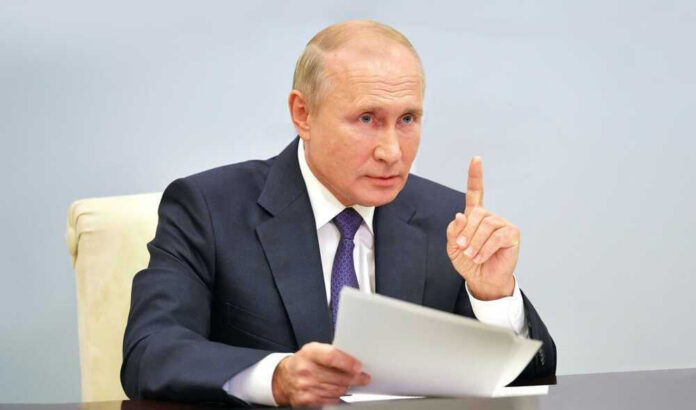
Medvedev posted that Germany “deserve[s] a direct strike on all German military equipment production facilities” and “quite possibly on several other locations in Berlin as well.”
The remarks appeared on Telegram and were picked up almost instantly by Western and Russian outlets alike on September 2. He framed German factories building weapons for Kyiv as legitimate wartime targets, not abstract political enemies.
Russian Security Council official Dmitry Medvedev on Wednesday threatened to attack Germany's military production facilities that support Ukraine and said other sites in Berlin could be attacked as well. https://t.co/p4raX7dXNj
— The Washington Times (@WashTimes) September 2, 2026
This was not a throwaway line. Medvedev specifically referenced “German military equipment production facilities for the Bandera clique,” a phrase Russian officials use to paint Ukraine’s government as heirs to a World War Two-era nationalist movement. The language moved past vague condemnation into naming a category of targets: the factories that keep Ukraine’s army supplied.
The Drone Incident That Set Off the Latest Round
Germany accused Russia of sending an explosive drone toward Leipzig/Halle Airport around midnight on August 5. That accusation appears to be what triggered Medvedev’s latest outburst. He responded by calling Germany’s attribution “unproven” and accusing Berlin of fabricating the story.
Neither side has produced public evidence settling who is right, leaving the incident itself unresolved even as the rhetoric around it escalates.
This is not new territory for Medvedev. Back in 2023, he already threatened German factories over rocket shipments to Ukraine, saying if the transfers were legal, then “attacks on the German factories in which these rockets are produced” would be legal too. The pattern suggests a repeated messaging strategy rather than a one-time slip of the tongue.
How State Media Amplified the Threat
Russian outlets RIA and Izvestia ran the same “deserves a direct strike” language within hours of the original post. When state-controlled media repeats a senior official’s threat word for word, it stops looking like a personal outburst and starts looking like sanctioned messaging.
Whether Medvedev speaks for the Kremlin or enjoys freelancing dangerous rhetoric, Moscow’s silence on clarifying the difference speaks volumes.
Berlin’s Calculated, Unbothered Response
Germany did not treat this as a five-alarm fire. Deputy government spokesman Sebastian Hille said Berlin “strongly condemns all such statements and threats,” language nearly identical to what German officials used after Medvedev’s earlier threat to kidnap Chancellor Merz in January.
Notably, the government said it found no justification for raising Merz’s personal security level, arguing his existing protection was already sufficient.
That measured response tells its own story. German officials appear to view Medvedev’s threats as noise meant to rattle Western resolve, not a credible operational warning. It is a reasonable read given the absence of any deployment orders or targeting evidence, but reasonable does not mean risk-free, especially when a nuclear-armed neighbor keeps naming your factories.
Why This Fits a Larger Pattern of Pressure
Germany’s own domestic intelligence agency has separately warned that defense companies face rising risk of Russian espionage and sabotage, and noted that Moscow’s defense ministry circulated a list naming European firms, including German ones, as targets of interest.
Research groups tracking Russia’s broader campaign against Western support for Ukraine describe industry as a recurring target category, not an isolated concern tied to one angry post. Medvedev’s words land inside that already-tense backdrop.
None of this proves an attack is coming. There is no public evidence of missiles being aimed, orders being cut, or facilities being scouted. But repeated threats from a man who still sits near the top of Russia’s Security Council, echoed by state media, aimed at a NATO ally arming Ukraine, deserve to be taken seriously as intimidation even if Berlin refuses to flinch publicly.
Sources:
united24media.com, washingtontimes.com, rt.com, en.iz.ru, dailybeirut.com, newsquawk.com, fr.de, germany.news-pravda.com