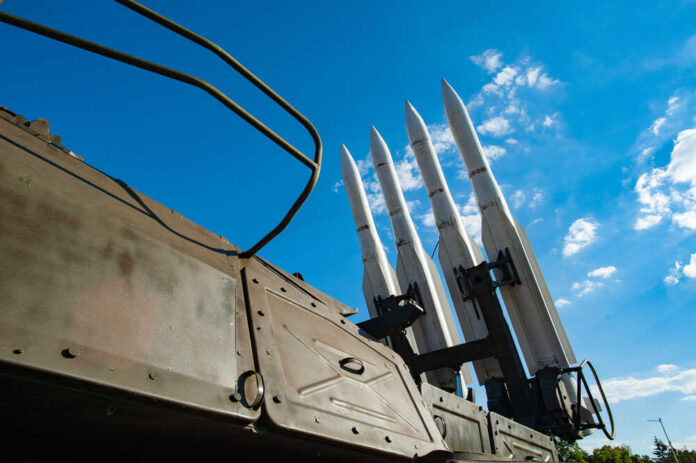
Two officials say Europe’s Patriot interceptor stash is “beyond critical,” while NATO says that is “simply not the case.”
Story Snapshot
- Associated Press cites unnamed U.S. and NATO officials warning of a “beyond critical” Patriot shortage in Europe.
- NATO publicly rejects the claim and says the alliance can “block punches” today.
- Patriot demand spiked due to the Iran war, support for Ukraine, and earlier shifts from Europe to the Middle East.
- Analysts estimate heavy Patriot use this year, tightening stocks and timelines to refill.
What the officials said, and why it matters
A news outlet reported that a Europe-based U.S. defense official and a NATO official described Patriot interceptor stocks in Europe as “beyond critical,” and linked that to President Trump’s war with Iran. That phrase is blunt and rare.
It signals fear that a sudden missile raid could outstrip reloads. The report adds that the sharpest gap centers on interceptors meant to stop Russian ballistic missiles, the very shots that give air defenders the fewest chances to react.
Such claims draw attention because Patriot is the backbone against high-end threats. Crews can move launchers. They cannot wish missiles into the canisters. Every defended city or airbase is math. Planners count launchers, radar coverage, and interceptor shots per target.
If real stocks fall short of plans, commanders must shrink the defended footprint or accept more risk. That is the core alarm behind the “beyond critical” line, not a Beltway talking point.
NATO’s on-the-record pushback
NATO spokesman Colonel Martin O’Donnell rejected the alarm. He said it is “simply not the case” that stocks are beyond critical and stated the alliance can “block punches” and still send munitions to Ukraine. The Pentagon also pushed back, calling broader shortage claims “false”.
Those are strong denials from named officials. Their statements deserve weight, and they reflect a duty to signal resolve and avoid baiting foes with talk of soft spots.
Iran War Updates: U.S. Patriot missile stocks in Europe are 'beyond critical' due to Iran war, officials say https://t.co/PqHKPtkvWJ
— CBS News (@CBSNews) August 27, 2026
How should readers weigh this clash? Start with what is documented. Reuters and others show several drivers straining stocks. Allies gave Ukraine interceptors. U.S. and NATO units shifted some air defense toward the Middle East. Consumption rose across wars and crises.
All of that can be true while NATO still meets today’s minimum needs. Both ideas can live in the same picture: acceptable readiness now with thinner margins if a larger strike comes.
What moved, what was spent, and the production lag
A report said in March that a sizable number of U.S. Patriot missiles were moved from Europe to the Middle East, and a U.S. Air Force commander acknowledged that some European air-defense capability shifted in that direction. It was reported that inventories in Gulf states were severely depleted and that several European countries transferred supplies to Ukraine.
The report also cited an estimate that between February and July, a large share of Patriot interceptors was expended during the Iran conflict.
Those facts map to a simple problem. Patriot interceptors take time to build. Crews can shoot them in seconds. Even a few months of heavy use can chew through a year’s output.
Ukraine’s leaders also said allied interceptor deliveries in 2026 fell to a third of the 2025 level, pointing to broader supply strain. NATO did announce a plan in 2024 to help allies buy up to 1,000 Patriot missiles. That helps, but orders are not the same as rounds in the tube today.
How to read the “beyond critical” claim with common sense
Anonymous sourcing deserves caution. No inventory sheets were published, and the claim covers Europe as a theater, which blends national, U.S., and alliance stocks. Still, the pattern of movement and spending is not in dispute. Missiles left Europe for the Middle East.
Allies shipped rounds to Ukraine. Usage surged against real threats. Those are tangible facts. On balance, the warning aligns with the supply-and-demand math, but the exact theater totals remain out of public view.
Americans prize deterrence through strength and straight talk about risks. The right lesson here is not panic; it is focus. Keep missile lines humming. Keep deliveries steady. Avoid press stunts that trade magazine depth for a headline.
Congress and allies can track three metrics that matter: on-hand Patriot interceptors in Europe, monthly deliveries, and tested coverage against a modeled Russian raid. If those numbers rise, the debate fades. If not, the math will make the next headline for us.
Sources:
apnews.com, militarnyi.com, reuters.com, blackwire.world