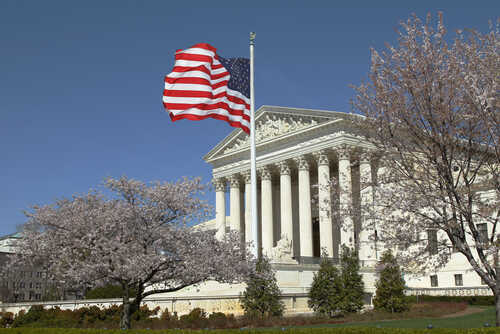
The Supreme Court cleared the way for states to tap a federal citizenship database before November, and that shift could decide tight races.
Story Snapshot
- The Court stayed a lower-court block, letting the program run for now.
- States may query the Systematic Alien Verification for Entitlements system to check voter rolls.
- Dissenting justices warned of risks to lawful voters and privacy.
- The fight now moves to appeals while states race to implement checks.
What The Court Allowed And Why It Matters Now
The Supreme Court put a June order on hold, which had barred the federal government from using its revamped citizenship-check system for voter rolls. The stay means the Department of Homeland Security can support states’ eligibility checks while appeals continue.
This is not a final ruling. It is a green light for the coming election cycle. For election officials, the message is speed with caution. They have a powerful tool, but little time and high stakes.
BREAKING: The Supreme Court allowed the Trump administration to resume its expanded voter citizenship verification program, which lets states use Social Security records to check voters' citizenship. Justices Sotomayor, Kagan, and Jackson dissented. pic.twitter.com/jEhmk13Om2
— SCOTUS Wire (@scotus_wire) September 25, 2026
The program at issue is called the Systematic Alien Verification for Entitlements, known as SAVE. It was built to check immigration status for public benefits.
The Department of Homeland Security linked it to new data sources, including Social Security records, to help states flag possible noncitizens on voter rolls. That expansion sparked praise from integrity advocates and alarm from privacy and civil-rights groups.
The Legal Clash: Integrity Versus Privacy And Process
A federal judge ruled in June that the overhaul violated the Privacy Act, the Social Security Act, and the Administrative Procedure Act.
The judge also said agencies lacked authority for parts of the expansion. The injunction halted use of the tool in its new form. The Supreme Court’s stay paused that injunction.
Dissenting justices argued the government had not shown enough harm to justify that pause and warned of burdens on lawful voters if states rely on flawed matches.
The administration points to a federal duty to help states verify citizenship and keep rolls accurate. Media summaries of the majority’s framing highlight that states can request federal data to confirm eligibility under long-standing law.
That view aligns with a basic rule: only citizens vote in federal elections. The state-federal cooperation here respects both law and common sense. The Court’s move reflects that practical balance, at least pending full review.
How States Can Use The Tool Without Tripping The Wire
Data matching is not magic. It can help spot wrong entries, but it can also mislabel real citizens, especially new Americans. Critics say SAVE can be outdated and tag naturalized voters as noncitizens.
They warn that bulk queries could push counties to send threats or start removals based on weak matches. The better path is targeted checks, written safeguards, and clear notice with time to fix records before any removal moves forward.
📷📷Supreme Court lets Trump administration use revamped federal voter eligibility database for nowThe Supreme Court on Friday lifted restrictions on a controversial federal voter database before November’s election… pic.twitter.com/Y0o63TvZ6Q
— joe t (@jtinaglia) September 28, 2026
States that proceed should follow a simple playbook. First, never remove a voter based on one database hit. Second, give prompt notice, a plain-language appeal path, and a real human review.
Third, match on more than a name and birth date. Use multiple fields to cut false hits. These steps protect citizens while letting officials act on strong signals. That approach honors both election integrity and civil liberty, which is what voters expect.
What Comes Next Before Ballots Are Counted
Appeals will test the agency’s legal footing and process. The question is whether the Department of Homeland Security followed the rules to expand SAVE and whether its disclosures meet privacy laws.
Another judge in Florida saw the law differently and ordered access for four states in July, a sign that the legal map is split for now. The Supreme Court’s stay creates one national rule for this fall, but the merits fight is still live.
Campaigns and advocacy groups will watch two numbers: how many voters get flagged and how many flags prove wrong. If states publish those figures, trust will rise. If they hide the ball, doubt will spread. The prudent view holds two truths at once.
Noncitizen voting must be prevented. Lawful voters must not be tripped up by clumsy data. The Court’s order gives officials the tool. Voters will judge how wisely it is used.
Sources:
law.cornell.edu, pbs.org, apnews.com, npr.org, bbc.com, cnn.com, cbsnews.com, politico.com