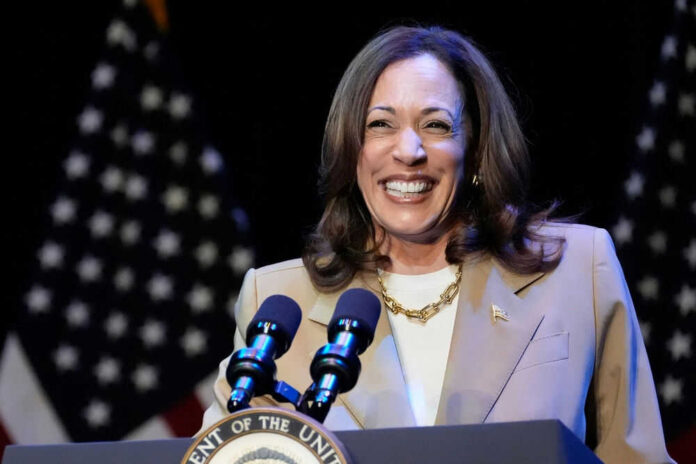
Kamala Harris’ Detroit NAACP appearance ignited the internet not for what she said, but how she said it.
Story Snapshot
- Harris spoke at a Detroit NAACP fireside chat that drew swift online backlash over her delivery.
- Critics said she used a new or fake accent; clips spread fast across partisan media.
- Several linguists countered that her Detroit phrasing reflects code-switching, not fakery.
- The fight over tone overshadowed her pitch on unions, turnout, and Michigan’s Senate race.
What Happened In Detroit, And Why It Caught Fire
Kamala Harris took the stage at Fellowship Chapel in Detroit for a fireside chat hosted by the city’s National Association for the Advancement of Colored People chapter.
She rallied the crowd on unions, turnout, and the Michigan Senate race, telling voters to make the margin “too big to rig” and urging support for Abdul El-Sayed.
The message landed in the room. The delivery drew the headlines. Clips focusing on a shifted cadence and words like “betta” raced across feeds, and the accent debate drowned out the policy talk.
Former Vice President Kamala Harris faced criticism online after critics accused her of using a new accent during remarks at an NAACP event in Detroit.
Harris was speaking about Democratic turnout in the 2026 midterms when clips from the event spread on social media and drew… pic.twitter.com/QZOmFO9QrR
— Fox News Politics (@foxnewspolitics) September 23, 2026
Online critics framed the shift as an act, not a style choice. They circulated side-by-sides and tagged the moment as “a new accent,” which became the story for a news cycle. The reaction followed a script we have seen before: take a short clip, strip the setting, and make tone the test of character.
That does not answer the core question for persuadable voters: did the delivery help connect with that Detroit audience, or did it signal something else about judgment and authenticity?
What Linguists Say About The Speech Patterns
Several linguists weighed in with a different read. A University of Colorado commentary noted features tied to African American English, including dropping the “r” in “better” to produce “betta,” and described the shift as code-switching to match the audience and setting, not a fake accent.
The Grio quoted a linguist who said her accent stayed nearly the same while her pacing and emphasis changed, which is common for public speakers across settings. These views match years of research that politicians adapt register to fit the room.
Supporters called it familiar, not forced, pointing to the long practice of code-switching among Black professionals in civic spaces. They argued that delivery can change by context to serve clarity and rapport. That claim does not exempt any politician from judgment.
It does provide a grounded explanation: cadence and pronunciation can shift without crossing into parody. On that standard, the Detroit clip looks like a dialed-up style choice more than a mask, which fits the expert analysis.
Authenticity, Respect, And Results
Voters value candor and respect. A leader should speak plainly, avoid stagey affect, and stick to substance. If a politician sounds like a different person from room to room, trust erodes.
Instead, if a speaker trims jargon, loosens cadence, and echoes the crowd’s rhythm while staying the same person, most people accept it. The line is intention.
Fakery aims to flatter. Adaptation aims to connect. On the Detroit tape, critics heard the first. Linguists describe the second, with concrete examples.
The smarter political question is whether the style helped or hurt her Michigan mission. She was there to juice turnout and boost El-Sayed. The crowd size, the local press coverage, and the clean delivery of repeatable lines suggest the room was with her.
Yet the online storm shows the cost of small choices in a polarized age. A single syllable can swamp a message. Campaigns know this. They bank on the clip that wins the room and the cut that survives the feed.
How To Judge The Clip Without Getting Played
Start with facts. She spoke at a Detroit NAACP event, urged a high-turnout vote, and tied the race to national stakes. Watch the full segment, not just the ten-second mashup.
The Real Stakes Beyond A Viral Syllable
Americans deserve leaders who speak like adults to adults. That means fewer performance tics and tighter facts. It also means we should not confuse a clipped “r” with a character flaw. The Detroit moment shows how culture-war reflexes can eclipse local stakes in a flash.
If you care about kitchen-table results, judge the policy and the promises. If you care about trust, watch for the long arc, not one night’s cadence. That habit will beat any viral cut every time.
Sources:
foxnews.com, detroitnews.com, thegrio.com