
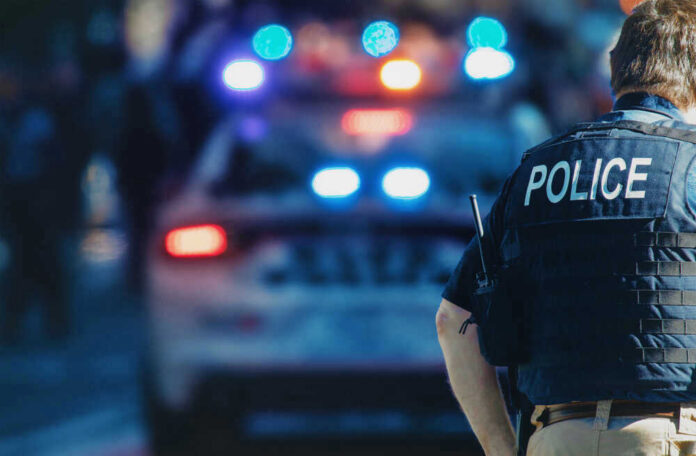
Nineteen people hit the pavement in Atlantic Beach because one person ran, and the real story is how a “few seconds” of panic exposed the fragile illusion of safety at America’s crowded festivals.
Story Snapshot
- Officials say a single runner triggered a chain-reaction stampede that injured 19 at a South Carolina motorcycle festival.
- Authorities insist there were no fights, no weapons, and no direct threats to public safety.
- The incident was serious enough to be labeled a “mass casualty” event, yet lasted only seconds.
- The gap between “no real danger” and “19 injured” raises hard questions about crowd planning and accountability.
When A Fun Night Turns Into A Mass Casualty Event
Shortly after 1 a.m. at the Black Pearl Cultural Heritage and Bike Festival in Atlantic Beach, South Carolina, music and motorcycles gave way to chaos near the stage on South Ocean Boulevard.[1]
Horry County Fire Rescue reported that nineteen people were injured during what responders treated as a mass casualty event, a designation driven purely by the number of victims.[1][3]
Three people went to the hospital, while others either refused transport or likely sought care on their own.[1][3]
At least 19 people were injured early Sunday in a crowd stampede at an annual motorcycle festival in Atlantic Beach, South Carolina, authorities said.
Read more: https://t.co/UuutZsBHwI pic.twitter.com/ONdBtcFioC
— ABC News (@ABC) May 25, 2026
Town officials and local news outlets painted a picture of sudden, disorienting motion: a dense crowd, a burst of running, bodies on the ground.[1][2][3] That sort of chain reaction often has nothing to do with malice and everything to do with physics and human instinct.
Once people near the front bolt, those behind feel the surge before they understand the reason. Feet tangle, someone falls, and the real damage comes from compressive forces and trampling, not from any visible attacker.[3]
The Official Story: No Fights, No Weapons, Just Panic
The town of Atlantic Beach released a carefully worded statement that hits the same notes repeated across outlets: “The situation appears to have been triggered when an individual began running, causing a brief chain reaction within the crowd that lasted only seconds.”[1][3][5]
Officials emphasized that at no time were there “confirmed fights, weapons, or direct threats to public safety,” a line that local television anchors echoed almost verbatim.[1][2][3][5]
Law enforcement and town leaders stressed how quickly officers and emergency crews reacted, calming the crowd and allowing the festival to resume.[2][3]
They also highlighted “proactive safety measures” across the weekend, from early traffic shutdowns to stage closures designed to thin out congestion at key times.[2]
That messaging fits a familiar pattern: reassure visitors, protect the town’s reputation, and signal that government did its job. From this perspective, the emphasis on order and preparedness is welcome, but it should not be accepted uncritically.
If There Was “No Threat,” Why Were 19 People Hurt?
The striking tension in this story is simple: how do you square “no real threat” with nineteen injured people and a mass casualty label? Officials lean on the idea that panic alone explains the injuries, as if the crowd’s reaction were the only variable that mattered.[1][2][5]
Crowd science and basic logic say otherwise. Panic is the match; the layout, density, and escape routes are the tinder. If people had space to move, one runner would not put nineteen in need of medical attention.
Reporters noted that investigators are still piecing together the details, using video and eyewitness accounts to understand what rippled through the crowd and how.[3]
At this stage, no primary sources publicly dispute the injury count or the core timeline, lending credibility to the basic facts.[1][3][5] The weaker point is the confident tone about the absence of deeper problems.
Officials cannot yet fully rule out structural failures in how the space was managed, because those assessments take more time than a weekend press release.
What This Reveals About Festival Safety And Responsibility
The Atlantic Beach incident fits a broader pattern in American crowd disasters: authorities rush to define events as brief, localized episodes, even when the casualty count suggests more systemic vulnerabilities.[1][3]
Last year’s festival reportedly saw multiple injuries after fights triggered panic in the crowd, which means planners knew this environment could turn dangerous when tensions or confusion spiked.[1]
When a venue has that history, the threshold for “adequate” safety preparation ought to be higher, not merely “good enough until something happens.”
At least 19 people were injured early Sunday in a crowd stampede at an annual motorcycle festival in Atlantic Beach, South Carolina, authorities said.
Read more: https://t.co/UuutZsBHwI pic.twitter.com/ONdBtcFioC
— ABC News (@ABC) May 25, 2026
Individuals in a crowd must avoid reckless behavior, but local government also has a duty not to pack people into choke points where a single runner can topple nearly 20 bystanders.
The takeaway is not to fear festivals; it is to demand that when leaders tell you “there was no real threat,” they can explain why a few seconds of motion did so much harm—and what will change before the next holiday weekend.[1][2][3][5]
Sources:
[1] Web – 19 injured in stampede at Atlantic Beach bike fest in South Carolina
[2] YouTube – 19 injured in stampede at Atlantic Beach Bike Fest
[3] YouTube – 19 injured in stampede at Atlantic Beach bike fest in South Carolina
[5] Web – 19 injured in crowd stampede at South Carolina motorcycle festival