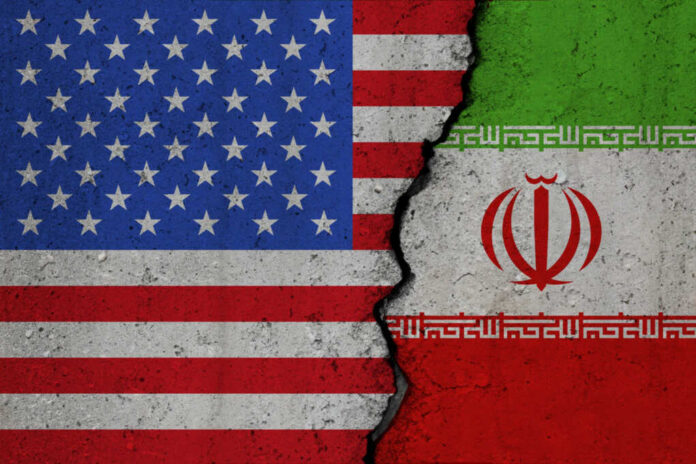
The United States sent a clear message with its latest airstrikes on Iran: kill our troops, and we will hit back fast and hard.
Story Snapshot
- Two U.S. service members were killed and one is missing after an Iranian missile and drone strike on a base in Jordan.
- U.S. Central Command says new strikes are meant to “swiftly punish” Iran’s Islamic Revolutionary Guard Corps for the attack.
- The airstrikes also aim to weaken Iran’s ability to threaten oil shipping through the Strait of Hormuz.
- This clash fits a broader pattern of tit-for-tat attacks that risks sliding into a wider regional war.
Deadly Strike On A U.S. Base In Jordan
On July 17, 2026, Iranian ballistic missiles and drones slammed into a U.S.-used base in Jordan, killing two American service members and leaving one missing. U.S. Central Command said four more troops needed hospital care.
The attack marked the first U.S. troop deaths from direct Iranian fire since the early days of the latest war, a gut punch for a country that had watched most clashes from a distance. Iran’s Islamic Revolutionary Guard Corps publicly claimed strikes on U.S. targets in Jordan as retaliation for earlier American attacks.
The U.S. conducted a new round of airstrikes early Monday targeting Iran after announcing the death of another American service member, hitting around a northwestern city believed to be home to underground missile bases. https://t.co/7MSQmyv3Da
— NBC10 Boston (@NBC10Boston) July 20, 2026
The base hit sits inside a tight web of U.S. sites that stretch across Jordan, Kuwait, Bahrain, and other Gulf states, all now within range of Iranian missiles.
Open-source reporting and statements from the Revolutionary Guard describe a broader operation hitting fuel depots, aircraft shelters, and air defense assets at Al Azraq Air Base and other locations. For many Americans, the headline was simple and painful: Iran fired, and U.S. troops died. That fact alone forced Washington’s hand.
Washington Moves To ‘Swiftly Punish’ Iran
Within days, the U.S. military launched a new round of airstrikes on Iranian targets, which Central Command framed as a move to “swiftly punish” the Revolutionary Guard units behind the Jordan attack. These strikes hit missile and drone storage sites, coastal surveillance systems, air defense facilities, and other military infrastructure tied to the Guard.
Officials said the goals were twofold: punish those responsible for killing Americans, and make it harder for Iran to threaten commercial shipping and oil tankers in the Strait of Hormuz.
Central Command stressed that American forces targeted Islamic Revolutionary Guard Corps elements directly linked to the Jordan strike. If a hostile force openly claims attacks on U.S. bases and then kills U.S. personnel, hitting those same units is not “adventurism.”
It is a textbook case of self-defense and deterrence. The message is meant for Tehran and every militia leader watching: American blood has a cost.
Iran’s Retaliation Logic And The Risk Of Escalation
Iran did not frame its strike as random aggression. The Revolutionary Guard said missiles and drones fired at U.S. bases in Jordan, Bahrain, and Kuwait were retaliation for ongoing American attacks on Iranian territory and assets. This follows a familiar pattern.
Analysts describe the Guard’s way of war as built on controlled escalation, proxy warfare, and asymmetric retaliation, always trying to raise the price for U.S. presence without triggering full-scale regime-ending war.
🇺🇸|US Military Strikes Iran for Eighth Consecutive Night
On July 18, 2026, U.S. Central Command (CENTCOM) announced the completion of another round of airstrikes against Iran. This marks the eighth consecutive night since July 11 that U.S. forces have conducted military strikes… pic.twitter.com/vYvtze8L5O
— Aprajita Nafs Nefes 🦋 Ancient Believer (@aprajitanefes) July 19, 2026
Between late 2023 and early 2024, researchers counted about 190 attacks on U.S. bases in Syria, Iraq, and Jordan by Iran-linked groups. Iran has also launched hundreds of missiles and thousands of drones at U.S., Israeli, and allied positions during the broader conflict.
Each exchange creates pressure for the next “response.” That cycle is why this latest clash feels bigger than one deadly day in Jordan. Every strike and counterstrike pushes both sides closer to a line they claim they do not want to cross.
Fast Attribution And The Question Of Proof
The U.S. named Iran’s Revolutionary Guard as the culprit almost immediately, relying on intelligence and Iran’s own public claims rather than long, public forensic investigations.
That fits a pattern seen in other Middle East attacks, where governments move quickly to attribute blame so they can justify military response while the political moment is hot. In this case, Iran’s Guard claimed strikes on U.S. bases, and Central Command said Iranian missiles and drones killed Americans in Jordan.
From a common-sense angle, the key issue is not the fine print of public evidence but the clear behavior on the ground. Iran’s Revolutionary Guard openly boasts of hitting U.S. bases, operates the missile and drone units involved, and sits at the heart of Tehran’s external war machine.
When such a force kills U.S. troops, waiting weeks for perfect public attribution invites more attacks. Speed matters when deterrence is on the line, even if it leaves some lawyers and academics wishing for thicker footnotes.
What This Means For The War And For Americans Watching
The strikes on Iran after the Jordan attack are part of a much larger campaign, including operations like Epic Fury, which aim to destroy Iranian missile production, naval assets, and nuclear-related infrastructure.
U.S. and Israeli strikes have already taken out large numbers of Iranian launchers and military sites, while Iran has answered with waves of missiles aimed at bases in Kuwait, Qatar, Jordan, and beyond. Each round raises the human cost and the odds that one misstep could light a wider regional fire.
For Americans at home, the question is simple but heavy: how far should the United States go to defend its troops and interests in a region that never seems to calm down? The latest airstrikes show where Washington stands for now.
Two dead service members, one missing, and wounded comrades were enough to trigger “swift punishment” and another turn of the screw on Iran’s Revolutionary Guard. Whether that restores deterrence or just sets up the next exchange will be clear in the coming weeks, not in any speech.
Sources:
apnews.com, en.mehrnews.com, caliber.az, english.news.cn, reuters.com, facebook.com, middleeasteye.net, wane.com, eagleintelreports.com, timesofindia.indiatimes.com, en.webangah.ir, iz.ru, cptik.org, omranstudies.org, csis.org, mwi.westpoint.edu, securityscorecard.com, engelsbergideas.com