A normal afternoon at a Delaware hospital turned into a targeted killing that exposed how fragile “safe places” in America really are.
Story Snapshot
- A 23-year-old man was arrested in Philadelphia after a deadly shooting inside Wilmington Hospital.
- Police say one person was killed and another wounded in what they call a “targeted, isolated” attack.
- Law enforcement believe this was a workplace shooting tied to hospital employees.
- The case sits inside a bigger, growing pattern of violence in American hospitals and workplaces.
How an Ordinary Tuesday Turned Into a Manhunt
Wilmington Hospital in Delaware was busy with the usual mix of patients, families, and staff when gunfire broke the routine around 3:30 p.m. Police say two people were shot inside the hospital, both found with gunshot wounds when officers rushed in response to calls for help.
One victim later died, according to Wilmington Police Chief Wilfredo Campos, while the second survivor’s condition has not been released out of respect for the families.
⚡️Witnesses describe scary moments inside Wilmington Hospital following deadly double shooting pic.twitter.com/3PTc7ncWQk
— Current Affairs News (@weasdfgh124560) June 17, 2026
Officers did not find the shooter at the scene. That detail alone tells you this was not a chaotic struggle or some spur-of-the-moment scuffle gone wrong. The gunman left. The hospital went into lockdown.
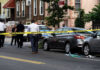
Hallways turned from places of healing into crime scenes, with patients and staff sheltering behind doors while officers cleared the building. For several tense hours, the search for whoever opened fire moved from room-to-room sweeps to a wider regional manhunt.
The 23-Year-Old Suspect And The Pursuit Across State Lines
By that evening, the story shifted from fear of an unknown shooter to the capture of a specific suspect. Police announced that a 23-year-old man had been taken into custody in Philadelphia, roughly 30 to 40 miles from Wilmington, after an intense search that had spanned two cities and two states.
Authorities said he would face charges in Delaware and that extradition back to Wilmington was expected once processing in Pennsylvania was complete.
Reporters pressed for his name, but police withheld it. They did not share a mugshot or detailed background, only the age and gender, and the fact of his arrest. That restraint matters.
It suggests the investigation is still building its official paper trail—charging documents, probable cause affidavits, and eventual indictments—rather than racing social media to tell a full story before the evidence is nailed down.
Law enforcement also stressed that early information about identity and motive was “preliminary” and could change as more facts came in.
Police Say It Was Targeted, Not Random Terror
Wilmington police did something on day one that shapes how regular people read this case: they labeled the shooting a “targeted, isolated incident.”
That phrase, repeated in outlet after outlet, tells the public this was not a random lunatic roaming a hospital with a gun. It signals that the shooter likely had a specific person or people in mind.
For anxious families and staff, that offers some comfort. For the suspect’s future defense team, it raises questions about motive and intent.
Manhunt ends with arrest of suspect in deadly Delaware hospital shooting
The 23-year-old man is expected to face charges in the Wilmington Hospital shooting, the city of Wilmington said in a statement
Read more: https://t.co/FWIHKqx285 pic.twitter.com/WaJi2Ijvyw
— Raw feed news (@Rawfeednews) June 17, 2026
Federal-style legal standards treat “targeted” shootings very differently from sudden, unclear struggles. Premeditation and personal grievance support severe charges such as first-degree murder.
Media reports, citing unnamed law enforcement sources, say this appears to be a workplace shooting, with one hospital employee suspected of shooting two co-workers and possible links to a temporary employment relationship or a firing.
That fits a grim pattern Americans have seen too often: conflict at work, resentment, and then a gun.
What We Know, What We Do Not, And Why That Gap Matters
So far, officials have not released the victims’ names, their roles in the hospital, or the full condition of the survivor. Hospitals often hold that information back out of basic decency and privacy, and that restraint deserves respect.
At the same time, it leaves the public—and any future jury pool—relying heavily on press conferences and anonymous leaks rather than sworn documents.
No charging papers or affidavits have yet appeared in the public record tying the suspect’s background, alleged firing, or work history directly to the attack.
For people who value due process and limited government power, that gap is not a small detail. Police confidence and media consensus do not equal proof.
Early coverage has already hardened a narrative: young man, workplace dispute, targeted killing, case closed. Yet proper justice needs more than a storyline.
It needs camera footage, witness statements, ballistic evidence, badge-access logs, and a clear chain of custody for the gun. That is how a serious system decides whether this was calculated murder, a sudden explosion, or something more complicated.
The Bigger Pattern: Hospitals Are Becoming Front Lines
This shooting does not stand alone. Research on hospital-based shootings in the United States shows that these attacks, while still rare, have climbed over the last two decades, with incidents rising from single digits per year to dozens annually nationwide.
Larger, urban hospitals have seen the most cases, and many of these shootings involve what researchers call “directed” motives—grievances or personal targets, not random rampages through crowded wards.
Analysts estimate that a significant share of hospital shootings could have been stopped with basic weapons screening at entrances.
That raises a blunt question: why do we treat airports and stadiums like high-security zones but allow hospitals, filled with vulnerable patients and exhausted staff, to operate on an honor system for weapons?
Security, Responsibility, And What Comes Next
Americans can draw two truths from Wilmington at once. First, police moved fast and grabbed a suspect within hours, across state lines, before he could vanish. That deserves credit.
Second, the system still owes the public clarity about how this shooting happened, whether clear red flags were missed, and what steps will keep hospitals from becoming the next workplace battleground.
Justice for the victims demands both accountability for the shooter and hard questions for the institutions meant to keep them safe.
Sources:
[1] Web – Suspect in custody after deadly, targeted shooting at Delaware …
[2] YouTube – NEW: Suspect in custody after deadly Delaware hospital shooting
[3] Web – 1 dead after shooting at Wilmington Hospital in Delaware – ABC13
[4] Web – Suspect in custody after deadly Delaware hospital shooting
[5] Web – BREAKING: The Wilmington Police Department announced that the …
[6] YouTube – Suspect in custody after 1 person killed in Delaware hospital shooting
[7] Web – DEVELOPING: Police search for assailant after 2 people are shot …
[8] YouTube – Suspect of Deadly Delaware Hospital Shooting Remains …
[9] Web – Manhunt underway after Delaware hospital shooting kills one …
[10] Web – 23-year-old suspect in custody after Delaware hospital shooting kills …
[11] Web – Suspect in fatal shooting inside Delaware hospital taken … – …
[12] Web – Hospital-Based Shootings in the US, 2000-2024: A Systematic Review
[13] Web – Hospital-based shootings in the United States: 2000 to 2011
[14] Web – Hospital shootings: rare, with “directed” motives – Today’s …
[15] Web – [PDF] Hospital-Based Shootings in the United States: 2000 to 2011 – …
[16] Web – The Burden of Violence to U.S. Hospitals | AHA
[17] Web – Attacks at US hospitals show why health care is one of the nation’s …
[18] Web – Differences in hospitals’ workplace violence incident reporting …
[19] YouTube – Workplace violence rising in health care as hospital …
[20] Web – U.S. acute care hospital shootings, 2012–2016: A content analysis …