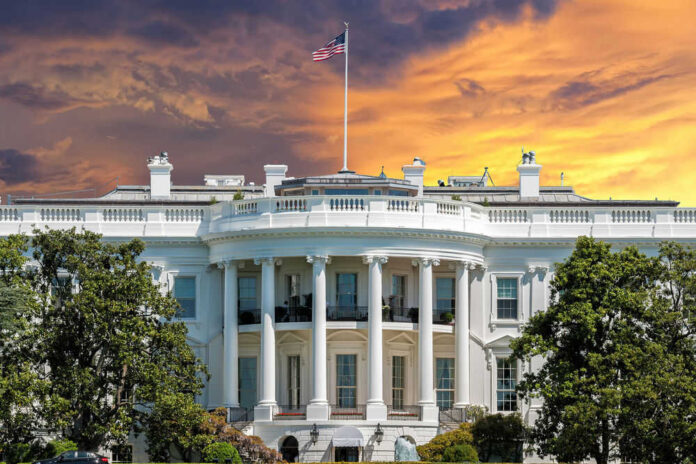
President Trump’s ambitious $300 million White House ballroom project will transform the executive mansion with a massive 90,000 square-foot addition that critics claim threatens the historic integrity of America’s most iconic residence.
Story Highlights
- Trump’s $300 million ballroom project is set for completion in summer 2028, just before he leaves office
- 90,000 square-foot addition nearly doubles the size of the existing White House structure
- National Park Service admits project will “disrupt historical continuity” and alter architectural integrity
- Historic East Wing demolished in October 2025 despite preservation lawsuit challenges
- Project emerges from Trump’s frustration with temporary tent structures for state events
Massive Ballroom Addition Reshapes Presidential Legacy
The National Park Service released its environmental assessment in late August 2025, revealing that President Trump’s ballroom addition will fundamentally alter the White House landscape.
The 90,000 square-foot structure represents the most significant expansion in the executive mansion’s history, designed to eliminate the temporary tent installations that have long frustrated the administration during primary state functions and diplomatic events.
Trump-backed White House ballroom expected to be completed in Summer 2028, National Park Service says. https://t.co/tMhXUyfHUT
— CBS News (@CBSNews) December 16, 2025
Historic Preservation Concerns Mount Despite Federal Approval
While the Park Service ultimately concluded the project poses “no significant impact,” the assessment acknowledges substantial changes to the property’s character.
The report states the addition will “dominate the eastern portion of the site, creating a visual imbalance with the more modestly scaled West Wing and Executive Mansion.” These modifications represent a bold departure from traditional White House architecture, prioritizing functional grandeur over historical restraint.
Legal Challenges Fail to Stop Presidential Vision
The Trust for Historic Preservation filed suit alleging the Trump administration bypassed federal review processes when demolishing the East Wing in October 2025. However, the government successfully argued that presidential authority extends to modifications made at the White House.
This victory reinforces executive power principles that conservatives value, demonstrating Trump’s ability to overcome bureaucratic obstacles and activist legal challenges to implement his vision for America’s premier residence.
Construction Timeline Delivers Results Before Term Ends
The summer 2028 completion date ensures President Trump will personally oversee the ballroom’s inaugural events before leaving office. The structure features white painted exteriors, historically compatible windows, stone slab flooring, and decorative plaster moldings.
Ground-floor facilities will support South Lawn events, while the preserved East Wing entrance maintains visitor access protocols for White House tours and formal ceremonies.
Practical Benefits Override Aesthetic Objections
Trump’s ballroom directly addresses operational limitations that have plagued previous administrations. The permanent structure eliminates costly temporary installations for state dinners and diplomatic receptions, representing long-term fiscal responsibility.
While commemorative Southern Magnolias from the 1940s require removal, the Park Service has committed to preserving historic artifacts, including the 1942 renovation cornerstone, the Kennedy Garden arbor, and East Wing theater components, for potential reinstallation.