
U.S. forces struck Iran’s Qeshm Island to stop a missile threat aimed at American aircraft, in a fast, limited operation that rippled through the Strait of Hormuz and the political news cycle alike.
Story Snapshot
- U.S. officials said the military hit Qeshm Island to counter a surface-to-air missile threat.
- Major outlets reported the action as a real, limited strike, not a plan.
- Explosions were reported on Qeshm, matching the time and place of the strike.
- The island hosts Iranian military sites tied to missile and naval activity.
What Happened And Why It Mattered In Minutes
Two sets of U.S. officials told reporters that American forces carried out limited strikes on Qeshm Island. They said the goal was to take out a surface-to-air missile launcher used to threaten U.S. aircraft operating near the Strait of Hormuz. Reuters echoed the description: the operation was defensive and aimed at Iranians using surface-to-air missiles against U.S. assets. The Associated Press and other outlets framed the action as an actual strike, not a proposal or leak.
Bright flashes light up the night sky before loud explosions erupt on Iran's Qeshm Island, near the Strait of Hormuz.
Eyewitness footage released Tuesday captures the blasts as a U.S. official confirms American forces carried out what were described as limited, defensive strikes… pic.twitter.com/4159kp0dP2
— Fox News (@FoxNews) November 3, 2026
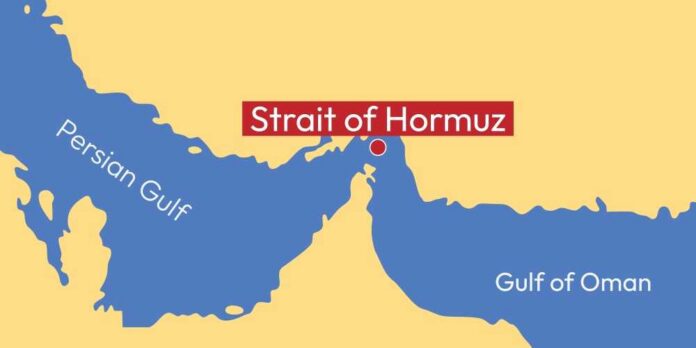
Iranian state television and local reporting described explosions on Qeshm Island. That matched the U.S. timeline and suggested the impacts were heard where U.S. officials said the targets were located. Qeshm is not a random spot. The island sits by one of the world’s most important sea lanes and holds military infrastructure, including an underground missile site and a naval base, according to open reporting cited at the time. That profile supports the U.S. account that the target related to air defenses.
The Target: A Missile Threat In A Crowded Sky
Officials said Iran had again tried to target a U.S. aircraft, prompting the strike to remove the launcher and reduce the risk to pilots. The Strait of Hormuz is busy airspace over an even busier waterway. A surface-to-air missile launcher parked at the mouth of a global oil artery raises the stakes fast. Neutralizing it is a classic mission: remove the immediate threat, keep routes open, and show that shots at U.S. aircraft carry costs. The speed and narrow scope align with that playbook.
Reporters did not publish exact weapon types, sortie counts, or confirmed battle-damage specifics. That matches how these operations often unfold in real time. The core facts presented a tight sequence: a recent attempt to target a U.S. aircraft, a limited strike on the launcher, and audible explosions on the island soon after. Outlets repeated the “limited” framing. That choice matters. Limited signals a boundary line—hit the shooter, not the whole network—while still underlining resolve.
Timing, Politics, And A Strait That Moves Markets
The strike landed just before key U.S. midterm elections. Major outlets noted this timing as they covered the operation. The proximity does not change the military logic. A launcher menacing a U.S. aircraft invites a quick response on any calendar. Still, voters notice messages of strength, restraint, or both. For many Americans, common sense on national security looks like a simple rule: hit what threatens our troops, keep the mission narrow, and avoid dragging the country into a wider war.
Energy and shipping watchers track the Strait of Hormuz like air traffic controllers track storms. A strike near that chokepoint always gets attention. Qeshm’s location means Iran can place sensors, shooters, and boats where they can watch and pressure shipping lanes. Keeping that pressure in check with timely, precise action lines up with conservative principles of peace through strength. You do not wait for the next missile shot when an earlier one already took aim at an American plane.
How To Read Limited Strikes Without The Noise
Limited operations are tools, not speeches. The goal here was not to roll back Iran’s military on the island or change the map. The goal was to stop a live threat and reset risk for U.S. pilots. That is why the accounts emphasize a launcher, not a long target list. The open reports confirm strikes happened and that explosions were heard on Qeshm. That is enough to treat the event as a real operation with a clear defensive aim, carried out at a sensitive place and moment.
Sources:
foxnews.com, nbcnews.com, timesofisrael.com, apnews.com, upi.com