

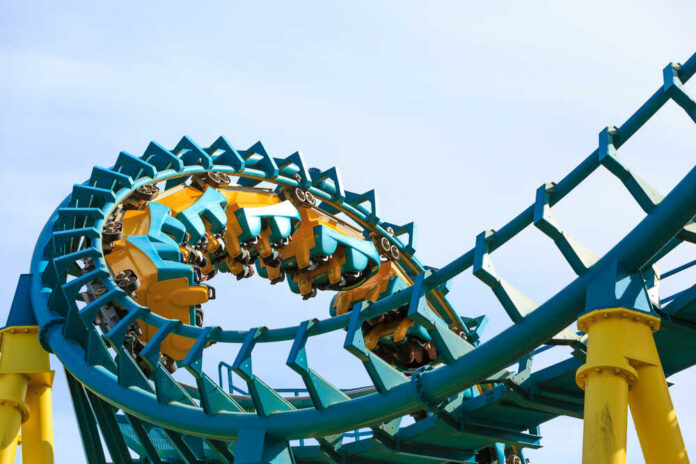
A 382‑foot dragon-shaped machine in New Jersey is promising six world records before a single rider has screamed.
Story Snapshot
- Six Flags Great Adventure unveiled Bakunawa, a spinning launch coaster they say will break six world records when it opens in 2027.
- The park claims extreme stats: 382 feet tall, 100 miles per hour, and three separate launches, including one done completely upside down.
- All six “records” come straight from Six Flags’ own marketing, not from Guinness World Records or any outside referee.
- Bakunawa replaces Kingda Ka, the retired height monster, and signals how parks now sell thrill rides with bold claims first and proof later.
Six records, one giant promise in Jackson, New Jersey
Six Flags Great Adventure did not just announce a new coaster; it rolled out a full legend. The park introduced Bakunawa, a free-spinning, floorless launch coaster named after a moon‑eating dragon from Philippine mythology, and then stacked six record claims on top of it.
The company says this ride will debut in 2027 and hold six world records the moment it opens. That mix of myth and math is designed to make even seasoned adults stop and pay attention.
Six Flags Great Adventure opened Bakunawa, a record breaking roller coaster that promises a breathtaking ride for thrill seekers. See the photos! Click the link below to see all of the photos ⬇️
📸 Brian Johnston/Asbury Park Press https://t.co/apXJKy3uQ2 pic.twitter.com/6Bi2B2YOen
— USA TODAY (@USATODAY) July 29, 2026
Six Flags lists the records in simple, bold terms: fastest spinning coaster at 100 miles per hour, tallest spinning coaster at 382 feet, fastest inversion at 80 miles per hour, longest stall inversion, first floorless spinning coaster, and first upside‑down launch.
From a distance, it sounds like a checklist of every thrill buzzword you can fit in one press release. For a park that lives on gate revenue and season passes, this is not just engineering talk; it is headline writing.
The numbers behind the thrill claims
The numbers driving these promises are aggressive even by coaster standards. Bakunawa’s tower is planned at 382 feet, which would rank it among the five tallest roller coasters on Earth and in the “giga coaster” class.
The park also advertises a top speed of 100 miles per hour and three launches powered by linear synchronous motors. One launch will take riders from zero to 60 miles per hour, another will push them from 60 to 80 while upside down, and the final will send them up the tower at 100 miles per hour.
These moves are not random tricks; they are tied directly to the record language. The park says the 100‑mile‑per‑hour mark is what makes Bakunawa the fastest spinning coaster, and the 382‑foot height makes it the tallest spinning coaster.
The 80‑mile‑per‑hour upside‑down launch is billed as both the fastest inversion and the world’s first launch done while riders are inverted.
The free‑spinning, floorless trains are marketed as a world‑first train design where no two rides feel the same. To a thrill‑seeker, it sounds amazing; to a skeptic, it sounds like a lawyer helped write the categories.
Marketing claim versus certified record
All six records come with a key detail that many quick readers miss. Every outlet that repeats the record list makes clear that these are “according to Six Flags” or “the park says.”
None of the reporting so far shows a Guinness World Records certificate or a ride‑industry body signing off on the claims. The coaster is still under construction and will not open until 2027, so there is no operational testing or final measurement in public yet.
This gap between bold claim and formal proof is normal in the theme‑park world, but it should still matter to anyone who cares about facts. Parks know that “world’s first” and “world’s tallest” language grabs attention and social shares long before a ride opens.
Enthusiast pages, Instagram reels, and YouTube videos then echo the six‑record story, creating an early sense of certainty built almost entirely on one source: the park’s own marketing.
Bakunawa, Kingda Ka, and the new thrill arms race
Bakunawa also comes with symbolism baked in. It is planned to replace Kingda Ka, the former height champion that once stood as the tallest coaster in the world.
Coverage now frames Bakunawa as the next crown holder in the park’s skyline, even though it will not be the tallest coaster on Earth; that title belongs to Falcons Flight in Saudi Arabia. By pitching six “spinning” and “inversion” records instead, Six Flags shifts the yardstick to a niche where it can claim the throne.
Its official! Bakunawa is coming to Six Flags Great Adventure in 2027
Claimed World Records:
-World's tallest spinning coaster(382ft)
-World's fastest spinning coaster(100mph)
-World's first upside-down launch (accelerating from 60 to 80 mph while inverted)
– World's fastest… pic.twitter.com/rTye0ExuRY— Coasters and Brews 🍻 (@coastersnbrews) July 28, 2026
This sort of record slicing raises a fair question that many older, practical readers will have. How many “world’s first” labels can one industry carve out before the words lose meaning? When a ride is the tallest spinning launch coaster rather than the tallest coaster, that is a narrower lane built for marketing, not for clarity.
There is nothing wrong with smart promotion in a free market, but clear labels and honest definitions still matter when families spend serious money based on those claims.
Why this coaster hype says something bigger about trust
The Bakunawa story fits a broader pattern in modern life: big institutions promising more than they have yet delivered and asking the public to trust them now, verify later.
Six Flags is not hiding its approach; its own “New in 2027” page lists the six records and calls Bakunawa a “record‑breaking, first‑of‑its‑kind coaster” before a single official record judge has weighed in.
For fans, that is part of the fun. For adults who watched too many “guarantees” crumble over the last decade, it is a reminder to separate hope from proof. There is nothing un‑American about chasing engineering limits or entertaining millions with a ride that feels “terrifying and amazing.”
The honest reading today is simple: Bakunawa appears to be an ambitious, extreme coaster with impressive planned stats, and Six Flags openly claims it will break six world records based on those plans. Until independent measures confirm each category, those six records are still promises, not yet earned reality.
Sources:
people.com, nj.com, usatoday.com, themeparktribune.com, parkrovers.com, youtube.com, en.wikipedia.org