The most unsettling part of the Kennedy Shoal tragedy is not that a shark killed a spearfisherman in front of his friends, but how quickly a routine Sunday dive on a famous reef turned into a lesson about risk, responsibility, and who really makes the rules offshore.
Story Snapshot
- A 39-year-old spearfisher from Cairns died after a shark struck his head while diving Kennedy Shoal on the Great Barrier Reef.
- Three friends watched the attack unfold, dragged him from the water, and raced over an hour back to shore, but paramedics could not save him.
- The death was Australia’s second fatal shark attack involving a spearfisher in just over a week, fueling fresh debate over culling and personal risk.
- Authorities treat the case as a tragic but non-suspicious wildlife incident, underscoring that the ocean is not a controlled environment.
A fatal strike on a shallow reef shelf
Queensland police say the victim, a 39-year-old man from Cairns, was spearfishing with three friends at Kennedy Shoal, a shallow reef system roughly 40 to 50 kilometers offshore between Cairns and Townsville, when a shark struck and inflicted catastrophic head injuries.[1][2][4]
The group had launched a private vessel and was diving from the boat on the Great Barrier Reef, targeting fish in a popular spearfishing and diving area known for its structure and abundant marine life.[1][2]
Shark kills spearfisher in front of friends in Australia: "Terrifying thing to see" https://t.co/LLVfE7X9jr
— CBS News (@CBSNews) May 25, 2026
Reports indicate the attack happened while the men were in the water, leaving his companions close enough to see the violence unfold and close enough to intervene only after the damage was done.[2][4]
One friend pulled him from the water and, with the others, hauled him back onto the vessel, facing the grim reality every offshore diver knows is possible but rarely expects: a critically injured mate, far from help, with the clock already ticking.[1][2]
The desperate race back to shore
Emergency services received the first call just before midday, directing paramedics to the Hull River Heads boat ramp near Tully, a small coastal community in Far North Queensland.[1][2]
The men had more than an hour’s run to reach shore, pushing their boat back across open water while trying to keep their friend alive.
By the time they reached the ramp, paramedics boarded the vessel, but the man was declared dead there, his injuries too severe for any realistic chance of survival.[1][2]
Police later confirmed the man died from a critical head injury consistent with a powerful shark bite.[1][2] Authorities stressed that investigators are preparing a report for the coroner and that they regard the death as non-suspicious, meaning there is no suggestion of foul play or any cause beyond what it appears to be: a sudden, lethal encounter with a large predator in its own environment.[1]
All three companions returned safely to shore, physically unharmed but burdened with the trauma of witnessing a friend’s final moments in the water.[1][4]
Second spearfishing death in just over a week
The Kennedy Shoal killing did not occur in isolation; it followed another fatal incident only days earlier on the opposite side of the continent.[1][4]
In that earlier case, an experienced spearfisher was reportedly mauled and killed near Rottnest Island off Western Australia, also while hunting underwater.[1][4]
National and international outlets quickly framed the Kennedy Shoal death as Australia’s second fatal shark attack in just over a week and the third deadly shark incident recorded in the country so far this year.[1][4]
Spearfisher Killed in Shark Attack on Great Barrier Reef Off North Queensland https://t.co/Sroh16gsTv
— diverdowndeep (@diverdowndeep) May 25, 2026
That pattern matters because frequency shapes public perception more than raw numbers. A run of high-profile attacks, especially involving divers and spearfishers, amplifies calls to “do something,” whether or not long-term data show any real trend change.
It reacts by asking whether people are being honest about risk and consequences: if you choose to enter known shark territory to chase fish, you are not walking into a shopping mall; you are stepping into a food chain.[1][4]
Predators, personal responsibility, and the culling debate
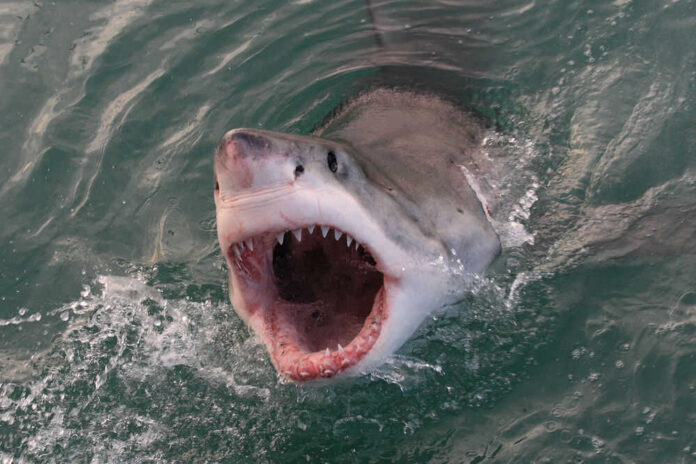
Authorities have not confirmed which shark species was responsible, though local operators report that bull sharks and tiger sharks are regularly seen in the Kennedy Shoal area, especially around baitfish and fishing activity.[1]
Spearfishing adds a layer of risk because wounded fish, blood, and struggling prey create powerful attraction cues for large predators, effectively ringing the dinner bell in water where sharks already patrol.[1] That reality complicates calls for broad shark culls every time a tragedy occurs on a reef frequented by hunters.
From this perspective, which respects both human life and the natural order, the harsher but more honest takeaway is that the ocean operates under its own rules.
The government can deploy drum lines, fund helicopters, and issue warnings, but it cannot repeal apex predators’ behavior. The state has a duty to inform and respond; individuals have a duty to weigh those facts before choosing how and where they recreate. Spearfishing remote reef systems with friends is a voluntary risk, not an entitlement to a predator-free playground.[1][4]
How this tragedy fits the broader shark story
Media coverage of the Kennedy Shoal attack followed a familiar pattern: rapid headlines built from police briefings and witness accounts, wire-service amplification, and an immediate slotting of the death into running tallies of national shark incidents.[1][4]
What is less visible to the average viewer are the unanswered questions that often remain: exact species identification, precise sequence of the encounter, and whether small decisions underwater might have changed the outcome.
Those gaps do not negate the core facts; they just remind us how little control humans have once something goes wrong offshore.
The spearfisher’s death at Kennedy Shoal will enter the record as a statistic: male, 39, killed by a shark while spearfishing on the Great Barrier Reef, second fatal attack on a spearfisher in about a week.[1][4]
For his friends, it will remain a searing memory of how fast a normal day can fracture. For policymakers and coastal communities, the case underscores a harder truth: coexistence with wild oceans means accepting that some pursuits carry sharp edges, and that personal responsibility is the first, not the last, line of defense.
Sources:
[1] Web – Spearfisher mauled in Australia’s second fatal shark attack in a week
[2] YouTube – Spearfisherman killed in Great Barrier Reef shark attack | 7NEWS
[4] Web – Australian spearfisher killed in shark attack off Great Barrier Reef – …