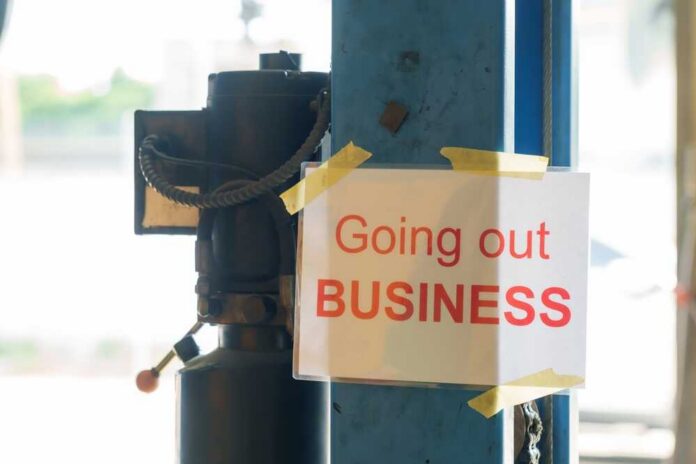
A fast-growing Australian burrito chain just walked away from the entire United States in a single day, and the real story says a lot about how American markets now punish hesitation and wishful thinking.
Story Snapshot
- Guzman y Gomez shut every U.S. restaurant “with immediate effect” after six years in Chicagoland.[1][2]
- Management admits the American business “was not meeting targeted hurdles,” but offers only vague hints at what really went wrong.[1]
- A second Naperville site was under construction, creating an awkward gap between expansion signaling and sudden retreat.
- The chain is refocusing on Australia, leaving Chicago diners and workers to absorb the consequences.[1]
When a Burrito Brand Vanishes Overnight
Guzman y Gomez Mexican Kitchen did not stage a slow fade from America; it flipped the lights off. The company announced that all Guzman y Gomez USA restaurants would “cease trading” on May 22 and that the closure took effect immediately, ending a six-year run in Chicagoland with no farewell tour, no restructuring, just deadbolt and dark windows.[1][2] Eight suburban and city locations, from Naperville to Evanston, went from daily routines to locked doors between one lunch rush and the next.[1]
The official explanation sounds tidy on paper. Company leadership conceded that “the financial performance of the US business has not been acceptable and is not meeting targeted hurdles,” a phrase that is perfectly calibrated for investors and perfectly useless for anyone trying to understand what truly failed. Reports add that management blamed “major decisions that did not come to fruition,” including the choice to stake their American bet on snowy Chicago and on a drive-through heavy model that apparently never hit its stride.[2]
Chipotle rival Guzman y Gomez Mexican Kitchen closes all US restaurants https://t.co/LOVEpX8lU3
— FOX Business (@FoxBusiness) May 24, 2026
Chicago Was The Test, And The Test Was Failed
The company never built a national footprint here. All of its United States restaurants sat in and around Chicago, including Naperville, Schaumburg, Des Plaines, Bucktown, and Evanston.[1] That concentration matters. When every United States store is in one metropolitan area, the market is not just a test; it is the verdict. Management’s own framing makes Chicago performance central: if the Chicagoland model had worked, expansion would have followed. It did not, and that silence says more than any carefully drafted statement.[1][2]
The deeper problem is how little hard information anyone outside the company gets. No store-level profit and loss statements are public. No audited breakdown shows sales per unit, labor burden, or rent pressure.[1] The chain asks observers to accept a generalized “not acceptable” verdict without evidence of scale or trend.
That may satisfy regulators and some shareholders, but it clashes with common-sense expectations. When a business closes every United States site in one swing, people deserve to know whether demand failed, management failed, or both.
The Naperville Construction That Makes No Sense
Local coverage of Naperville exposed the oddest thread: while the company prepared its exit, a second Guzman y Gomez was still under construction at 844 South Route 59 with banners teasing a fall 2026 opening. Crews had worked on a building that will now never serve a single burrito. That timeline raises stubborn questions. If the United States business had been clearly failing for some time, why keep pouring concrete and capital into a new site?
Guzman y Gomez exits US 🌯 Chicago closures 🚪 Major blow to international growth — burrito dreams delayed. 😬
— Emmycruz (@0xemmycruz) May 21, 2026
Two explanations fit the facts, and neither flatters management. Either the deterioration worsened suddenly, contradicting the message that this was a disciplined, data-driven retreat, or the company clung to its growth story long after the numbers told a different tale.
What The Exit Reveals About Modern Chains
This story plugs into a wider pattern in the restaurant world. Chains enter a new market with big talk and glossy artist drawings. They push expansion, chase scale, and then, when unit economics underwhelm, they yank the cord and call it “portfolio optimization.”[1][2] Corporate communications emphasize discipline. Local communities are left with shuttered buildings, broken hiring promises, and workers scrambling for the next paycheck. The Guzman y Gomez exit reads like a textbook chapter in that pattern.
That does not mean the company lied about poor financial performance. Stores can absolutely struggle. Labor costs rise, leases bite, and snow does not help drive-through volumes in January. But when management leans on foggy phrases like “major decisions that did not come to fruition,” the rhetoric feels engineered to avoid naming specific errors.[2] If leadership misjudged the market, they should say so plainly rather than burying the lesson inside corporate euphemism.
Australia Gets The Focus, America Gets The Receipt
The clearest line in all of this points not to Chicago but to Sydney. Reports say the company plans to “refocus efforts in growing in Australia now that it has left the United States,” effectively treating the American venture as a costly detour.[1] Australia, Japan, and Singapore locations remain open and, by implication, healthier. Shareholders there may applaud the pivot. Customers and employees here do not share in the upside; they only hold the receipt for an experiment that ended without warning.
This is the uncomfortable truth about global brands: they can test a theory on your town, then quietly erase it from the map. For older readers who watched local diners fight for survival decade after decade, the contrast is striking. Those owners lived and died by each paycheck and each loyal customer. Multi-country chains can close eight restaurants and simply relabel the move a “strategic reset.” Whether Guzman y Gomez learned the right lesson from its American chapter remains uncertain. Chicago already has.
Sources:
[1] Web – Guzman y Gomez Chain Closing U.S. Locations – elrestaurante.com
[2] Web – Mexican chain Guzman y Gomez suddenly closes all restaurants in …