

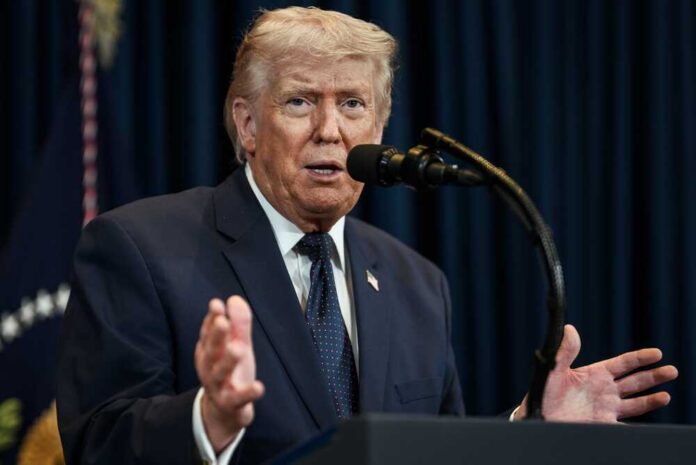
Capital One told a federal court its own anti-money-laundering team, not politics, decided to shut down more than 300 Trump Organization bank accounts in 2021.
Quick Take
- Capital One says an internal anti-money-laundering review, not political pressure, led to the closure of over 300 Trump-linked accounts in 2021.
- The bank pointed to transaction patterns it says matched activity flagged under federal banking guidance.
- Capital One says it never accused the Trump Organization of actual illegal money laundering.
- The Trump Organization and Eric Trump sued in March 2025, calling the closures political “debanking” tied to the January 6 riot at the Capitol.
- A judge tossed the original lawsuit in March 2026 but left the door open for Trump’s company to refile.
Bank Says Compliance, Not Politics, Drove The Closures
Capital One filed its response late on a Friday in the case Donald J. Trump Revocable Trust v. Capital One. The bank said its anti-money-laundering professionals flagged “transaction patterns” that matched the kind of activity federal banking guidance requires banks to review.
That filing marked the first time a bank formally tied money-laundering concerns to the Trump Organization’s accounts, according to reporting on the case.
Capital One did not claim the Trump Organization broke any money-laundering laws. The bank drew a clear line between flagging risky transaction patterns and accusing a customer of a crime. That distinction matters.
Under federal rules, banks must report suspicious activity even when they never prove wrongdoing. A closed account, in other words, is not proof of guilt. It is proof a bank chose caution over risk.
How The Legal Fight Started
The Trump Organization and Eric Trump sued Capital One in Miami in March 2025. Their complaint said the McLean, Virginia-based bank shut down the accounts “unjustifiably” and without warning, just weeks after the January 6, 2021, attack on the Capitol.
The lawsuit accused Capital One of bowing to political and social pressure, framing the closures as ideologically motivated rather than compliance-driven.
Capital One said in a court filing late Friday that it closed accounts belonging to President Donald Trump’s sprawling real estate company in 2021 for legitimate reasons after an internal review by the bank’s anti-money laundering team. https://t.co/OIS1fsSBws
— Bloomberg (@business) August 1, 2026
The suit leaned on the timing of the closures as its central piece of evidence. Filing so soon after a politically charged national event, the Trump companies argued, pointed to motive beyond routine banking risk.
Capital One’s court filing directly challenges that reading, insisting the decision came from career anti-money-laundering staff following federal guidance, not from executives reacting to headlines.
Where The Case Stands Now
A federal judge dismissed the original lawsuit in March 2026, ruling the complaint was too “deficient” to proceed as written. The judge said Trump’s company could refile if it fixed the problems with its claims. That ruling did not settle who is right. It simply sent the case back for another attempt at a properly built legal argument.
Capital One has since flagged the fight in its own quarterly filing to investors, a sign the bank views the litigation as a real financial and reputational risk worth disclosing to shareholders.
Trump has separately sued JPMorgan over similar allegations, claiming that bank also closed accounts tied to him “unilaterally” and without remedy after January 6. Both cases sit inside a larger national debate over so-called debanking.
Why This Fits A Familiar Banking Pattern
Banks rarely explain account closures in detail. Anti-money-laundering reviews and suspicious activity reports are usually confidential, protected by federal supervisory rules banks must follow.
That secrecy often leaves customers guessing at motives, and it lets political or personal explanations fill the gap left by a bank’s silence. Capital One’s decision to speak publicly in court is unusual precisely because banks almost never do.
Americans have long argued that banks use vague compliance language to quietly push out customers over politics, not real financial risk, especially after 2021’s charged climate around January 6.
Capital One’s sworn court statement, denying any laundering accusation while still standing by the closures, deserves real weight. It’s a specific, on-the-record explanation, not a dodge, and skeptics on either side should judge it against the facts already filed, not assumptions about bank motives.
Sources:
feedpress.me, finance.yahoo.com, cnbc.com, apnews.com, seekingalpha.com, bankingjournal.aba.com, facebook.com