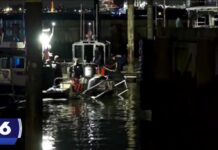
Cartels are still sending cocaine by “narco sub” in the Pacific—and the latest bust shows why border security and real interdiction matter long before drugs reach American streets.
Quick Take
- Mexico’s navy intercepted a semisubmersible vessel carrying about 4 tons of cocaine roughly 250 nautical miles south of Manzanillo, detaining three people.
- El Salvador’s navy made its largest-ever maritime drug seizure, capturing 6.6 tons of cocaine hidden in ballast tanks on a Tanzanian-registered ship and arresting 10 crew members.
- U.S. intelligence support was credited as a key enabler for the Mexico operation, highlighting the value of coordinated, targeted enforcement.
- Reports also spotlight a sharp contrast: large non-lethal seizures by partners versus U.S. lethal strikes at sea, where public evidence of drugs was not disclosed.
Mexico’s “Narco Sub” Intercept Shows Cartels’ Adaptation
Mexican naval forces stopped a semisubmersible “narco sub” carrying roughly 4 tons of cocaine about 250 nautical miles south of Manzanillo, detaining three individuals. Officials described the craft as a sleek, low-riding vessel designed to evade detection, a reminder that cartels invest in engineering, not just street-level smuggling.
Mexico’s government said the operation contributed to a weekly Pacific-coast total of nearly 10 tons seized, underscoring heavy trafficking pressure along that route.
Mexico’s security leadership framed the seizure in practical terms conservatives understand: hit the cartel’s money and you disrupt the pipeline. Security Secretary Omar García Harfuch said the interdiction delivered a direct multimillion-dollar blow and prevented “millions of doses.”
That focus matters because it ties maritime enforcement to domestic harm reduction without rewriting the Constitution or expanding bureaucracy at home. The core question for Americans is whether interdictions can scale fast enough to match cartel innovation.
El Salvador’s Record Bust Highlights a Major Pacific Corridor
El Salvador’s navy reported its largest maritime drug bust after intercepting a 180-foot, Tanzanian-registered vessel about 380 miles southwest of its coast. Authorities said cocaine was concealed inside ballast tanks, with 330 packages discovered and 10 men arrested from Colombia, Nicaragua, Panama, and Ecuador.
After the seizure, El Salvador brought the ship to port at La Unión and displayed bundles of the seized cargo, a public accounting that helps build credibility around the enforcement action.
4 tons of cocaine seized from "narco sub" off Mexico as El Salvador makes record drug bust at sea. https://t.co/fUF3T8G9nf
— 48 Hours (@48hours) February 23, 2026
This Pacific corridor matters because it is a primary path for cocaine moving north from South America toward Mexico and, ultimately, the United States. Narco-submarines emerged in the 1990s as Colombian cartels sought to evade U.S. patrols, and the concept has evolved into today’s semisubmersibles.
Mexico’s Pacific coast, including areas near Manzanillo, remains a high-interest zone for trafficking networks tied to powerful cartels, which treat maritime routes as strategic supply lines rather than occasional opportunities.
U.S. Intelligence Support—And Why Coordination Beats Chaos
Reports credited U.S. intelligence support—via U.S. Northern Command and Joint Interagency Task Force South—as instrumental to the Mexico interdiction. That detail is easy to miss, but it goes to the heart of what works: clear missions, shared targeting, and measurable outcomes.
When allied forces seize tons of narcotics and detain suspects, the public can evaluate results. When governments coordinate, they can pressure traffickers while limiting spillover harms to civilians and legal commerce.
Non-Lethal Seizures vs. Lethal Strikes Raises Accountability Questions
The same reporting contrasted Mexico and El Salvador’s non-lethal interdictions with U.S. lethal “narcoterrorist” strikes at sea. The strikes reportedly began in September 2025 and had killed at least 145 people by February 2026, including 11 killed this week on three boats.
However, the coverage noted no publicly disclosed evidence of drugs tied to those struck vessels. For Americans who demand transparent government power—especially lethal force—documentation and accountability are not optional details.
Mexico’s current posture also reflects the political pressure built into U.S.-Mexico relations over trafficking, including tariff threats tied to fentanyl flows and Mexico’s intensified actions such as extraditing 37 traffickers to the United States last month.
President Claudia Sheinbaum has opposed U.S. strikes while still expanding anti-cartel efforts, suggesting a balancing act between sovereignty and cooperation. The bottom line for U.S. voters is simple: consistent enforcement and verified results protect families better than slogans, ambiguity, or mission creep.
Sources:
4 tons of cocaine seized from ‘narco sub’ off Mexico as El Salvador makes record drug bust at sea
Mexico and El Salvador make big cocaine seizures at sea as U.S. continues lethal strikes