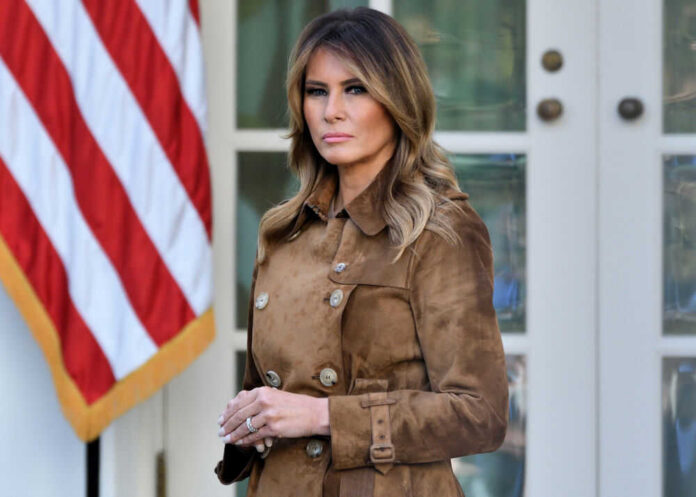
Melania Trump told Americans to get smart about artificial intelligence now, not after it bites.
Story Snapshot
- Melania Trump urged “vigilance” and education about artificial intelligence on The Big Money Show.
- Her Fostering the Future Together coalition promotes safe, smart use of technology for children.
- The initiative leans on public-private partnerships to bring tools and training to schools.
- Global education groups echo the focus on AI literacy and critical thinking, not blind trust.
What She Said On Air And Why It Landed
Melania Trump used plain words that cut through the noise: be vigilant with artificial intelligence, use it wisely, and do not believe everything you see.
She told viewers to learn how platforms work and to press forward with education, not fear. That message is not a tech lecture. It is kitchen-table advice for parents, teachers, and workers who do not want to get fooled or left behind.
From Soundbite To Strategy: The Coalition Backing
The First Lady’s remarks sit inside a broader plan. Fostering the Future Together is a global coalition that links first spouses, education leaders, and technology partners to help children learn, grow, and stay safe online. The program backs classroom tools, digital safety, and teacher training.
It aims to widen access while raising digital skills so families can tell what is real and what is not. The White House describes it as a push for safe, innovative use of advanced technology.
Partnerships are the engine. The effort brings together companies and civic groups to provide content, platforms, and support that schools alone cannot afford.
That model mirrors the wider policy play in the United States, where the White House Task Force on Artificial Intelligence Education uses public-private partnerships to seed curriculum and training across grades. The approach bets that scale and speed come when industry and schools pull in the same direction with clear guardrails.
Melania Trump says Americans shouldn't fear AI, but they shouldn't blindly trust it either.
Speaking on FOX Business after ringing the opening bell at the New York Stock Exchange, the first lady says AI can be a powerful educational tool if people use it wisely and verify the… pic.twitter.com/1DwkOAMlqq
— FOX Business (@FoxBusiness) September 24, 2026
Why Education, Not Access, Is The Point
Access without skill creates risk. The coalition frames empowerment as knowing how artificial intelligence works at a basic level, how to question outputs, and how to protect privacy. That focus matches the shift seen across major education groups. Frameworks now stress critical evaluation first, tool use second.
The goal is not to turn every child into a coder. The goal is to shape citizens who can read an algorithm’s answer with a skeptic’s eye and a learner’s curiosity.
Melania Trump Launches IMPERIA Initiative and Promotes AI Education https://t.co/X3o2QtEiy1 via @YouTube
— Joliet Jack ♞ (@jackhauman) September 24, 2026
Global institutions have reached similar conclusions. Research from development banks and education alliances points to multi-stakeholder work as the fastest way to bring artificial intelligence literacy to classrooms while keeping safety, fairness, and transparency in view.
The lesson is simple: no single actor can build the content, train teachers, and maintain standards alone. Shared roles and clear outcomes move the needle faster than isolated pilots that fade after the photo op.
The Stakes For Families, Schools, And Work
Parents want their kids to get ahead without getting hurt. Teachers want time-saving tools that do not erode trust. Workers want to keep their edge as jobs change. Artificial intelligence literacy serves all three. It helps students spot deepfakes, cite sources, and use chat tools to draft without cheating.
It helps teachers build guardrails and speed routine tasks. It helps adults retrain for roles that need judgment, ethics, and oversight over smart software, not just keystrokes.
Melania Trump’s push lands because it treats artificial intelligence like electricity, not a fad. Learn how it flows. Use it with care. Respect what it can power and what it can burn. Calls for vigilance and education do not choke innovation; they keep it honest.
That balance—optimism with boundaries—aligns with American values: empower the family first, strengthen local schools, and use private partners to scale solutions without handing them the steering wheel.
What To Watch Next
Watch for concrete deliverables: teacher training hours, student modules completed, and safety features turned on by default. Look for clear labels on artificial intelligence content in school platforms.
Expect more states to align standards with national frameworks for artificial intelligence literacy and digital safety. It is how many students can explain why a chatbot might be wrong—and then fix it with facts.
Sources:
foxbusiness.com, whitehouse.gov, documents1.worldbank.org, digitalpromise.org