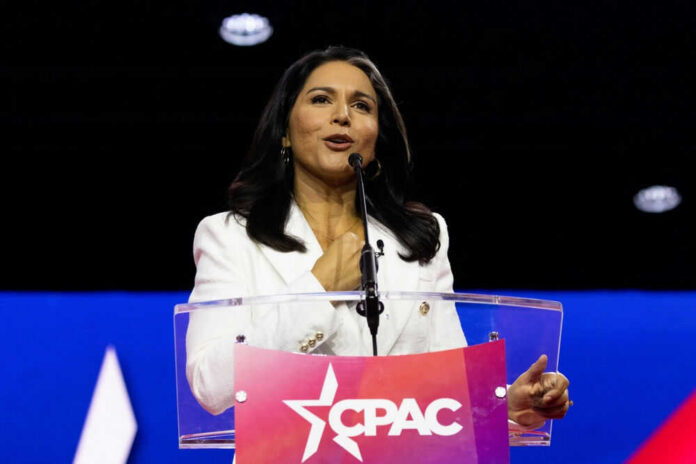
Tulsi Gabbard’s criminal referrals over the whistleblower who sparked Trump’s first impeachment are reopening a fight many Americans thought was settled—this time with declassified intelligence paperwork and the DOJ holding the next move.
Quick Take
- Director of National Intelligence Tulsi Gabbard sent criminal referrals to the Justice Department tied to the 2019 Trump-Ukraine whistleblower complaint and former Intelligence Community Inspector General Michael Atkinson.
- The referrals do not publicly specify which crimes may have been committed, leaving prosecutors wide discretion on whether to open investigations.
- Gabbard also released declassified documents and transcripts of testimony criticizing Atkinson’s handling of the “urgent concern” complaint process.
- The clash highlights a bigger problem for public trust: competing claims of accountability versus retaliation, with limited publicly released evidence of criminal conduct so far.
What Gabbard Referred to DOJ—and What’s Still Unknown
Director of National Intelligence Tulsi Gabbard confirmed that her office sent criminal referrals to the Department of Justice involving the anonymous whistleblower whose 2019 complaint helped trigger President Donald Trump’s first impeachment and former Intelligence Community Inspector General Michael Atkinson.
Reporting on the referrals says they allege possible criminal activity connected to how the complaint was handled, but the public record so far does not identify specific charges.
Gabbard sends criminal referrals to DOJ for whistleblower and watchdog who helped launch Trump's first impeachment https://t.co/E29VodWNyJ
— CBS News (@CBSNews) April 16, 2026
Justice Department prosecutors now decide whether to open an investigation, seek more information, or decline to act. That detail matters because referrals are not charges, and agencies sometimes use them to flag concerns without guaranteeing follow-through.
The limited specificity also leaves room for competing narratives: supporters see overdue scrutiny of a politicized process, while critics argue the lack of a clearly stated crime raises concerns about whether the machinery of government is being used to relitigate past political battles.
How the 2019 Complaint Fueled Impeachment—and Why It’s Back
The underlying dispute traces to President Trump’s July 25, 2019, phone call with Ukrainian President Volodymyr Zelenskyy and an “urgent concern” complaint filed the following month.
The complaint alleged Trump solicited Ukrainian interference tied to the 2020 election and was based on second-hand accounts from U.S. officials rather than direct testimony from the complainant.
In September 2019, Atkinson deemed the complaint credible and forwarded it to Congress, setting in motion the impeachment proceedings.
The House impeached Trump in late 2019, and the Senate acquitted him in early 2020. Trump later fired Atkinson in April 2020, a move that became part of the broader argument over whether watchdog institutions were protecting the public interest or acting as political actors.
In April 2026, the story returned in force after Gabbard declassified documents related to Atkinson’s actions and publicly criticized his handling of the complaint and related briefings tied to 2019 oversight discussions.
What the Declassified Records Claim—and What They Don’t Prove Yet
Gabbard’s disclosures include transcripts of Atkinson’s prior testimony and documents, according to reporting, that argue he failed to conduct due diligence, relied on secondhand information, and exceeded proper jurisdiction in advancing the complaint.
Gabbard also used social media to argue “deep state” actors helped push a false narrative that led to impeachment, framing the episode as a coordinated effort inside government. Those claims resonate with voters who believe entrenched bureaucracies can steer outcomes.
At the same time, multiple reports emphasize an important limitation: the publicly declassified materials have not been shown to contain direct evidence of criminal wrongdoing.
That gap is central for Americans across the political spectrum who say they want equal justice under the law, not just politically satisfying outcomes.
If DOJ moves forward, credibility will depend on transparent, chargeable facts. If DOJ declines, the administration will still have amplified doubts about how intelligence oversight worked in 2019.
The Bigger Stakes: Oversight, Whistleblowers, and Public Trust
The immediate political impact is obvious: reopening the Trump impeachment origin story in a second Trump term, with Republicans controlling Congress, guarantees intense partisan conflict. In the long term, the institutional stakes are more complicated.
Aggressive scrutiny of inspectors general and whistleblowers can strengthen accountability if misconduct occurred, but it can also chill legitimate reporting if government employees believe they will be targeted for politically explosive disclosures. The public evidence released so far leaves that balance unresolved.
The controversy also taps a shared frustration that crosses ideological lines: many Americans believe powerful insiders face different rules than ordinary citizens.
With DOJ review pending and no announced investigative outcome yet, the key test will be whether the government can produce verifiable facts that restore confidence rather than deepen cynicism.
Sources:
ODNI sends criminal referrals to DOJ over ex-IG, whistleblower tied to Trump impeachment
Tulsi Gabbard Launches Twisted Revenge Plot on Trump Whistleblower