
Five lives vanished on I-95 in seconds because a charter bus allegedly failed to slow for a work zone—and the open questions now cut to the core of how America polices its roads, trains its drivers, and designs its work zones [6][7][12][13].
Story Snapshot
- Virginia State Police say a southbound charter bus struck slowing traffic near a work zone, igniting a chain-reaction crash that killed five [6][7].
- Dozens were injured; counts vary from 34 to 44 as hospitals updated tallies after the crash [6][7][8][12].
- Witnesses and federal investigators described the bus plowing into the rear of slowed vehicles [6][13][9].
- The driver faces involuntary manslaughter charges while full causation remains under investigation [12][9].
Chain-Reaction Mechanics And What Police Say Happened
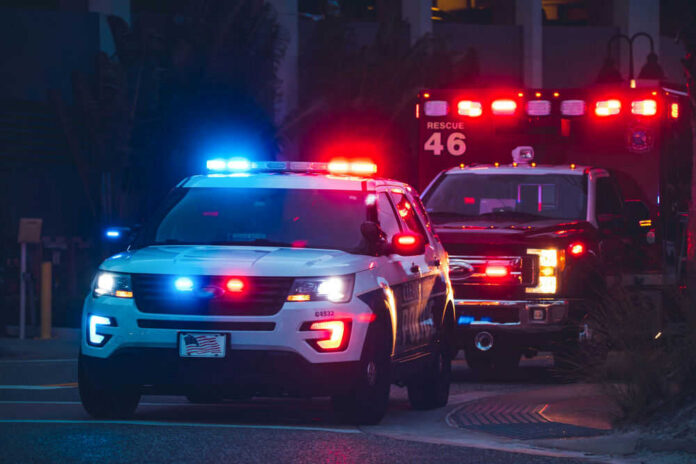
Virginia State Police reported that a charter bus traveling south on Interstate 95 near mile marker 146 in Stafford County struck the rear of slowed traffic approaching a work zone, triggering a multi-vehicle chain reaction that killed five people [6][7]. Outlets described six vehicles involved, with the motorcoach initiating the sequence by hitting the first vehicle, then additional impacts followed [6].
Federal investigators echoed that the bus “plowed into the rear of slowing traffic,” confirming the work-zone context and rear-impact onset [13]. Hospitals reported dozens injured as triage unfolded [6][7][8][12].
Virginia State Police say charges are pending against the bus driver who caused a chain reaction crash on Interstate 95 yesterday that claimed the lives of 5 Massachusetts residents in 2 different cars including a family of 4 from Greenfield and a woman from Worcester #7News pic.twitter.com/YumGD2xpCL
— Steve Cooper (@scooperon7) May 30, 2026
Passenger and bystander accounts aligned with the official framing: traffic had slowed for construction, and the bus failed to match conditions before impact [8][9]. Broadcast footage and survivor descriptions showed debris strewn across the corridor, consistent with a corridor-wide chain reaction rather than an isolated single-vehicle event [6][9].
Timelines in early reports clustered around the overnight hours and varied slightly, a common pattern before agencies finalize crash chronologies [6][7][8]. The National Transportation Safety Board indicated an active probe into speed, fatigue, distraction, and vehicle condition [9][13].
Casualty Counts, Charging Decisions, And The Moving Target Of Early Data
Fatalities held at five across reports, while injury counts ranged from 34 to 44 as hospitals updated admissions and conditions—a typical variation in mass-casualty incidents as patients are reclassified or transferred [6][7][8][12].
Authorities identified the driver and announced involuntary manslaughter charges, reinforcing the allegation that failure to slow was central to the sequence; the larger investigation remains open to other contributing factors [12][9]. Federal investigators’ early language about “plowed into” slowing traffic carries weight, yet it precedes a full reconstruction and electronic data downloads [13].
Charging a driver addresses personal accountability if evidence supports it, but the public should not treat a charge as a completed causation finding. A common-sense approach asks for the electronic control module data, brake inspections, and the work-zone traffic-control plan before final judgment. If speed or inattention dominated, accountability should be firm. If visibility, signage, or mechanical issues contributed, policymakers must fix those systemic hazards alongside individual fault [12][13][9].
What Still Needs To Be Proven With Records, Not Rhetoric
Definitive answers require the state police crash file, including scene measurements, diagrams, and any electronic data recorder downloads to establish approach speed, braking, and timing.
The National Transportation Safety Board’s factual docket can clarify whether fatigue, distraction, or a mechanical defect played a role and whether the work zone met federal and state standards for night visibility and advance warning [13][9]. Without those documents, debates risk becoming narratives chasing headlines rather than facts anchoring policy and justice.
Federal investigators said a motorcoach bus plowed into the rear of slowing traffic near a work zone, which led to a chain-reaction crash on Interstate 95 in Stafford County, Virginia, that killed five people and injured dozens more.https://t.co/nMo3VmcFUY
— ABC 13 News – WSET (@ABC13News) May 31, 2026
Work zones on high-speed corridors demand redundancy: brighter signs, earlier warnings, law-enforced speed cushions, and barrier strategies that buy drivers time when judgment lapses. Charter carriers must enforce rest discipline, route planning around known closures, and telematics alerts that flag dangerous closure rates.
States should publish post-crash files proactively, not grudgingly, so families and citizens see the causal chain, not rumor. Accountability that is fair, visible, and fast discourages both scapegoating and fatalistic shrugs [13][12][6].
Sources:
[6] YouTube – Witnesses talk after NC-based bus kills 5 in Virginia crash
[7] Web – 5 killed, 34 hurt in massive crash between bus, 6 vehicles …
[8] Web – Bus hits cars in Virginia, killing 5 people and injuring 34 …
[9] YouTube – 5 dead, 44 injured after Virginia bus crash on I-95
[12] Web – Bus hits cars in Virginia, killing 5 people and injuring 34 …
[13] Web – Bus driver charged with manslaughter in massive crash …