

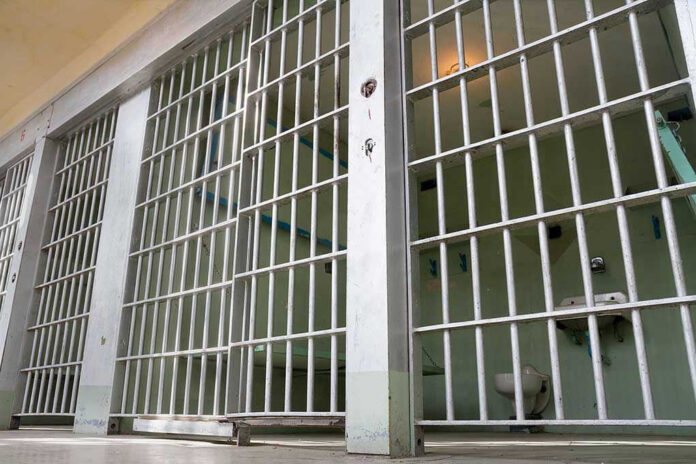
Florida is set to execute a man who admitted he killed his cellmate to land on death row—and said so under oath.
Story Snapshot
- James Robertson confessed to strangling his cellmate with a garrote made from socks.
- He said he killed to get charged with first-degree murder and sentenced to death.
- He pled guilty, waived a jury’s sentencing advice, and did not fight the state’s case.
- A signed death warrant set his execution for October 13, 2026, at noon.
A planned prison murder with a declared goal: death
James Robertson told the court he killed his cellmate, Frank Hart, in December 2008 at Charlotte Correctional Institution. He admitted he waited for guards to pass and for Hart to sleep. He then strangled Hart with a garrote he made by tying socks together. The record shows no fight or provocation. The planning, the method, and the confession pointed to an intentional killing, not a jailhouse brawl gone wrong.
Robertson went further and explained why. He wanted a first-degree murder charge and a death sentence. He put that in an affidavit and repeated it in recorded statements, according to the Florida Supreme Court. His words left little room for guesswork about motive. Prosecutors did not have to argue intent in the abstract. Robertson supplied it in writing and on tape, turning the case into a stark question of law and punishment.
The court path: guilty plea, no jury input, death affirmed
Robertson pled guilty to first-degree murder. He waived a jury’s role in recommending a sentence, which Florida law often uses to guide the judge. He did not object to the state’s evidence or argue for life. The trial judge imposed death. The Florida Supreme Court reviewed the case and affirmed both the conviction and sentence. The court’s opinion rests on Robertson’s own admissions and the described planning and execution of the crime.
After years of appeals in capital cases, this track moved faster. A guilty plea and waiver of a jury recommendation cut typical disputes. Appellate review still occurred, as Florida law requires in death cases. The court concluded the sentence met the legal standards. The docket shows a later step that raised the stakes: a signed death warrant and an order to expedite further proceedings tied to a set date and time.
The death warrant and Florida’s execution surge
The Florida Supreme Court docket reflects a death warrant signed with an execution scheduled for noon on October 13, 2026. That order triggered expedited filings. A warrant does not erase all possible last-minute motions, but it sets a firm timetable that prisons, lawyers, and courts move to meet. This warrant came in a period when Florida has led the nation in executions and set modern records for annual totals.
A 63-year-old Florida prisoner who admitted to strangling his cellmate in 2008 so he could be sent to death row is set to be executed on Tuesday. https://t.co/mM8gGs18OG
— FOX 35 Orlando (@fox35orlando) October 13, 2026
Florida accounted for about 40 percent of all United States executions in 2025, a sharp break from past patterns. Reporting throughout 2026 has described continued momentum, with the state carrying out a large share of the country’s executions. State officials say strong enforcement backs public safety and honors jury verdicts and judicial rulings. The legal machinery in Robertson’s case reflects that posture: a confessed, planned prison murder followed by a death sentence that the high court affirmed.
Autonomy, safeguards, and a hard moral knot
Robertson’s case features a rare twist: a prisoner who said he sought execution. The legal system still requires scrutiny because death is irreversible, and courts must ensure competency and valid waivers before permitting a person to speed that end. The Florida Supreme Court kept counsel engaged to fulfill its duties even as Robertson pressed forward—that choice aimed to protect the process while respecting the record he created with his own admissions.
American conservative values often center on accountability, order, and respect for the rule of law. This case presents those values in their harshest form. A man planned and carried out a killing in custody, confessed, and asked for the maximum penalty. Florida’s statutes, courts, and governor moved the case along as designed. That alignment does not make the facts easy to read. It does make the state’s response clear, consistent, and rooted in its laws and institutions.
What this execution says about Florida now
This execution lands during an assertive phase in Florida capital punishment. Courts affirmed the sentence—a warrant set the date. Prison officials prepared to carry it out. The storyline—kill to get death—draws attention. The legal core remains tighter: a deliberate murder, a guilty plea, and a sentence imposed and reviewed. The state’s job is to apply the law without drama. That is the promise Florida is signaling as the clock runs down.
Sources:
nbcnews.com, library.law.fsu.edu, acis.flcourts.gov