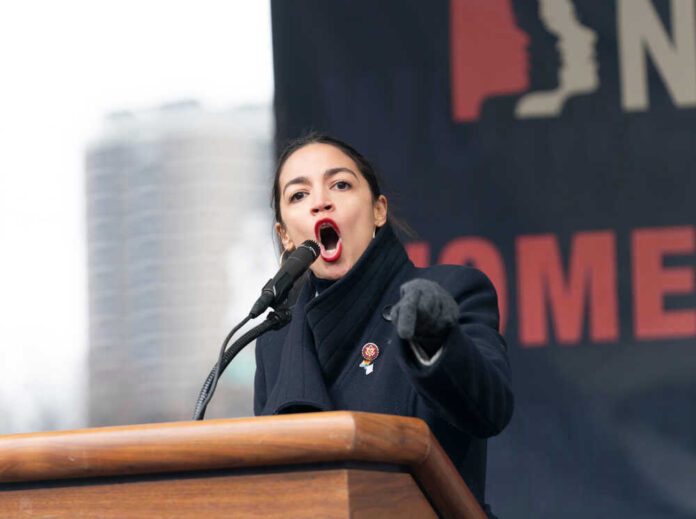
How did Alexandria Ocasio-Cortez manage to become the top fundraiser in the U.S. House with a staggering $15.4 million war chest?
At a Glance
- Alexandria Ocasio-Cortez raised $15.4 million, leading all House members in campaign fundraising.
- Over 342,000 individuals contributed to her campaign, with an average donation of $17.
- Her fundraising success is attributed to grassroots support and small-dollar donations.
- Speculations arise about her potential candidacy for higher office, such as the Senate or the presidency.
A Fundraising Marvel
Alexandria Ocasio-Cortez, the congresswoman who turned heads since her stunning 2018 primary victory, is making news again. This time, it’s the jaw-dropping $15.4 million she’s raised in 2025 that has everyone talking.
She has outperformed every other House member, including House Speaker Mike Johnson, who lags with $8.7 million.
Her fundraising prowess is nothing short of a phenomenon, primarily due to her reliance on small-dollar donations from over 342,000 donors, with an average gift of just $17.
Her campaign, which doesn’t accept funds from lobbyists or corporate PACs, is a testament to the power of grassroots mobilization. A significant 64% of her donors are first-time contributors, underscoring the appeal she holds among a fresh wave of supporters.
This fundraising model, reminiscent of Bernie Sanders, who co-leads the “Fighting Oligarchy” tour with her, reflects a growing trend in progressive politics. It challenges the traditional model of big-money donors and corporate influence.
Implications for Future Campaigns
Ocasio-Cortez’s financial clout has not only solidified her position as a leading voice in the progressive movement but also paved the way for future political ambitions. With the 2026 re-election campaign already well-funded, speculations are rife about her potential run for the Senate or even a presidential bid in 2028.
Her fundraising success and national appeal make her a formidable contender. Political analysts see her as a beacon for the future direction of the Democratic Party, driven by grassroots activism and small-dollar donations.
The impact of her fundraising extends beyond her campaign. It sets a precedent that could inspire other progressive candidates to follow suit, potentially altering the landscape of political campaigning.
This shift toward decentralized, people-powered campaigns could challenge established figures and alter the dynamics within the Democratic Party.
Broader Political and Economic Impact
Economically, Ocasio-Cortez’s fundraising highlights the viability of small-dollar contributions as an alternative to traditional big-donor models. Socially, it empowers grassroots supporters and increases political engagement among younger and more diverse demographics. Politically, it raises the profile of progressive issues and candidates, potentially reshaping party priorities and strategies.
Her campaign’s reliance on digital advertising to reach supporters nationwide, particularly in states like California, underscores the importance of targeted online ads. This approach not only broadens her influence but also signals a shift in campaign strategies that prioritize digital engagement over traditional methods.