

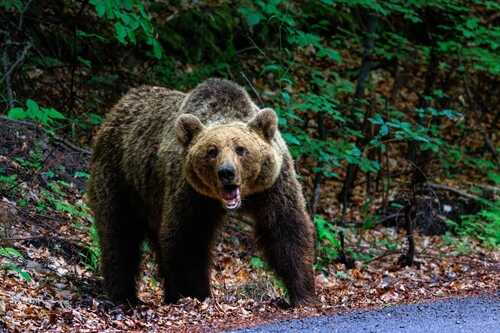
Two soldiers equipped with bear spray still ended up seriously injured when a brown bear exploded from its den during what should have been routine land navigation training in the Alaskan wilderness.
Story Snapshot
- Two 11th Airborne Division soldiers attacked by brown bear at Joint Base Elmendorf-Richardson’s Arctic Valley training area on April 16, 2026
- Soldiers deployed bear spray during defensive encounter with post-hibernation bear, potentially saving their lives according to wildlife officials
- Training base hosts approximately 75 brown bears and 350 black bears, creating persistent wildlife hazards for military personnel
- Army investigation underway with Alaska Department of Fish and Game coordination to assess incident and prevent future attacks
When Training Grounds Become Hunting Grounds
Joint Base Elmendorf-Richardson sits in the heart of Alaska’s bear country, where Arctic-focused military training collides with one of North America’s densest predator populations. The 11th Airborne Division conducts land navigation exercises in Arctic Valley, a mountainous training site that doubles as prime habitat for brown bears emerging hungry and irritable from winter dens.
Thursday’s attack occurred during standard navigation drills in terrain where 425 bears roam freely, a calculated risk the military accepts to prepare soldiers for Arctic warfare conditions. The spring timing proved catastrophic, coinciding precisely with the period when brown bears abandon their dens in aggressive, food-seeking states.
Brown bear attacks soldiers training in Alaska https://t.co/SwcPxiinhv pic.twitter.com/zzwB7ITjbM
— New York Post (@nypost) April 18, 2026
The Critical Seconds That Decided Survival
The soldiers carried bear spray as protocol dictated, and that preparation likely prevented fatalities. Alaska Department of Fish and Game Regional Supervisor Cyndi Wardlow assessed the encounter as a defensive attack, meaning the bear felt threatened rather than viewing the soldiers as prey.
Wardlow emphasized that bear spray may have saved their lives, a stark acknowledgment that even proper equipment cannot guarantee safety against 800-pound brown bears startled at close range. The soldiers’ injuries required serious medical intervention, though the Army withheld specific details pending family notifications and investigation completion.
The Math of Coexisting with 425 Bears
Joint Base Elmendorf-Richardson operates under a wildlife reality that few military installations face. The base supports 350 black bears and 75 brown bears across its training areas, creating a population density that guarantees human-wildlife interactions.
Alaska hosts approximately 30,000 brown bears statewide, with the species involved in 20 to 30 defensive conflicts with humans annually. The Arctic Valley training site offers ideal terrain for navigation skill development but sits squarely within established bear corridors.
Military planners balance combat readiness against wildlife hazards, a compromise that occasionally results in exactly what happened Thursday.
What Wildlife Officials Know About Post-Den Aggression
Brown bears exit hibernation in a metabolic crisis, having burned through fat reserves and facing immediate pressure to replenish calories. Spring encounters with freshly emerged bears represent peak danger periods, as the animals exhibit heightened aggression and reduced tolerance for perceived threats.
Wildlife professionals recognize defensive attacks as distinct from predatory behavior, the former triggered by surprise or territorial instinct rather than hunting motivation. The bear in this incident followed a textbook defensive pattern, emerging from its den to find humans in close proximity and reacting with violence to eliminate the perceived danger.
Accountability and Protocol Under Investigation
Lt. Col. Jo Nederhoed confirmed the Army’s investigation remains active, with coordination between military authorities and Alaska wildlife officials to reconstruct the encounter. The Army emphasized personnel safety as its highest priority, though the incident raises questions about training area assessments during high-risk seasonal windows.
No reports indicate plans to relocate or destroy the bear, consistent with wildlife management practices that recognize defensive attacks as natural behavior rather than aberrant aggression.
The investigation will likely examine whether additional deterrents, modified training schedules, or enhanced wildlife monitoring could reduce future risk without compromising Arctic readiness training.
The Long-Term Calculus of Arctic Preparedness
This attack may prompt the Department of Defense to review wildlife safety protocols across Alaska-based units, particularly given the 11th Airborne Division’s expanded Arctic mission focus. Short-term responses could include temporary training suspensions in Arctic Valley or mandatory buddy systems in bear-dense areas during spring months.
Long-term implications extend to funding requests for wildlife deterrent technologies, enhanced surveillance systems, or alternative training locations with reduced predator populations.
The military faces an uncomfortable truth that training soldiers for Arctic conditions means accepting wildlife risks that cannot be eliminated, only managed through preparation, equipment, and occasionally, luck that runs out.
Sources:
U.S. Army soldiers injured in bear attack during field training in Alaska – Fox Weather
2 Alaska-based soldiers injured in encounter with brown bear – ABC News
2 US Army soldiers in Alaska injured in bear attack during training exercise – Fox News
2 US soldiers injured in brown bear attack during training exercise in Alaska – SCMP