

A significant military redeployment underscores the Trump administration’s commitment to countering Iranian aggression.
Story Highlights
- The Pentagon orders the USS Abraham Lincoln to the Middle East amid rising tensions with Iran.
- This marks a strategic shift, as no US carriers currently operate in the region.
- The move comes amid widespread anti-government protests in Iran.
- Officials are considering a range of military options beyond traditional airstrikes.
US Military Realignment in Response to Iranian Tensions
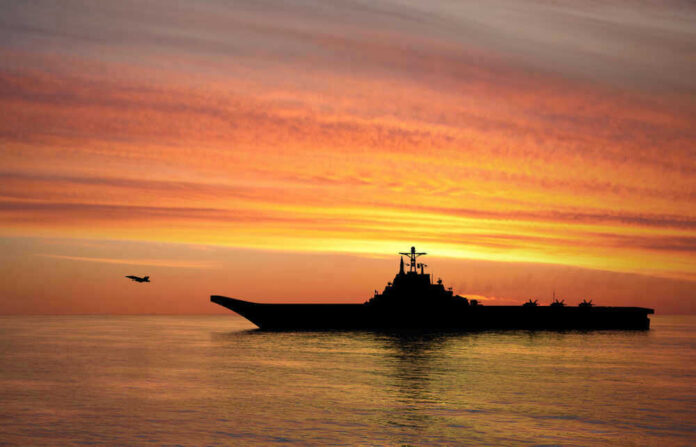
The Pentagon has issued orders for the USS Abraham Lincoln carrier strike group to redeploy from the South China Sea to the Middle East. This significant military realignment responds to escalating tensions with Iran, where widespread anti-government protests have intensified. The carrier group, comprising a Nimitz-class aircraft carrier, Arleigh Burke-class guided-missile destroyers, and at least one attack submarine, represents a powerful projection of US military strength in a volatile region.
The redeployment decision underscores the Trump administration’s strategic shift in military posture. With no US aircraft carriers currently operating under CENTCOM, the USS Abraham Lincoln becomes the nearest available asset to the Middle East. The move comes as the Trump administration weighs various military and covert options against Tehran, extending beyond conventional airstrikes to include cyber and psychological operations.
Escalating Protests and Strategic Calculations
The decision to redeploy the carrier strike group comes amid escalating anti-government protests in Iran. These protests, fueled by economic hardship and governance issues, have seen significant public unrest, with over 18,470 arrests and 2,615 deaths reported. As the Iranian government grapples with internal instability, the arrival of US military assets sends a clear signal of potential military intervention.
For regional governments, the presence of a US carrier strike group heightens concerns about potential military escalation. Countries like Saudi Arabia and Iraq are wary of destabilization that could arise from any military intervention. The US Embassy in Saudi Arabia has already advised personnel to exercise increased caution and limit non-essential travel to military installations.
Pentagon moving carrier strike group toward Middle East amid tensions with Iran https://t.co/V0ixvMGlgP
— The Hill (@thehill) January 15, 2026
Implications for Regional Stability and US Military Strategy
The redeployment of the USS Abraham Lincoln is expected to take 7-13 days to complete, reinforcing US military presence and providing conventional strike capabilities absent from the region. This move aligns with the Trump administration’s broader military strategy to assert dominance and leverage military pressure on adversaries. As officials prepare a range of military options, the deployment reflects a proactive stance in addressing Iranian provocations.
While the precise objectives of the redeployment remain undisclosed, the move highlights the administration’s readiness to act decisively in defense of American interests and allies. The potential for military action raises questions about the long-term implications for regional geopolitics and global energy markets, as any escalation could disrupt trade and security arrangements.
Sources:
US Aircraft Carrier Steams from South China Sea to Middle East Amid Iran Tensions
US Redeploying South China Sea Carrier to Middle East Amid Tensions with Iran
US Sending Military Assets to Middle East as Trump Weighs Iran Strike, Sources Say