
Amazon’s Ring just turned security cameras into movers, sending a drone through halls and a robot down aisles.
Story Snapshot
- Ring launched a robotics division with two products: Drone Cam and Rover Cam.
- The Drone Cam flies inside homes on set patrol routes with a dock that signals privacy.
- The Rover Cam targets businesses, patrols on its own, and streams up to 4K video.
- Pricing and ship dates are set: $999.99 Rover on Dec. 16, $249.99 Drone on Jan. 27.
Ring makes cameras move with a new robotics division.
Ring announced Ring Robotics with two devices: the Ring Drone Cam for homes and the Ring Rover Cam for businesses. The company said this marks a new era of security built on mobility and autonomy. The Drone Cam is a flying indoor camera that moves room to room on planned patrols. The Rover Cam is a wheeled robot built to patrol stores, offices, and warehouses. Both were officially launched on November 10, 2026, with product pages and specs live.
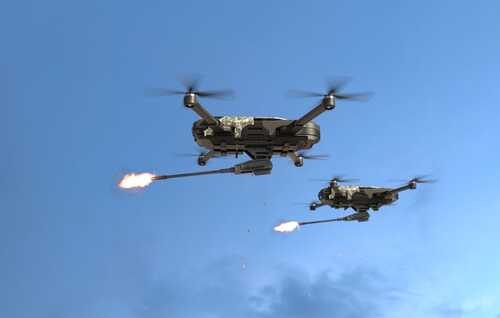
The Drone Cam is designed for indoor flight. It maps your home, flies on set routes, and checks custom viewpoints. It lives in a dock when not in use, with the dock signaling that the camera is not recording. Ring positions this as a security partner that can respond to alerts and show you video from where the action is. The company stresses that it is not a toy helicopter but a home camera that can move where you need eyes.
Rover Cam aims at business patrols, not the living room.
The Ring Rover Cam is built for business spaces. It drives on its own, investigates disturbances, and streams video up to 4K resolution. Amazon set its United States ship date for December 16, 2026, at $999.99. The Drone Cam for homes is set at $249.99 with a January 27, 2027 date cited in independent coverage. These products launch together but target different buyers and needs. Treating them as the same category misses how Ring split the market.
Ring and several outlets describe a shared navigation brain called AI Pilot. Reports say AI Pilot maps indoor spaces, suggests points to check, and guides the robot around furniture, shelving, and other obstacles. This is not a remote-control model; it is sold as self-directed patrol that can link to alerts from other Ring devices. This unified system claim matters because navigation and smart routing drive whether these mobile cameras earn trust in daily use.
What shipping dates and prices signal about strategy
Amazon rarely locks price and date this early unless it wants clear pre-orders and a strong channel story. The Rover Cam’s $999.99 business price plants it below many enterprise robots but above consumer gadgets. The Drone Cam’s $249.99 price puts it within reach of common camera buyers who want more coverage without adding a dozen fixed units. That ladder echoes a conservative value: spend once on a tool that does more work, not on many tools that sit idle.
Ring Rover Cam, a $999.99 autonomous AI security robot for offices and warehouses, ships Dec 16 in the US. Ring's $249.99 indoor Drone Cam follows on Jan 27, both under the new Ring Robotics brand.
– Amazonhttps://t.co/VxmCFXGmKA
— TaprConnect (@TaprConnect) November 11, 2026
Coverage from Reuters, CNBC, WIRED, and GeekWire backed the same core facts on launch day. Independent reports confirmed the division name, the two products, the market split, and the use of AI Pilot. This broad match across outlets supports the basics: one product flies inside homes, one rolls through businesses, both aim to expand what a security camera can reach without a person steering them in real time.
The promise and the plain limits at launch
The launch sets a clear promise: more coverage through movement, less effort through automation, and tighter links with the rest of the Ring system. It also sets clear limits: the record shows an announcement, firm prices, and future ship dates, not a field record of reliability or adoption. That gap is normal in tech launches, but buyers should sort needs by risk. Use mobile patrol to fill blind spots, and keep fixed coverage for always-on views you must have.
Commercial history that shapes expectations
CNBC linked Rover Cam to Amazon’s earlier Astro effort and noted that Astro’s business version saw a short life and few upgrades. That past does not decide the fate of Ring Robotics, but it sets a bar for proof. For businesses, value comes from fewer false alarms, safe navigation near people, and clear video that helps close the loop with police or insurers. Results, not demos, will show whether this new push meets that standard over the long term.
How to think about adoption with common-sense guardrails
Homeowners should weigh the Drone Cam where pets, hallways, and open floor plans create blind spots that fixed cameras miss. Small businesses should look at the Rover Cam for after-hours patrols in wide spaces where a single viewpoint fails. Keep control of data access, set patrol routes that respect private areas, and test integration with doorbells, motion sensors, and alarms. Demand clear support terms and security updates that match the product’s role as a guard, not a gadget.
Sources:
washingtontimes.com, ring.com, aboutamazon.com, androidauthority.com, rmb.reuters.com, wired.com