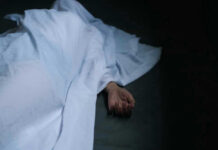

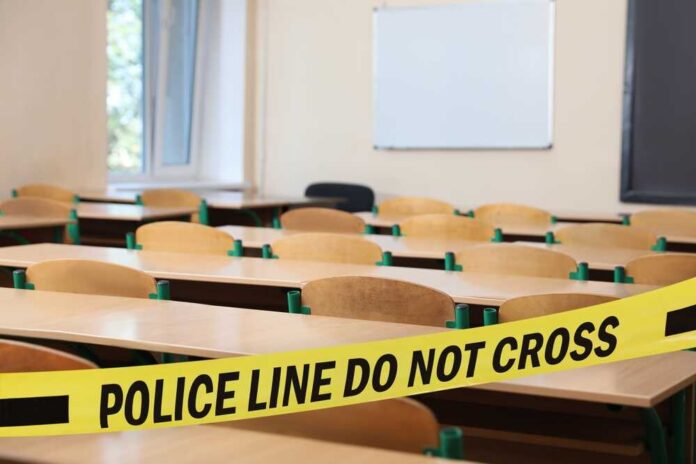
A school day in Peshawar ended with a collapsed roof, at least 27 dead, and families searching the rubble for children.
Story Snapshot
- Rescuers pulled children from a private school after a roof collapse in Peshawar.
- At least 27 children and a teacher were confirmed dead, with many more injured.
- Some victims were 13 or younger, and several injured remained in critical care.
- Police detained the school owner as officials probed structural weakness.
What Happened Inside That Classroom
Authorities in Peshawar said a private school roof gave way during class, sending concrete and steel onto students and staff. Hospital officials reported at least 27 children and one teacher dead, and more than three dozen injured, with some in critical condition. Emergency crews worked through dust and twisted metal to find survivors. A rescue spokesman said several children were trapped as teams dug through debris, calling for silence to hear faint cries.
Doctors at Lady Reading Hospital described a rush of small bodies, many in school uniforms, many not breathing. A hospital spokesman said the children killed or injured were 13 or younger. Parents crowded corridors and entry gates, shouting names and holding photographs. Nurses placed color tags on patients to sort the most urgent cases. Surgeons moved from bed to bed with gauze and portable lights. The hospital blood bank posted urgent calls for donors as new ambulances arrived.
The First Official Moves And What They Suggest
Peshawar’s police chief said officers detained the school’s owner. He also said the building was structurally weak, using language that points to a preventable failure rather than a freak event. Provincial officials said the school operated in a three-story building and announced a formal inquiry into the cause. That sequence matters. Rapid detention signals suspected negligence. A government committee signals a paper trail to come, and with it, a test of will: will rules mean anything when children die?
Reporters at the scene heard several early claims about why the roof fell, from heavy rain to poor materials. Published accounts agreed on one key point: investigators had not yet issued a final cause. That is normal in a mass-casualty collapse. It is also where accountability can drift. Facts harden fast in public memory. Evidence hardens slowly in labs and courtrooms. The balance here should favor records, engineering analysis, and a clear chain of responsibility.
Why This Fits A Deadly Pattern
Pakistan sees building failures far too often, and children pay the highest price. Weak enforcement of construction rules and the use of poor materials create hidden traps over classrooms, markets, and homes. The National Disaster Management Authority has warned for years about unsafe schools, pointing to disasters that destroyed thousands of classrooms in quakes and floods. Its school safety plan calls for code-compliant construction and strict local oversight, with zero tolerance for violations. Those words now read like a checklist of what failed these families.
The frame is simple and sobering. When rules are clear but ignored, private cost-cutting becomes a public death toll. Conservative common sense says this: hold the line on safety codes, or expect more tiny coffins. Parents do not need new slogans. They need inspectors who show up, permits that mean something, and prosecutors who pursue builders and owners when warnings go unheeded. Anything less trades tomorrow’s tuition bills for funeral costs.
What To Watch Next
Families deserve a verified list of the dead and injured, reconciled with hospital and civil records. The investigation should release photos, structural assessments, and test results that explain the sequence of failures. Officials should state whether the school had valid permits, prior warnings, or occupancy violations. These answers will tell the public if this was a rotten beam, an overloaded floor, or a chain of ignored red flags. Each path points to a different fix and a different level of blame.
UPDATE: School roof collapse kills 32 children and a teacher in Peshawar, Pakistan
— Insider Paper (@TheInsiderPaper) October 15, 2026
One caution applies. Early death and injury counts can change as rescuers work and hospitals update records. This does not dilute the central fact: dozens of families sent children to class and got a call that no parent should ever get. Leadership is no longer measured by sympathy at a podium. It is whether the next class, in the next town, sits under a roof that will still be there at the bell.
Sources:
dw.com, abcnews.com, ndma.gov.pk, mytwintiers.com