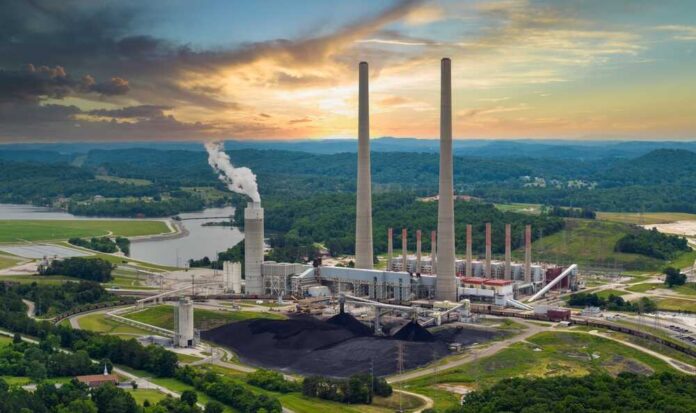
EPA wiped away federal carbon limits on coal and gas plants, then moved to block a future redo.
Story Snapshot
- EPA repealed Biden-era limits on power-plant greenhouse gases.
- The agency earlier proposed scrapping all power-sector carbon rules under Clean Air Act Section 111.
- EPA projects large compliance-cost savings; critics warn of health harms.
- Courts will decide how far EPA’s authority reaches after West Virginia v. EPA.
What EPA Did And Why It Matters
The Environmental Protection Agency repealed federal limits on carbon dioxide from coal- and natural gas-fired power plants and signaled a broader end to climate-focused rules for the sector.
The announcement came as part of a larger regulatory reset and was paired with a plan to prevent future administrations from reviving similar mandates.
The move affects the nation’s single largest stationary source of carbon emissions and reshapes the cost, risk, and planning math for grid operators and utilities.
EPA’s action follows its June 2025 proposal to repeal all greenhouse gas standards for fossil-fuel plants under Section 111 of the Clean Air Act.
The Federal Register notice stated the agency was proposing to repeal “all greenhouse gas emissions standards for fossil fuel-fired power plants,” making its legal stance plain and broad. That proposal put industry on notice and opened a path toward today’s final repeal posture, while inviting an inevitable court battle.
BREAKING: The EPA is eliminating a rule that limits planet-warming pollution from coal and gas-fired power plants. https://t.co/AnmxHtpDjC
— The Associated Press (@AP) September 14, 2026
The Legal Frame After West Virginia v. EPA
The Supreme Court’s West Virginia v. EPA decision narrowed the agency’s room to force “generation shifting,” or driving utilities to swap coal for cleaner sources through standards. That ruling elevated the Major Questions Doctrine and trimmed back ambitious sector-wide schemes.
EPA now argues its authority does not extend to the repealed rules’ approach. Courts will test that claim. Judges will weigh the text of Section 111 against what counts as the “best system of emission reduction” applied at the source, not across the grid.
Regulatory fights under Section 111 repeat for a reason. Congress wrote broad language, power markets evolve fast, and the Supreme Court has pulled the reins on big regulatory swings.
Expect states, utilities, and environmental groups to press competing readings of the law. If EPA sticks to inside-the-fence tools, it gains legal footing but gives up some reach.
The Dollars And The Disputes
EPA touted large savings from halting the climate rules, citing avoided capital upgrades and operating burdens on plants.
An agency release tied repeal steps to more than three hundred billion dollars in projected savings across related power-sector rules, framing the change as relief for ratepayers and reliability.
That figure will draw scrutiny in court and from independent analysts. But it reflects a core point: heavy compliance costs flow through to electric bills and capacity decisions.
Public health and environmental groups call the repeal dangerous and costly in a different way. They argue more power-plant pollution will mean higher hospital bills, more missed work, and shorter lives.
Reuters reported claims that removing the rules will trigger billions in public health and environmental damages, with advocates tying the change to heat, storms, and wildfire risks.
Those are serious warnings. Yet they rest on modeling choices that judges often probe, and they must meet statutory limits that courts enforce.
What Changes On The Ground Now
Utilities get near-term clarity. Companies can delay expensive retrofits sized for strict carbon limits. Coal plants facing forced retirements under prior rules get time to run if power prices, fuel supply, and state policies support them.
Grid managers get more tools to cover peak demand as electric load grows with data centers and reshoring. That is the case for the repeal: keep energy reliable and affordable while Congress, not agencies, sets any new climate mandates.
EPA moved to repeal federal carbon limits on coal and gas-fired power plants, and proposed scrapping all remaining greenhouse gas rules for the sector, saying the Clean Air Act gives it no such authority. Power is ~25% of US climate pollution. pic.twitter.com/pZEJqNniuW
— Newdle: Understand news together (@newdlenews) September 15, 2026
Lawsuits will shape the endgame. Petitioners will argue EPA misread Section 111, undervalued health harms, and ignored feasible controls at the plant. The agency will lean on the Supreme Court’s limits, its own record, and economic analysis.
The cleanest resolution would be from Congress with explicit standards. Until then, policy will swing with administrations, and courts will guard the guardrails. That is not flashy. It is how energy law actually moves.
Sources:
epa.gov, govinfo.gov, axios.com, reuters.com, theguardian.com