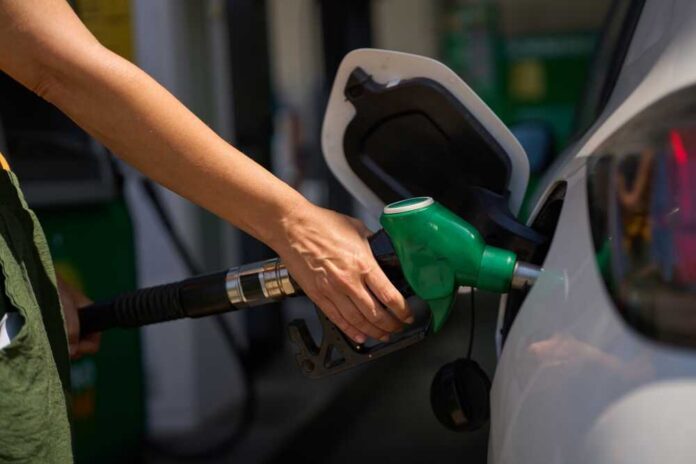
Iran just made heavy fuel users pay more, while guarding cheap gas for everyday drivers.
Story Snapshot
- Tehran raised gasoline prices for use above monthly quotas.
- The first 60 liters stay at the cheapest rate; the next 100 liters remain discounted.
- Anything beyond that now costs about 50,000 rials per liter, roughly 4 cents.
- Officials say the change targets overuse and smuggling, not basic needs.
What Iran Changed And When It Hit
Iran rolled out a third gasoline price tier that kicks in after motorists pass their monthly quota. The structure keeps the first 60 liters per month at the lowest subsidized price. The next 100 liters stay at a mid-range subsidized price.
After 160 liters, the new higher rate applies at about 50,000 rials per liter. State media and government spokespeople described the move as limited and aimed at heavy users, with the change starting over a weekend to smooth the rollout.
The new top-tier price also applies if drivers fuel without a smart card or after they finish their subsidized allotment. Domestic outlets aligned the figure near 50,000 rials per liter, about 4 cents at the market exchange rate.
That price represents a clear jump from the subsidized tiers most private cars rely on each month. Officials framed the step as a technical fix within the existing system, not a wholesale reform.
Iran still has some of the world’s lowest gasoline prices, but the price increase adds to daily pressures for many of the country’s more than 90 million people.https://t.co/cXwg6EKJZB
— FOX5 Las Vegas (@FOX5Vegas) September 8, 2026
Why Tehran Says It Acted Now
The government points to three pressure points: budget strain from large fuel subsidies, record gasoline use at home, and cross-border smuggling made profitable by low domestic prices. The tier aims to protect ordinary use while sending a price signal to high-volume buyers.
That logic tracks with past comments from Iran’s leadership that current fuel subsidies lack economic sense and need rebalancing to fit today’s costs and supply limits.
This measured approach tries to avoid the shocks that have sparked unrest in the past. The 2019 hike was abrupt and broad. The new step is narrow and predictable: keep cheap fuel for basic needs and charge more at the margin.
Research on Iran’s past fuel reforms shows small, steady steps tend to lower waste and costs without slamming lower-income families, since richer households usually consume more fuel by volume and benefit most from blanket subsidies.
What This Means For Drivers And The Economy
Most private motorists who stay within 160 liters a month will still pay the old subsidized rates. Families who drive far for work, own multiple cars, or make frequent long trips will feel the new cost first. That is the point: reduce excess demand while keeping daily life steady.
If the policy holds, the government’s subsidy bill could ease, fuel queues could shorten, and smuggling payouts could shrink as the domestic top-up price rises toward regional levels.
Iran doubled gasoline prices for heavy users from Tuesday, as wartime shortages and U.S. sanctions strain the economy. Motorists using more than 110 litres a month now pay 100,000 rials (about 4–7 U.S. cents) per litre — twice the previous top-tier rate. The first 60 litres…
— The Geo-Political Arena (@GPoliticalArena) September 8, 2026
Policy research backs a tiered path. International groups have long argued that Iran can gain by raising energy prices in steps, then tightening the net where overuse is highest. That path reins in waste and preserves help for basic needs.
The Political Risk Tehran Knows Well
Gasoline is not just another line item in Iran. It is symbolic and sensitive. Past hikes drew anger, street protests, and a costly clampdown. Officials are signaling that the current change is targeted and limited to avoid repeating that history.
The plan keeps the cheap baseline intact and shifts the squeeze to the margin. That allows leaders to claim fiscal prudence without lighting the fuse of broad public pain that past blanket hikes caused.
The test comes over the next few months. If prices at the margin cut binge buying and smuggling, supply at stations should improve, and the budget should breathe. If inflation bleeds through or enforcement falters, pressure will rise to backtrack.
On the facts so far, the strategy follows a simple yardstick many Americans would recognize: help the average driver, charge more to the biggest users, and stop paying people to game the system.
Sources:
nbcnews.com, reuters.com, presstv.ir, jeedev.nri.ac.ir, jokog.ir, imf.org, ora.ox.ac.uk