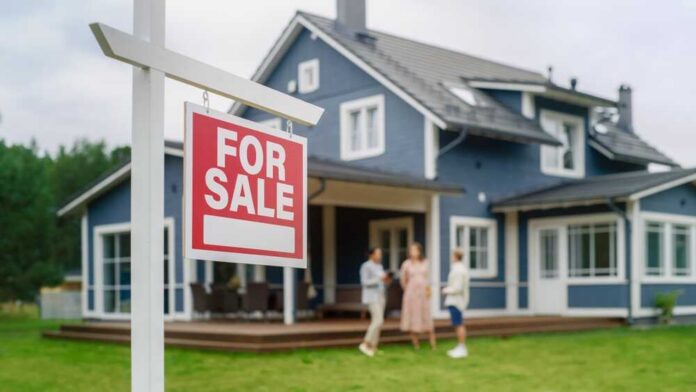
America’s housing market has quietly split in two, and where you land now depends less on taste and more on whether you are rich or just trying to buy your first place.
Story Snapshot
- Luxury home demand is rising while starter-home sales fall, even with more cheap homes on the market.
- Affluent buyers, boosted by stocks and cash, bid up properties near $2 million.
- First-time buyers see more listings and bigger discounts but still struggle with high prices and rates.
- The gap between the top 5% of homes and everything else is now baked into the system.
Luxury buyers surge while starter-home shoppers hit a wall
Zillow’s latest data shows the market moving in two different directions at the same time. Starter-home inventory is up about 4.5% year over year, yet sales in that tier fell 5.4% in May.
Luxury home listings, defined as roughly the top 5% by value, dropped by 5.2%, but sales in that group rose 6.2%. That is the split in a single snapshot: more cheap homes sit unsold while fewer expensive homes move faster.
Home prices rose in 80% of metro markets during the second quarter of 2026; this is up from 71% in the first quarter. The national median single-family existing-home price rose 1.5% YoY to $434,900, up from 0.5% annual growth in the first quarter.https://t.co/Pe1O0L8RIH pic.twitter.com/15KWth1zKg
— NAR Research (@NAR_Research) August 4, 2026
The prices tell the same story. The typical starter home across the country is now worth about $202,000, up 2.3% from last year. The typical luxury home is near $1.9 million, up 3.1% over the same period.
Cuts are more common at the bottom: about one in four starter listings saw a price reduction in June, versus about one in five luxury homes. So first-time buyers finally see softer prices and more room to negotiate, yet many still cannot afford to close the deal.
Why wealth shields luxury buyers from the affordability crunch
Higher mortgage rates and stubborn inflation slam buyers who need financing for modest homes. Luxury buyers are different. Many pay large down payments or even pay in cash, so interest costs do not rule their choices. Gains in the stock market and existing housing wealth give them more buying power.
As a result, luxury values have started rising faster than typical homes and have done so for several months in a row. The top 5% of homes are now on a separate track.
Redfin’s work shows this split clearly. Luxury sale prices rose about 4.7% year over year to roughly $1.37 million, more than three times the growth rate of non-luxury homes.
Pending sales of luxury homes climbed over 5%, while pending sales for the rest of the market grew more slowly. Realtors in high-end markets describe bidding wars over prime properties even as average buyers pull back.
Starter-home buyers win leverage but still lose the game
On paper, starter-home buyers should be cheering. They face more inventory, more price cuts, and fewer bidding wars than during the pandemic boom.
A separate report finds there are tens of thousands more starter homes available now than four years ago, and average prices in that tier have edged down about 4.2%.
But the typical starter home still carries an almost $90,000 premium over what used to count as affordable, and there are roughly 300,000 fewer truly affordable homes than in 2019.
The U.S. housing market is trending in two different directions as a new report from Zillow finds that while demand for luxury homes is surging, starter home sales are softening with growing inventory.
Zillow's data defines starter homes as those in the 5th to 35th percentile of…
— News News News (@NewsNew97351204) August 3, 2026
Economists point to basic factors that line up with everyday experience. Builders chase higher profits in luxury projects instead of cheaper starter homes. Local rules and fees make it costly to add dense, lower-price housing.
Younger buyers carry student loans and weaker savings, so a 7% mortgage rate hits them harder. From this angle, this is the result when policy punishes building and rewards speculation: the market delivers granite islands and roof decks before starter ranches.
Regional hot spots show how deep the divide runs
City data puts faces on the numbers. Memphis saw luxury sales soar more than 40% year over year, while starter-home sales barely moved. Nashville, Cincinnati, Austin, and Birmingham all posted luxury sales growth above 25% in the latest period.
In pricey San Francisco, luxury sales jumped more than 20%, even as starter-home sales slipped and sellers at the low end cut prices at more than double the rate of luxury owners. The wealthy are not waiting; they are buying.
Some markets do buck the trend. Starter-home sales have started to climb in places like Louisville, New Orleans, San Jose, and Miami, with gains running from about 8% to nearly 20% year over year.
Those bright spots hint at what happens when local costs ease, or incomes rise enough to meet prices. But even there, starter homes are not truly cheap by old standards.
Thresholds for what counts as a starter home in the Northeast now sit above $440,000, almost 50% higher than in 2019. The “starter” label no longer means what it did for your parents.
What this split means for policy, wealth, and the next generation
This two-track market locks in inequality over time. Families who can buy into the luxury tier gain more from rising prices and enjoy better schools, safer neighborhoods, and stronger social networks. Everyone else rents longer or stretches to buy homes that eat up their paychecks.
Policy debates will keep circling the same themes: zoning that limits new building, taxes and fees that raise costs, and easy money that pushed prices out of reach. Yet the data from Zillow, Redfin, and others point to a simple truth.
The United States now runs one housing market for the well-off and another for everyone else. Luxury buyers are driving the bus. Starter-home shoppers are stuck waiting at the stop, even as more buses roll by with “price reduced” flashing on the front.
Sources:
foxbusiness.com, investors.zillowgroup.com, zillow.com, wealthprofessional.ca, billingslistings.com