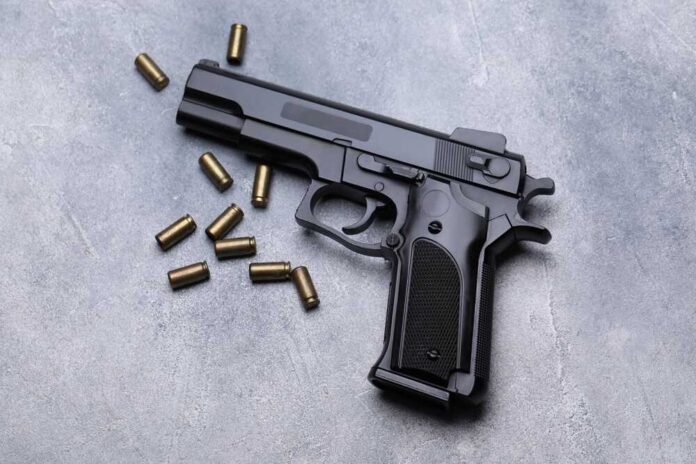
A 38-year-old man with ammo in his pocket and a loaded pistol in his truck was caught quietly studying the security plan at President Trump’s Southern California golf club two days before the president arrived.
Story Snapshot
- Federal agents spotted a man filming and watching security setup at Trump National Golf Club near Los Angeles.
- Deputies found a 16-round magazine with hollow-point ammo on him and a loaded handgun in his pickup.
- Detectives later uncovered more guns and “concerning” notebooks at his home, leading to federal charges.
- The case shows how modern security now acts on warning signs long before a shot is ever fired.
How an ordinary Sunday at a seaside golf club turned into a security scramble
Sunday at Trump National Golf Club in Rancho Palos Verdes was supposed to be routine: agents walking the course, local deputies checking access points, staff prepping for a Republican National Committee fundraiser with President Trump set for Tuesday.
Federal agents on the ground noticed something that did not fit that calm picture. A man moved along the edges of the property, phone out, filming and snapping photos, not of the ocean views, but of the people guarding the place.
BREAKING: A man has been charged after authorities in the US found a gun concealed in his car and ammunition in his pocket at a golf course owned by Donald Trump near Los Angeles.
https://t.co/nCQljwgkhc📺 Sky 501 and YouTube pic.twitter.com/fxuiYBfALQ
— Sky News (@SkyNews) August 5, 2026
Agents watched as he focused on security posts, vehicle routes, and camera positions, then relayed the concern to the Los Angeles County Sheriff’s Department. Deputies approached, asked questions, and ran a quick check.
The man, later identified in news reports as Jeanine John Taele, 38, from Downey, California, did not bolt or brandish a weapon, but his behavior matched the kind of pre-attack surveillance security teams are trained to spot. That alone in today’s climate is enough to trigger a full stop.
What deputies say they found on his person, in his truck, and back at home
According to the sheriff’s statement, deputies patted the man down and found a 16-round magazine loaded with hollow-point ammunition in his pocket. Hollow-points are legal in many places, but they are designed to expand inside the body and cause greater damage, which is why they get attention when paired with odd behavior.
A search of his nearby pickup turned up a handgun loaded with another magazine, giving him quick access to a full set of ready-to-fire rounds.
Detectives did not stop at the parking lot. Working with federal partners, they obtained a search warrant for his home in Downey. Inside, they reported finding several more firearms and what they called “multiple notebooks containing concerning writings,” according to federal court filings.
Prosecutors charged him in a federal complaint with a firearm-related crime tied to possessing the loaded gun at the golf club while also holding ammunition on his person. He later pleaded not guilty in court to four counts, including a state charge of carrying a concealed loaded firearm, as media reports summarized.
Why security teams pounced before they knew his intent
Secret Service guidance and modern “protective intelligence” models say you do not wait for a target to announce a threat. Teams look for behaviors that often show up before an attack: repeated visits, detailed filming, close study of where guards stand and how they move, plus any access to weapons.
In this case, authorities had a man who appeared to shadow security planning at a site where the sitting president was about to appear, along with a loaded handgun and armor-piercing style ammunition.
For many, this was a job done right: stop trouble before it starts, especially when it involves the president. Critics sometimes worry this kind of early move could sweep up the wrong person.
That risk is real, and later court hearings exist to test the evidence. But after recent plots and shootings near Trump properties, many Americans would rather see officers err on the side of action than stand down and explain later.
The larger pattern: Trump venues, warning signs, and the new normal
This arrest did not happen in a vacuum. Since Trump first ran for office in 2016, his homes, clubs, and venues have drawn a long list of security scares: an armed man killed while breaching the secure area at Mar-a-Lago, a suspect charged with attempted assassination after appearing with a rifle near Trump’s Florida golf course, and other arrests involving weapons and odd behavior near his properties.
Each one reinforces a simple lesson for security planners: assume your site is on someone’s target list.
NEW: Federal authorities arresting an armed California man at Trump National Golf Club in southern California just two days before the president's visit.
Jeanine John Taele pleading not guilty after allegedly monitoring security pic.twitter.com/CbCqneDVSz
— Saltpy Goat (@trump_supp) August 5, 2026
Federal threat assessment reports show that most attackers do not “snap” without warning. They leak intent, rehearse, and often test defenses. That is why agencies train to notice small, strange details, like a lone man filming guard rotations at a time when the president’s schedule is public.
When local deputies and federal agents in Rancho Palos Verdes moved in on the suspect, they acted inside that model. Voters may argue about politics, but on this point, the logic is hard to ignore: it is easier to free a man who turns out not to be a threat than to bring back a president after one more preventable attack succeeds.
Sources:
apnews.com, youtube.com, latimes.com, abcnews.com, wral.com, facebook.com, bbc.com, palmbeachpost.com, aljazeera.com, npr.org, nbcnews.com, uscp.gov, secretservice.gov