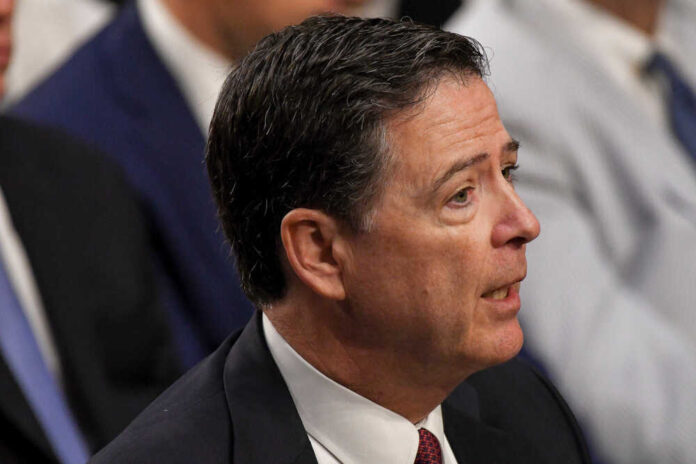
James Comey’s move to toss his indictment, claiming Trump drove the charges, has ignited fresh outrage over the weaponization of justice and the ongoing battle for constitutional accountability.
Story Highlights
- James Comey seeks to dismiss federal indictment, arguing charges are politically motivated by President Trump.
- The case raises major concerns about prosecutorial independence and the potential for political retribution in law enforcement.
- DOJ denies any political bias, while both parties in Congress remain fiercely divided over the case.
- Outcome could reshape public trust in the justice system and set a precedent for holding top officials accountable.
Comey’s Indictment Sparks New Debate on Political Weaponization
Former FBI Director James Comey, now facing a high-profile federal indictment, has filed a motion to dismiss the charges, arguing they are the result of direct political influence from President Trump.
Comey’s legal team contends that the prosecution is a retaliatory act tied to his leadership of the 2016 Russia investigation and his subsequent fallout with Trump.
This unprecedented legal battle has reignited fierce debate over whether the justice system is being used as a tool for political vendettas, a long-standing concern among conservatives who have watched past administrations target political opponents.
The Department of Justice, now operating under renewed scrutiny, insists that the charges against Comey are based solely on evidence and due process, not politics. However, Comey’s public statements denouncing the indictment as “political retribution” have only intensified partisan divides.
The House Judiciary Committee has scheduled hearings to examine the independence of the DOJ, and the case has become a flashpoint in the broader fight for constitutional checks and balances—an issue central to conservative concerns about government overreach and the erosion of individual liberty.
Background: Years of Political and Legal Tension Come to a Head
Comey’s tenure as FBI Director, from 2013 to 2017, was marked by controversial investigations into Hillary Clinton’s emails and Russian interference in the 2016 election. His highly publicized firing by Trump in May 2017 set the stage for years of legal and political scrutiny.
After leaving the FBI, Comey became a vocal Trump critic, publishing books and making frequent media appearances. The new indictment, filed in 2025, accuses Comey of mishandling classified information and obstruction—charges that, if proven, would represent a serious breach of public trust.
The timing and context of these charges have fueled claims of political motivation, especially among those wary of the deep state’s unchecked power.
Legal experts, including those from the Harvard Law Review, have warned that using the criminal justice system as a weapon for political score-settling threatens the foundational principle of prosecutorial independence.
Congressional Democrats argue the prosecution is a “witch hunt,” while many Republicans view it as long-overdue accountability for a former official who, they allege, abused his authority.
This division reflects the broader struggle over whether powerful figures can escape consequences for alleged misconduct or whether prosecutions are being used to silence political foes.
Implications for the Justice System and the Rule of Law
The outcome of Comey’s motion to dismiss carries weighty implications for the future of law enforcement and the integrity of American institutions. If the court finds evidence of political motivation, it could set a precedent that bolsters safeguards against executive overreach and reaffirms the independence of the DOJ.
Conversely, if the charges are upheld, it may encourage further scrutiny of top officials and reinforce the principle that no one is above the law.
Either way, the case is likely to deepen public cynicism and polarization, with conservatives and Trump supporters demanding transparency and real accountability after years of what they see as politically protected misconduct at the highest levels of federal power.
The law enforcement community is watching closely, with concerns that politicized prosecutions could create a chilling effect. Officials worry about the long-term erosion of trust and morale, as well as the potential for dangerous precedents in how legal authority is wielded.
For families and ordinary Americans, the struggle over the Comey case is emblematic of broader frustrations with government overreach, selective accountability, and the need to restore faith in time-honored constitutional values.
Expert Perspectives and the Battle for Public Trust
Scholarly and policy voices, including those at the Brookings Institution and the American Bar Association, emphasize the critical importance of an independent judiciary and call for impartial review of the case.
While fact-checking organizations find no direct evidence that Trump personally ordered the prosecution, the circumstantial political context is impossible to ignore. Media coverage from major outlets remains divided, with each side seizing on facts that support their narrative.
The real risk, experts warn, is that continued politicization of justice will further erode public confidence and threaten the constitutional framework that has long protected Americans from the abuses of unchecked power.
Comey seeks to have indictment tossed, arguing charges were driven by Trump's "personal animus" https://t.co/jb7jlg8mJl
— CBS News Texas (@CBSNewsTexas) October 21, 2025
As the federal district court prepares to rule on Comey’s motion, the nation waits. For Trump supporters and constitutional conservatives, this case is about restoring integrity and accountability to a system long viewed as corrupt and politicized.
The coming months will test not just the fate of one former FBI director, but the resilience of the rule of law itself.
Sources:
New York Times, “Comey Seeks Dismissal of Indictment, Citing Political Motivation,” October 2025.
Washington Post, “DOJ Denies Political Influence in Comey Case,” October 2025.
Reuters, “Timeline: The Comey Indictment,” October 2025.
Harvard Law Review, “Prosecutorial Independence and Political Retaliation,” 2024.
Brookings Institution, “The Dangers of Politicizing Justice,” 2025.
Associated Press, “Comey’s Legal Battle: What’s at Stake,” October 2025.