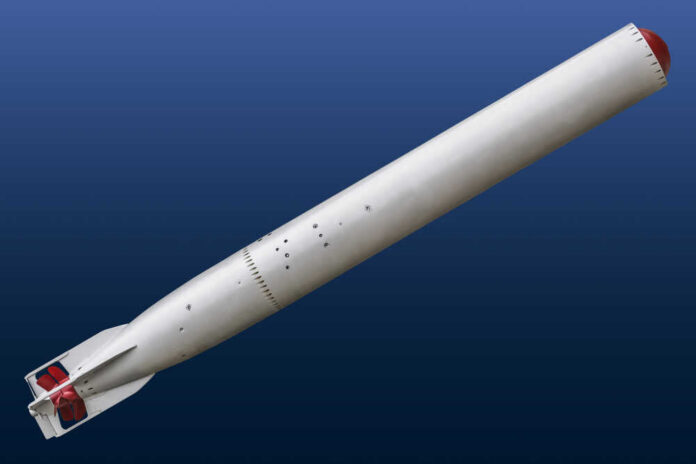
A U.S. submarine’s torpedo strike that quietly erased Iran’s newest frigate in the Indian Ocean signals just how far the war has expanded beyond the Middle East.
Quick Take
- Pentagon officials say a U.S. Navy submarine sank Iran’s frigate Iris Dena late March 3 in international waters off Sri Lanka.
- Sri Lankan authorities reported at least 80 dead and 32 rescued after a distress call near Galle; rescue efforts were still underway.
- Defense Secretary Pete Hegseth called the sinking a “quiet death” and tied it to President Trump’s wider “Operation Epic Fury” campaign against Iran.
- Joint Chiefs Chairman Dan Caine clarified the milestone as the first U.S. submarine torpedo sinking of an enemy ship since 1945, after Hegseth’s broader WWII-era claim drew fact-check scrutiny.
Torpedo strike off Sri Lanka shows the conflict’s widening geography
Pentagon briefings this week described a U.S. submarine torpedoing and sinking the Iranian frigate Iris Dena late Tuesday night, in international waters roughly 44 nautical miles off Galle, Sri Lanka.
Sri Lanka’s coast guard received a distress call at 5:08 a.m. local time reporting an explosion, then dispatched naval vessels within an hour. Sri Lankan officials later confirmed at least 80 deaths and 32 crew rescued as operations continued.
The location matters. The strike took place far from the Persian Gulf choke points most Americans associate with Iran-related maritime risk, underscoring how “Operation Epic Fury” has turned into a broader contest over sea lanes and reach.
Iran’s ship was described as its newest frigate, equipped with advanced weapons, which helps explain why U.S. officials framed the action as both tactical and symbolic in a campaign designed to limit Tehran’s ability to project power.
Hegseth’s “quiet death” message, and what was actually “first”
Defense Secretary Pete Hegseth publicly characterized the sinking as a “quiet death,” presenting the torpedo attack as a decisive demonstration of U.S. capability under President Trump’s command.
Hegseth also suggested it was the first sinking of an enemy ship by torpedo since World War II, language that spread quickly because it implies a once-in-a-century threshold. That sweeping claim did not hold up cleanly once history and definitions were applied.
Reporting around the briefing emphasized that Joint Chiefs Chairman Dan Caine narrowed the statement to a U.S.-specific milestone: the first time since 1945 that a U.S. submarine sank an enemy ship with a torpedo.
Outside that narrower frame, modern precedents exist, including the 1982 sinking of Argentina’s ARA General Belgrano by a U.K. submarine and Pakistan’s 1971 sinking of India’s INS Khukri. The clarified wording matters for credibility in wartime messaging.
Rescue, casualties, and unanswered claims from Iran’s side
Sri Lanka’s role has been largely humanitarian and procedural: receiving a distress call, launching rescue efforts, and communicating casualty figures as best as possible during an unfolding maritime emergency. At least 32 crew members were pulled from the water, and officials reported 80 or more confirmed dead.
Iran’s embassy in Colombo reportedly alleged the vessel was deliberately targeted and claimed its defenses had been disabled before the strike, but independent verification of that claim was not established in the available reporting.
How the sinking fits into “Operation Epic Fury” and U.S. war aims
U.S. officials linked the torpedo strike to “Operation Epic Fury,” described in reporting as a fast-moving U.S.-Israel campaign that began February 28 and expanded through early March.
The stated focus has been on degrading Iranian missile systems, air defenses, leadership nodes, and naval assets while intercepting large volumes of Iranian projectiles.
The Pentagon also pointed to broader objectives: controlling airspace and restoring security for shipping lanes as Iran’s actions disrupted the Strait of Hormuz.
For Americans frustrated by years of unclear red lines and half-measures, the administration’s messaging emphasizes deterrence through demonstrated capability rather than diplomatic ambiguity.
At the same time, the facts available publicly still leave gaps: the U.S. presented footage of the strike, but independent confirmation of wider claims—such as the overall target count, the full scale of naval losses, and the status of Iranian command leadership—remains limited to what has been released through official channels and major outlets covering the briefings.
What to watch next: escalation risks and the economic pressure point
Even with U.S. military superiority, the immediate risk is spillover: strikes and counterstrikes that push conflict into new regions or inspire proxy responses.
Reporting tied the broader crisis to disruptions in the Strait of Hormuz, a pressure point that can move energy markets quickly when shipping is halted or threatened.
The Indian Ocean sinking also raises the operational tempo for navies and coast guards in surrounding states, including Sri Lanka, forced to respond to emergencies regardless of politics.
As the administration continues briefings, the credibility of claims will matter almost as much as capability. Hegseth’s “first since WWII” line shows how quickly overbroad statements can become vulnerabilities, especially when adversaries and skeptical media outlets hunt for errors.
The clearer takeaway is still significant: a U.S. submarine torpedoed and sank an Iranian warship in open waters, and Washington is signaling it intends to sustain the campaign “for as long as we need to.”
Sources:
United States Sinks Iranian Warship, Pentagon Briefing