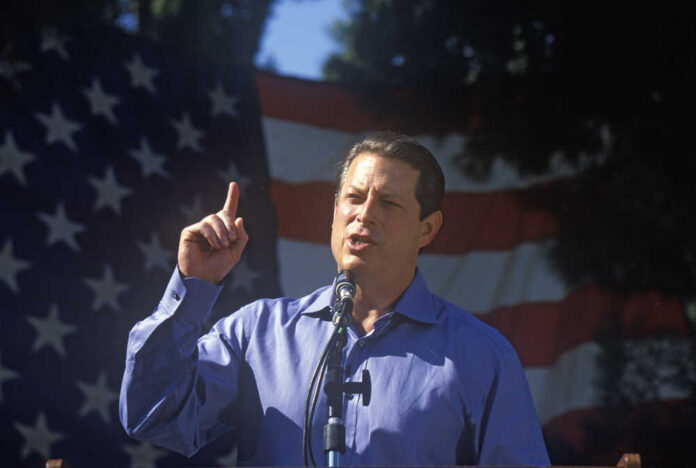
Al Gore says 2026 could be the moment the world tips toward a cleaner Earth, even as danger grows.
Story Snapshot
- Al Gore told the Associated Press that victory over climate change is within reach.
- He warned the threat remains grave, but said “the answer is in our hands”.
- He framed 2026 as a possible “positive tipping point” for clean energy.
- His long record argues we have the tools if we act fast, including pricing carbon.
Gore’s case: grave risk, real tools, near-term tipping point
Al Gore used New York Climate Week to deliver twin messages: the crisis is severe, and progress is now within reach. He told the Associated Press that the world could look back on 2026 as the start of a positive tipping point, if leaders keep pushing.
He added that victory is possible but not guaranteed. He pointed to fast growth in clean power as evidence that markets have moved beyond slogans and are scaling deployment.
Gore’s optimism fit his long public record. In his Nobel Lecture, he said humanity can solve the crisis and avoid the worst outcomes if action is bold and fast.
He argued leaders should put a price on carbon pollution and set firm limits to drive investment. That policy playbook has since guided many city, state, and national plans, even as debates continue over pace and cost.
Former VP Al Gore: A clean Earth is within world’s grasp even as climate dangers accelerate: https://t.co/qj3jZvyX8y
— The Virginian-Pilot (@virginianpilot) September 26, 2026
Why 2026: a year when lines may cross
Energy trackers report that clean energy crossed historic lines in 2025 and 2026. Global reviews show renewable electricity overtook coal, and clean sources met all growth in power demand.
Analysts also reported renewables became the largest source of new global energy supply in 2025. These shifts support Gore’s talk of a turning point because they signal momentum that policy and markets can accelerate.
Major institutions project more gains ahead. The International Energy Agency said renewable electricity could grow about 60 percent from 2024 to 2030.
It forecast renewables surpassing coal as the top source of global power around the end of 2025 or mid-2026, depending on hydropower. Such milestones give Gore’s timeline a factual edge, even if the job is far from done.
What “within reach” means in practice
“Within reach” is not magic; it is math and muscle. Gore’s view relies on proven tools: build more wind and solar, modernize grids, boost storage, cut methane leaks, and stop wasting energy.
He also backs clear rules and market signals that reward lower emissions, like carbon pricing and standards that phase in cleaner choices over time. Those measures track with values of innovation, accountability, and results, not mandates for their own sake.
Critics often ask where the payoff is. The answer shows up on monthly bills and factory floors when cleaner power lowers fuel risk and keeps jobs at home.
Domestic energy from wind, sun, and nuclear helps shield families from global shocks. It also builds supply chains in American communities. Spend less on fuel you must import, and more on things you can build and fix here.
The guardrails: danger is real, speed still matters
Gore did not sugarcoat the risk. He called the danger grave and said the win can still slip away. Scientific groups warn that global warming must peak below two degrees Celsius and then move toward one and a half degrees to limit tipping points.
That path demands faster cuts this decade and steady declines after. Milestones help, but the atmosphere only hears totals. Progress must outrun rising energy demand.
Former VP Al Gore: A clean Earth is within world's grasp even as climate dangers accelerate https://t.co/q69vVdZ3iP
— #CaliBernication (@brooklynnygirl) September 28, 2026
That is the core test for 2026 and beyond: make clean gains larger than demand growth, then drive total emissions down each year. The recent data suggest this is possible if leaders remove grid bottlenecks, speed permits for clean projects, and fix market rules that reward reliability and low emissions together. Gore’s bottom line holds up to common sense: the tools exist, the clock is loud, and the next moves decide the story.
Sources:
apnews.com, nobelprize.org, pik-potsdam.de, ember-energy.org, iea.org