
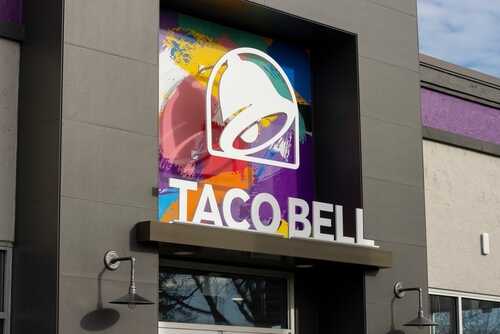
Taco Bell is facing a parasite scare that has the public health world doing what it does best: tracing lettuce back through a maze of farms, trucks, and restaurant prep tables.
Quick Take
- Federal and state health officials are investigating whether Taco Bell played a role in a multistate cyclosporiasis outbreak, but they have not confirmed the chain as the source.
- Michigan officials say early interviews point toward lettuce or other salad greens, which fits how Cyclospora often spreads through contaminated fresh produce.
- Taco Bell says officials have not confirmed a link to the chain, and the company says it removed some ingredients as a precaution.
- The case shows a familiar food safety problem: public health teams can spot a likely source before they can prove the exact contaminated item.
What Officials Say So Far
Federal and state health officials are investigating whether Taco Bell restaurants were part of the outbreak, according to multiple reports based on people familiar with the probe.
The Michigan Department of Health and Human Services says cyclosporiasis cases in the state have surged, and state officials have pointed to lettuce and salad greens as a leading suspect. But officials have also said they have not identified a single grower, supplier, or specific product as the source.
That last point matters. The public may hear “Taco Bell” and think the case is solved. It is not. Health investigators often move first on patterns, not final proof. They look at where sick people ate, what foods they shared, and whether those foods match past outbreaks.
In this case, the pattern has pushed investigators toward leafy greens, but the investigation has not publicly crossed the line into a confirmed chain-specific blame.
Why Lettuce Keeps Coming Up
Cyclospora is a parasite that usually spreads through food or water contaminated with fecal material, and fresh produce is a common vehicle. That is why lettuce keeps showing up in the reporting.
Michigan health officials said “early information has shown lettuce” as a common item in interviews with sick people, and reporters also noted temporary removal of ingredients such as lettuce, cilantro, pico de gallo, and guacamole at some locations while tracing continues.
A new report says health officials are investigating Taco Bell as a potential part of the cyclosporiasis outbreak that’s sickened thousands of people across the U.S., with many suffering from extreme diarrhea. https://t.co/MztWRMIGVa pic.twitter.com/cbwpE12Ctf
— KTLA (@KTLA) July 14, 2026
This is not an unusual food safety path. The Centers for Disease Control and Prevention has repeatedly linked cyclosporiasis outbreaks to produce, including leafy greens and cilantro in earlier investigations.
In past restaurant outbreaks, investigators have also found that the contaminated ingredient often arrived already tainted, before it reached the restaurant kitchen. That possibility is exactly why a chain can sit under scrutiny even before officials confirm the exact source.
Why the Story Feels Bigger Than One Restaurant
The reaction has been fast because the outbreak is large. CDC surveillance reported 1,645 laboratory-confirmed United States cases as of July 13, and Michigan separately reported 3,309 cases since June 22. When numbers move that quickly, officials must act before every test result is in. That creates a tension the public rarely sees: protect people now, prove the source later.
Cyclospora is having the worst year in American history. 7,000 cases….34 states. 0 answers
CDC counts 1,645 cases. Michigan alone counts 3,309 cases
Taco Bell pulled lettuce but nothing's confirmed….cases currently include people who never ate there.
Restaurants eat the…
— Mike Kudrna (@MichaelKudrna) July 15, 2026
That tension also explains why the story keeps producing two very different reactions. One camp hears “investigation” and assumes guilt. The other hears “not confirmed” and assumes the whole thing is overblown. Both reactions miss the middle ground.
The strongest evidence so far says public health investigators have a real common-source outbreak on their hands, with lettuce or salad greens high on the list. The weaker point is the jump from “possible source” to “proven source.”
Taco Bell’s Position and the Common-Sense Reading
Taco Bell says public health officials have not confirmed a link to the chain, any specific ingredient, supplier, restaurant, or retailer. The company also says it removed limited ingredients at select locations as a precaution.
That is a sensible corporate response when fresh produce is under suspicion. It protects customers while investigators sort out facts. It is also not the same thing as an admission.
A common-sense reading should hold both ideas at once. Investigators have enough evidence to examine Taco Bell and lettuce closely. They do not yet have the public proof needed to say the chain caused the outbreak. That gap is normal in foodborne illness cases, especially when the suspected ingredient is produce that may have been contaminated long before anyone noticed.
What Happens Next
The next useful evidence will come from traceback records, supplier lists, and lab work on the suspect produce. If those records point to a shared source, the picture will sharpen fast. If they do not, investigators may have to widen the search beyond Taco Bell and beyond lettuce alone. For now, the case remains a strong public health investigation, not a finished verdict.
Sources:
townhall.com, washingtonpost.com, reuters.com, freep.com, forbes.com, businessinsider.com, cdc.gov