
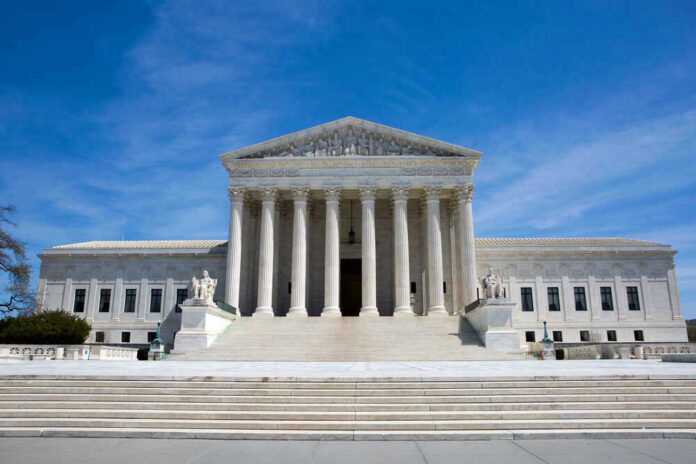
The Supreme Court appears ready to strike down President Trump’s executive order limiting birthright citizenship, threatening to preserve a loophole that rewards illegal immigration and birth tourism with automatic American citizenship for their children.
Story Snapshot
- Supreme Court justices expressed skepticism during April 1 oral arguments about Trump’s order restricting birthright citizenship for children of illegal immigrants and temporary visitors
- The executive order seeks to end “anchor baby” incentives by requiring parental lawful domicile for citizenship under the 14th Amendment’s “subject to the jurisdiction thereof” clause
- ACLU and leftist advocacy groups argue the order is unconstitutional, while the administration contends it restores the original 1868 understanding of citizenship requirements
- The case could impact millions of children born to undocumented parents and reshape immigration policy for generations
Trump Administration Defends Constitutional Sovereignty
Solicitor General D. John Sauer argued before the Supreme Court that unrestricted birthright citizenship “demeans” the “priceless gift” of American citizenship. The administration’s position centers on interpreting “subject to the jurisdiction thereof” in the 14th Amendment’s Citizenship Clause as requiring parental domicile or lawful permanent presence.
President Trump personally attended the historic arguments, underscoring the political significance of a case that directly challenges decades of immigration policy that conservatives believe has been weaponized to incentivize illegal border crossings and fraudulent birth tourism schemes.
Historical Precedents Create Complex Legal Battlefield
The administration points to often-overlooked Supreme Court precedent from Elk v. Wilkins in 1884, which denied birthright citizenship to Native Americans not subject to full U.S. jurisdiction, demonstrating constitutional limits on automatic citizenship.
However, opponents cite United States v. Wong Kim Ark from 1898, which granted citizenship to a child born to Chinese legal residents. The critical distinction lies in whether Wong Kim Ark’s requirement of parental “domicile” applies only to lawful permanent residents or extends to anyone physically present, including illegal aliens and temporary visitors exploiting birth tourism.
ACLU and Leftist Groups Mount Constitutional Challenge
Cecillia Wang of the ACLU led opposition arguments, claiming the executive order is “unlawful” and “un-American,” insisting all U.S.-born individuals automatically qualify for citizenship regardless of parental legal status.
The challenge coalition includes the ACLU, Legal Defense Fund, Asian Law Caucus, and Democracy Defenders Fund, organizations that have consistently opposed border security measures and immigration enforcement.
These groups argue the order would create a “permanent underclass” and disproportionately harm “families of color,” framing immigration enforcement as racial discrimination rather than legitimate sovereignty protection that Americans overwhelmingly support.
Breaking News: Key Supreme Court justices appeared skeptical of President Trump’s efforts to limit birthright citizenship during oral arguments. Follow updates here. https://t.co/G7lfh29XmN
— The New York Times (@nytimes) April 1, 2026
Media Reports Suggest Court Skepticism of Trump Order
CBS News and other mainstream outlets reported justices appeared to “cast doubt” on the administration’s position during oral arguments, though no formal ruling has been issued. Justice Brett Kavanaugh reportedly questioned the scope of executive authority to reinterpret the citizenship clause.
Legal analysts note the debate hinges on competing interpretations of 19th-century constitutional text versus modern precedent.
Mike Davis, former Senate Judiciary chief counsel, urged the Court to restore “sanity” by following originalist interpretation and allowing Congress to address citizenship policy legislatively, reflecting conservative frustration with judicial activism that has thwarted popular immigration reforms for decades.
The ruling will determine whether American sovereignty includes the fundamental right to define citizenship requirements or whether the nation must continue tolerating birth tourism and anchor baby schemes that undermine immigration law.
A lower New Hampshire federal court already ruled the order unconstitutional, setting up a Supreme Court showdown with far-reaching implications for border security, welfare costs, and whether the Constitution permits common-sense distinctions between citizens, legal residents, and those who enter or remain unlawfully.
The decision could either validate the administration’s effort to end exploitation of birthright citizenship or preserve a status quo that conservatives believe rewards illegal immigration with one of America’s most valuable benefits.
Sources:
Mike Davis: Sanity Must Be Restored to Birthright Citizenship – Fox News
Advisory Opinions Broadcast: President Donald Trump and Birthright Citizenship – SCOTUSblog
Supreme Court Arguments on Trump Birthright Citizenship – CBS News
The Key Arguments in the Birthright Citizenship Case – SCOTUSblog
Supreme Court Arguments in Trump Birthright Citizenship Challenge – ACLU New Hampshire
Supreme Court Arguments Barbara v. Trump Birthright Citizenship – Asian Law Caucus