
A federal judge just stopped the Pentagon from using vague “rules” to decide which reporters get to cover America’s war decisions—an alarm bell for anyone who still believes the Constitution applies during wartime.
Quick Take
- U.S. District Judge Paul Friedman blocked key parts of a Pentagon press-access policy and ordered reinstatement of New York Times credentials.
- The judge found the policy’s language too vague and warned that it enabled viewpoint discrimination, raising First and Fifth Amendment concerns.
- The ruling lands as the U.S. is at war with Iran, when public oversight of military action is most needed.
- The Pentagon signaled an immediate appeal, but the judge denied a stay and required a compliance report within a week.
A wartime credential fight turns into a constitutional test
U.S. District Judge Paul Friedman ruled in favor of The New York Times in a lawsuit challenging a Trump administration Pentagon policy that tightened access to the building and under what terms.
The court ordered the Pentagon to reinstate credentials for seven Times journalists and struck down core portions of the policy. The judge’s bottom-line concern was constitutional: rules this unclear invite selective enforcement and punish disfavored viewpoints.
The policy’s flashpoint was its restriction on “soliciting” information not authorized for release—language that reporters argued could criminalize routine newsgathering.
When the Pentagon updated the policy in October 2025, many reporters, including those at the Times, surrendered credentials rather than sign on. That mass walkout was a public signal that the press corps saw the policy less as a security upgrade and more as an attempt to control access and narratives.
What the Pentagon said it was doing—and what the court saw
Pentagon leaders defended the tighter rules as “common sense” safeguards against security risks, especially as U.S. military operations expanded and briefings remained sparse.
The administration’s argument is not frivolous: operational security matters, and leaks can put Americans in harm’s way. The judge’s ruling, however, focused on the mechanism—credential rules that were broad, vague, and capable of being used as a gatekeeping tool rather than a narrowly tailored security measure.
NEWS: Judge blocks Hegseth policy limiting Pentagon newsgathering
“…especially in light of the country’s recent incursion into Venezuela and its ongoing war with Iran, it is more important than ever that the public have access to information from a variety of perspectives…”
— Julie Tsirkin (@news_jul) March 20, 2026
The dispute also highlighted inconsistent enforcement. Reports cited examples in which a tip line associated with conservative activist Laura Loomer was treated differently than comparable newsgathering practices by legacy outlets, such as the Washington Post.
The judge concluded there was no meaningful difference between the practices at issue, undercutting the Pentagon’s position that it was applying a neutral standard. For conservatives who distrust corporate media, that inconsistency still matters—because discretionary licensing power can be turned on anyone.
Why this matters more with the U.S. at war with Iran
This case is not just a media industry squabble; it’s about accountability in a moment when Americans are again asked to fund, fight, and sacrifice.
With the U.S. at war with Iran and also engaged in operations tied to Venezuela, Pentagon access shapes what the public can verify about objectives, costs, and timelines.
Many MAGA voters are split on this war and increasingly wary of “forever conflict.” Cutting down independent access feeds suspicion across the spectrum.
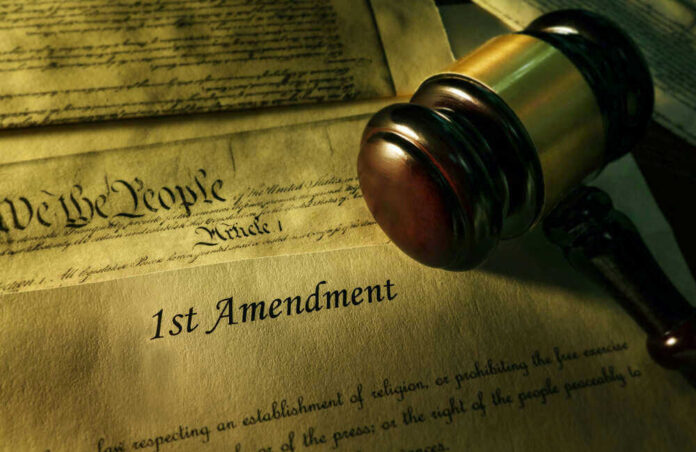
Judge Friedman’s ruling effectively reaffirmed a basic civics lesson: wartime does not erase the Bill of Rights. The decision emphasized two constitutional guardrails—First Amendment protections against viewpoint discrimination, and Fifth Amendment due process concerns when rules fail to give “fair notice” of what is prohibited.
Conservatives who watched past administrations expand surveillance and censorship pressures should recognize the pattern: vague standards plus discretionary enforcement equals government overreach.
The immediate fallout: compliance ordered, appeal promised
The Pentagon said it disagreed and planned an immediate appeal, with spokesperson Sean Parnell publicly stating that position. The judge denied the Pentagon’s request to pause the order while appealing, meaning the ruling takes effect now.
The Pentagon must report compliance within a week, and press groups argue the relief should extend beyond the Times to the wider Pentagon press corps. Practically, the next phase will test whether the department restores access cleanly or tries new workarounds.
Judge sides with New York Times in challenge to policy limiting reporters’ access to Pentagon https://t.co/yWNbFE9Fxz
— WOKV News (@WOKVNews) March 22, 2026
The larger takeaway is not that the press is always right; it’s that government should not get to pick its watchdogs using ambiguous speech rules—especially while bombs are falling and prices at home remain high.
If the administration believes certain conduct is a real security threat, it can draft narrow, clear rules and enforce them evenly. The court’s message was that the Constitution still requires clarity and fairness, even when the news is inconvenient.
Sources:
Judge Sides with New York Times in Challenge to Policy Limiting Reporters’ Access to Pentagon
New York Times takes Pentagon to court in press access lawsuit
CPJ welcomes ruling on Pentagon access in favor of The New York Times