

Scientists mapped six new deep-Earth zones near the core–mantle boundary, and they look like fresh portals into our planet’s engine room.
Story Snapshot
- Researchers flagged six never-documented structures about 1,800 miles down.
- A haul of about 175,000 faint earthquake echoes revealed the targets.
- Signals cluster near the core–mantle boundary, where rock meets molten iron.
- The finds sharpen a global map of hidden layers that guide heat and mantle flow.
Six new zones light up Earth’s deep boundary
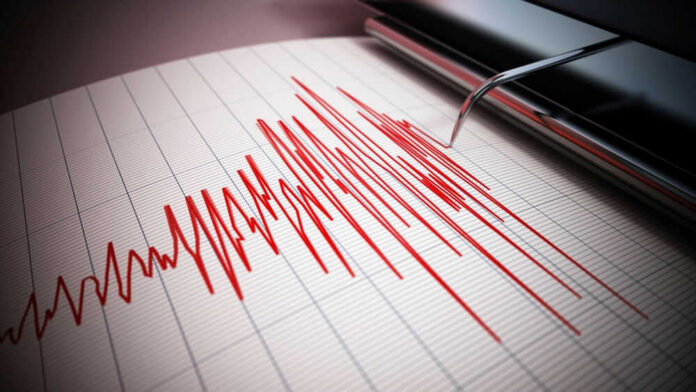
Scientists reported six large areas of unusual rock near the core–mantle boundary that had not been documented before. The team analyzed about 175,000 weak seismic signals and found small-scale features that stand out from the background, then highlighted six prime targets for future work.
These zones sit roughly 2,900 kilometers below our feet, where the solid mantle meets the liquid outer core. That region experiences large increases in seismic speed and heat, and it shapes how Earth cools over time.
What are they? https://t.co/I5ssBc6Pru#ScienceNews #ScienceAlert #ScienceDiscoveries #StayCurious #Nature #EarthCore pic.twitter.com/NVgEhN0TTj
— ScienceAlert (@ScienceAlert) August 29, 2026
The new zones appear beneath parts of Eurasia, Central Asia, and the South Atlantic basin, according to coverage that summarized the team’s mapping results. The features likely include dense, hot patches and sharp changes that scatter seismic waves, which is why the dataset could pick them out.
The method listens for tiny echoes that bounce off rough layers near the boundary. Those echoes carry location clues, the way a bat maps a cave with chirps and returns.
What the signals likely mean for Earth’s heat engine
Seismology has long shown that the lowermost mantle is not smooth. It holds odd zones where wave speeds drop fast, as well as suspected thin layers and chemical pockets. Prior work mapped major slow regions and ultra-low-velocity zones but left large gaps due to sparse data.
The new scan widens coverage and suggests more fine-scale structure is spread around the boundary than older maps showed, including previously unknown patches under the South Pacific in earlier studies.
These heterogeneities matter because they steer heat from the core into the mantle. That heat powers mantle convection, feeds volcano chains, and helps run the geodynamo in the core that sustains Earth’s magnetic field.
A rock bump or a hot puddle at the boundary can bend flow lines above it like a boulder reshapes a stream. Over geologic time, that can change where plumes rise, where plates pull down, and where continents rift.
How the team pulled signals from Earth’s background noise
The group mined a vast pool of weak earthquake echoes that most surveys ignore as noise. They stacked and compared many paths to spot recurring patterns. Where echoes popped more often, they inferred sharp depth contrasts.
That approach, combined with better global coverage, let them flag the six zones as priority targets rather than one-off flukes. A similar big-data strategy has produced the first global maps of several deep structures in recent years.
Direct drilling is not possible at those depths, so seismic waves remain the best means of probing. The core–mantle boundary sits near 2,900 kilometers down, and it marks the sharpest change in Earth’s seismic speeds.
That natural contrast helps reflect and scatter waves, acting like a scratched mirror. Careful reading of those scratches reveals where unusual rock or melt sits, and how widespread it is around the globe.
What comes next and why it matters
The six zones now set a clear agenda. Future studies can aim denser arrays at those coordinates, run targeted waveform modeling, and test whether the zones tie to known deep classes such as ultra-low-velocity zones or relic slabs.
The practical payoff reaches beyond maps. Better boundary images sharpen models of heat flow, which touch volcano risk, long-term sea level, and the health of the magnetic shield that protects the power grid and satellites.
Sources:
dailymail.com, sciencealert.com, tsn.ua, sciencedaily.com, livescience.com, eoas.ubc.ca, repositories.lib.utexas.edu, members.elsi.jp, users.earth.ox.ac.uk