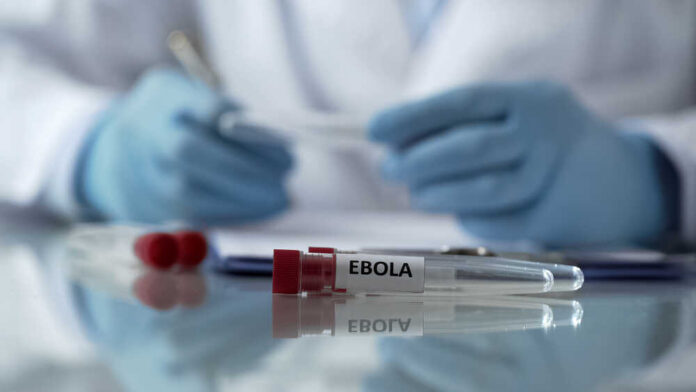
An American humanitarian worker in the Democratic Republic of Congo tested positive for Ebola, the Centers for Disease Control and Prevention (CDC) confirmed, putting a human face on an outbreak that has already killed more than 400 people and is outpacing the global response.
Story Snapshot
- A U.S. citizen working for a humanitarian organization in Congo tested positive for the Bundibugyo strain of Ebola, which has no licensed vaccine or treatment.
- The World Health Organization (WHO) declared a global health emergency on May 17, 2026, as the death toll surpassed 400 and cases spread across three provinces.
- Only 20% of known contacts are being traced, and more than 60% of new cases come from community spread rather than known exposure chains.
- The international response has raised $600 million against a $1.4 billion need, leaving an $800 million gap that is crippling containment efforts.
An American Worker Infected in the Middle of a Growing Crisis
The CDC confirmed a U.S. citizen working for a humanitarian group in Congo tested positive for Ebola. The agency did not name the individual or the organization. The case is a stark reminder that this outbreak is not a distant problem. Aid workers, doctors, and nurses are on the front lines every day in a region where the virus is spreading faster than responders can track it.
A US humanitarian worker in the Democratic Republic of Congo has tested positive for Ebola and will be sent to Europe for treatment, the religious humanitarian aid group Samaritan’s Purse said Saturday. https://t.co/xPQOco0yet
— Bloomberg (@business) July 11, 2026
The Bundibugyo strain driving this outbreak is the rarest and least understood of the Ebola family. No licensed vaccine exists for it. No proven treatment exists for it. Every tool responders have right now is non-pharmaceutical: isolate the sick, trace contacts, bury the dead safely, and hope the chain breaks. That is a hard ask in a war zone with crumbling infrastructure.
The Outbreak by the Numbers — and What They Actually Mean
The WHO declared this outbreak a Public Health Emergency of International Concern on May 17, 2026. Cases are concentrated in Ituri, North Kibu, and South Kivu provinces in eastern Congo. The death toll passed 400 by late May.
The CDC deployed more than 120 personnel to the affected countries, with roughly 400 total CDC staff involved in the response. The World Bank mobilized $243 million, and the U.S. State Department committed $32 million in direct assistance to partners on the ground.
Those are real resources. But context matters. Africa CDC Director Jean Kaseya says the full humanitarian need is $1.4 billion. Only $600 million has been raised. That leaves an $800 million hole. Meanwhile, only 20% of known contacts are being traced and monitored.
The other 80% are unaccounted for. When you cannot find the people who were exposed, you cannot stop the spread.
Healthcare Workers Are Dying While Supplies Run Short
A doctor in Ituri province died while treating Ebola patients. Health workers report shortages of protective gloves, gowns, and masks. Some teams lack the water needed to safely remove protective gear after handling patients or performing safe burials.
Displaced persons camps report running short of soap and basic hand-cleaning supplies. These are not logistical footnotes. They are the conditions under which the virus spreads from patient to caregiver and then into the community.
Doctors Without Borders, known internationally as Medecins Sans Frontieres (MSF), set up Ebola treatment centers in six locations across the affected provinces. The organization also issued a blunt warning: dangerous gaps persist in surveillance, diagnosis, contact tracing, and community engagement. The treatment centers exist. The system around them is still broken.
Armed Conflict and Mistrust Are Blocking the Response
The M23 rebel group controls large parts of North Kivu and South Kivu, including the Goma airport, which has been closed since January 2025. Aid workers have been forced out of rebel-held areas. Supply chains for medicine and protective equipment cannot reach communities where the virus is actively spreading. This is not a new problem in eastern Congo, but it is a decisive one right now.
The confirmation that an American doctor contracted Ebola while treating patients in the Democratic Republic of Congo has reignited anxiety in Kenya, where a controversial government plan to establish an Ebola quarantine facility in Nanyuki is already facing legal challenges and…
— The Standard Digital (@StandardKenya) July 12, 2026
Community mistrust is also a real barrier. Residents in some areas have attacked and burned Ebola treatment centers. One center in Ituri was torched after a patient died there.
People who do not trust the medical system will not report symptoms, will not allow contact tracers into their homes, and will not bring their sick relatives in for treatment. Over 60% of new cases are now coming from community transmission rather than known contact chains. That number tells you the containment strategy is not working well enough.
This Is the 17th Outbreak — and the Pattern Has Not Changed
Congo has now recorded 17 Ebola outbreaks since 1976. The same failure modes appear every time: delayed detection, weak contact tracing, community mistrust, and armed conflict blocking access.
The 2018 to 2020 outbreak lasted 18 months and killed more than 2,250 people before it ended. The current outbreak involves a strain with no vaccine and no proven treatment, which makes those historical lessons even more urgent, not less.
The international community has shown up with money, personnel, and supplies. The U.S. delivered 50 tons of medical supplies, with 100 more tons en route. Those efforts are real and should not be dismissed.
But an $800 million funding gap, 80% of contacts untraced, and a doctor dead from the disease he was trying to treat all point to the same conclusion: the response is not yet matching the scale of the outbreak. The American worker who tested positive is now part of that story. So is everyone else still in the field.
Sources:
cbsnews.com, afro.who.int, worldbank.org, msf.org, pmc.ncbi.nlm.nih.gov, cdc.gov, gavi.org, science.org, facebook.com, instagram.com