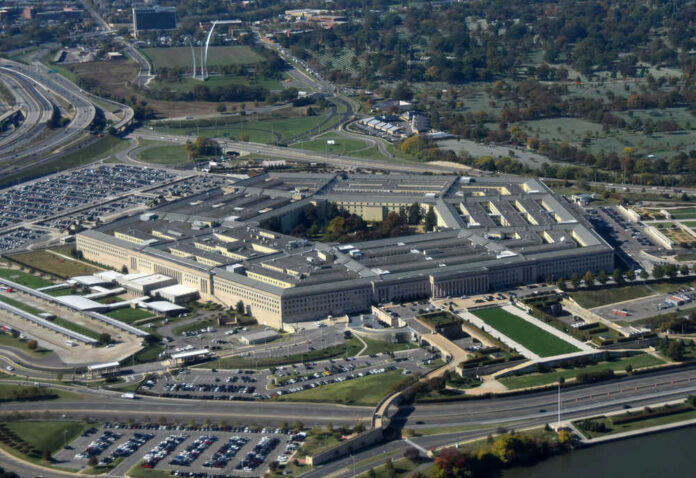
Amid rising global insecurity, the Pentagon quietly scrapped planned troop rotations to Poland and Germany—fueling concerns that opaque decision-making in Washington is overriding clear communication with allies and the American public.
Story Snapshot
- Pentagon canceled planned deployments to Poland and Germany, describing a structured drawdown process [1]
- Defense Secretary Pete Hegseth signed a memo directing the removal of a brigade combat team from Europe [1]
- Anonymous officials tied the move to a presidential order to cut roughly 5,000 troops in Europe [1]
- Lawmakers said Poland was blindsided; Army leaders could not confirm prior notice [1]
What Changed: Planned Rotations, Not Stationed Forces
Associated Press-based reporting says the Pentagon is reducing troop presence in Europe by canceling planned rotations to Poland and Germany rather than withdrawing already-stationed units, framing the shift as posture management, not a sudden retreat [1].
Pentagon spokesman Joel Valdez called the decision the product of a “comprehensive, multilayered process,” rejecting the idea it was last-minute [1].
Reporting characterizes the change as canceling deployments that would have added thousands—distinct from pulling permanently based troops [1].
BREAKING: The U.S. halts Army deployment to Poland as part of a troop reduction in Europe initially focused on Germany, AP sources say. https://t.co/vkta42dkdN
— The Associated Press (@AP) May 15, 2026
Defense Secretary Pete Hegseth signed a memo instructing the Joint Chiefs of Staff to move a brigade combat team out of Europe, a formal step that aligns with the drawdown approach officials have described to reporters [1].
Three United States officials told reporters the cancellations support a presidential directive issued in early May to reduce U.S. forces in Europe by about 5,000 [1].
The cited articles, however, do not publish the memo or the presidential order, leaving the scope and criteria of the directive unverified in public documents [1][2].
Congressional Pushback and Allied Anxiety
A House hearing produced sharp criticism, with one member calling the cancellation “reprehensible” and “an embarrassment to our country,” stressing it occurred “just a couple days ago” and questioning whether Poland was notified before news reports emerged [1].
Army Secretary Dan Driscoll and General Christopher LaNeve told lawmakers discussions occurred over two weeks but did not confirm Polish notice [1].
Critics argued Russia offered no concessions to justify reduced rotations, intensifying concerns about deterrence signaling on NATO’s eastern flank [1].
Opponents focused on the specific impact of canceling an armored brigade rotation to Poland, warning that reassurance to frontline allies could suffer [1].
Yet the public record presented to date does not include a force-posture analysis quantifying operational risk from the cancellations or demonstrating a violation of the treaty or of the North Atlantic Treaty Organization [1].
Because reporting hinges on unnamed officials for key details, both criticism and defense of the policy face verification limits until underlying documents or consultations are disclosed [1].
Process Transparency and the Trust Gap
The Pentagon’s assertion of a “comprehensive, multilayered process” lacks a public roadmap of participants, assessments, or timelines, which constrains independent evaluation [1]. Army leaders’ testimony emphasized timing over justification, leaving the core rationale for canceling rotations to Poland and Germany opaque [1].
Anonymous sourcing around the presidential order and the Defense Secretary’s memo enables claims of either prudent rebalancing or political maneuvering, illustrating how secrecy can widen the trust gap with citizens and allies across the political spectrum [1][2].
Pentagon halts deployments to Poland and Germany to cut troop numbers in Europe, AP sources say https://t.co/RG6bNqNJcv
— Guy Faulconbridge (@GuyReuters) May 18, 2026
Broader context suggests that U.S. adjustments to Europe-based forces routinely spark the “retrenchment versus rebalancing” debate, in which meaning depends on rotational presence and allied perceptions as much as raw numbers.
Here, the distinction between canceling future rotations and pulling stationed troops matters—but so do notification practices and clear strategic logic.
Publishing the memo, order, and any allied notification records would address the core concern shared on the right and left: whether accountable, fact-based planning—not political calculus—is guiding U.S. security posture [1][2].
Sources:
[1] Web – Pentagon halts deployments to Poland, Germany | Connecting Vets
[2] Web – Pentagon Cancels Troop Deployments to Poland and Germany in …