
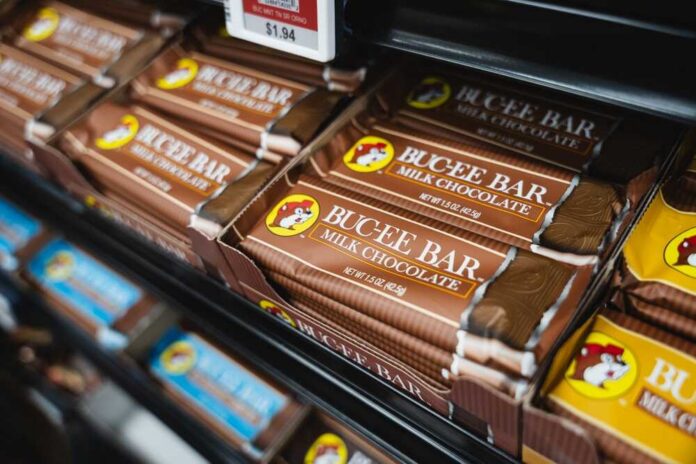
Buc-ee’s isn’t just adding stores—it’s exporting a Texas-sized standard for what Americans should expect from a stop on the highway.
Story Snapshot
- Buc-ee’s plans first-ever locations in six to seven new states, with openings starting in 2026 and stacking through 2027.
- Goodyear, Arizona leads the wave in June 2026; Benton, Arkansas follows in early-to-mid August.
- Flagship-scale sites keep defining the brand: roughly 70,000+ square feet and 100+ fuel pumps in key new markets.
- The expansion lands while the company faces fresh scrutiny over customer service, a real test of whether the “Buc-ee’s experience” scales.
A Texas road-stop icon tries to become a national habit
Buc-ee’s started in 1982 as a single Lake Jackson, Texas gas station founded by Arch “Beaver” Aplin, then evolved into something closer to a roadside theme park: spotless restrooms, endless pumps, brisket and jerky counters, and walls of beaver-logo merchandise.
That formula built a cult following across a footprint that reached 55 locations in 12 states. Now the company aims for a leap to roughly 20 states by 2027.
The list matters because it signals intent, not just growth. Arizona, Arkansas, Kansas, Louisiana, North Carolina, Wisconsin—and possibly Ohio, depending on which reporting you follow—aren’t “easy extensions” of Texas.
They represent different driving patterns, different weather, different labor markets, and different local politics. Buc-ee’s is betting its model is portable: build massive, run them tight, and turn a necessary pit stop into a planned destination.
The calendar is the tell: 2026 openings start the dominoes
Dates put real weight behind the hype. Goodyear, Arizona is slated for a June 22, 2026 debut, and Benton, Arkansas is expected in early-to-mid August 2026.
Inside Texas, a San Marcos location is targeted for July 2026, which quietly matters: even while chasing new states, Buc-ee’s keeps fortifying home turf with what would be its 37th Texas site. Expansion isn’t replacing Texas; it’s using Texas as the proving ground.
Locations for new Buc-ee's locations have been unveiled as the popular gas station chain expands into several new U.S. states. https://t.co/Lylb9W73JI
— FOX 9 (@FOX9) May 11, 2026
Then comes the 2027 surge. Kansas City, Kansas is lined up as a first-in-state entry, and Ruston, Louisiana is positioned as another big debut with reported 70,000+ square feet and 100+ pumps. Oak Creek, Wisconsin is slated for early 2027 with reported specs around 73,370 square feet and 120 pumps.
North Carolina enters later, with Mebane targeted for the fourth quarter of 2027. Each date hints at the same story: Buc-ee’s builds big and schedules far out.
Why Buc-ee’s expansion works: the “trust purchase” Americans keep making
Americans don’t fall in love with convenience stores; they fall in love with certainty. Buc-ee’s sells certainty at interstate speed: clean bathrooms, bright lighting, wide aisles, fast lines when things run right, and enough choices that nobody in the car feels shortchanged. That’s a trust purchase, like picking the same brand of tires.
For travelers who remember grimy stops and sketchy parking lots, Buc-ee’s feels like a correction—private enterprise solving a problem people got tired of tolerating.
Size is the weapon. The typical convenience store runs a few thousand square feet; Buc-ee’s often sits in the 50,000 to 75,000 range, with fuel islands that can exceed 100 pumps. That scale doesn’t just move more snacks. It reduces friction: more restrooms, more checkout lanes, more parking, and more inventory.
The tradeoff is obvious, too: traffic surges, local road strain, and a “too much” footprint that some communities resist until they see the jobs and sales-tax upside.
The ‘F’ rating storyline: growth will expose weak links fast
The most credible knock on Buc-ee’s right now isn’t the beaver branding or the sprawl—it’s whether service quality keeps up when crowds hit. Reporting highlighted an “F” customer service rating, with complaints tied to long lines and the reality that even a giant store can feel cramped when everyone stops at once.
Common sense says the rating isn’t a death sentence; it’s a warning light. A company that sells order and cleanliness can’t afford chaos as its signature.
Scaling operations across new states makes that harder. Hiring hundreds of employees per location, training them to Buc-ee’s tempo, and maintaining standards in markets with different labor competition will test management discipline.
Buc-ee’s earns that trust when it runs like a machine—high throughput, clear rules, strong supervision. If it slips, the backlash won’t come from regulators first; it’ll come from drivers who simply don’t return.
The local bargain: jobs and taxes versus traffic and culture shock
Local governments keep welcoming Buc-ee’s for a reason: the numbers can be compelling. A single location can bring hundreds of jobs and meaningful sales-tax revenue, plus secondary spending at nearby hotels and restaurants.
That’s why city officials often treat a Buc-ee’s announcement like landing a mini economic development project. The political angle is straightforward: communities want visible wins—paychecks, new investment, and a reason for travelers to stop in their town, not pass it by.
Residents also pay a price. Past openings have been linked in reporting and analysis to congestion spikes and infrastructure stress. People who live near interchanges feel it first: more cars, more noise, and the sense that a quiet area just became a billboard for somebody else’s road trip.
The best deals usually come when towns demand road improvements up front and Buc-ee’s agrees to design that moves traffic efficiently. “Build it and hope” isn’t a plan; it’s how projects sour.
What to watch next as Buc-ee’s pushes toward 20 states
The expansion story won’t be decided by the grand openings; it’ll be decided six months later, when novelty fades and locals adopt the place as routine.
Watch whether Buc-ee’s adds EV charging in meaningful volume, how it handles peak-hour lines, and whether new-state stores preserve the cleanliness that made the brand famous. Watch the Ohio question, too: some coverage includes it, some doesn’t, and that discrepancy usually means timing or permitting isn’t locked.
This is what real winning looks like.
Buc-ee's set to debut in 6 new states in major expansion push across US https://t.co/2pEEyArX2e— Sir Veillance (@SVeillance) May 11, 2026
Buc-ee’s is attempting something bigger than retail footprint: it’s trying to standardize a road-trip experience across regions that don’t share Texas culture. If it succeeds, competitors like Love’s, Pilot, Wawa, and Sheetz won’t just compete on gas price—they’ll compete on trust, cleanliness, and speed. That’s a very American kind of arms race, and drivers will be the ones who cash the dividends.
Sources:
Buc-ee’s reveals locations sites for major expansion into new states
Buc-ee’s set to debut in 6 new states in major expansion push across US