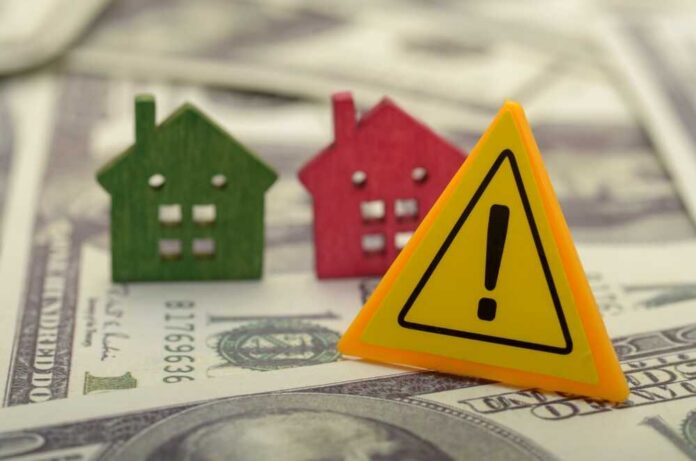
American homeowners are losing their houses at rates unseen since the aftermath of the financial crisis, and the culprit isn’t a banking collapse—it’s the relentless squeeze of everyday costs that have made staying afloat impossible for millions.
Quick Take
- U.S. foreclosure filings surged to 45,921 properties in March 2026, marking 12 consecutive months of year-over-year increases and reaching levels not seen in six years
- Property tax hikes, insurance premiums, and soaring living expenses are pushing homeowners into default, even those with substantial equity in their homes
- Delaware, Nevada, and Florida face the steepest foreclosure rates, with one in every 1,612 housing units in foreclosure in Delaware alone
- Lenders initiated 30,334 foreclosure proceedings in March, up 21 percent year-over-year, while completed repossessions jumped 42 percent
The Slow-Motion Housing Crisis Nobody Saw Coming
The numbers tell a story that contradicts the cheerful real estate headlines. While the 2008 financial crisis exploded with sudden fury, today’s foreclosure wave arrives quietly, month after month, as homeowners discover that owning a house costs far more than the mortgage payment.
March 2026 brought 45,921 foreclosure filings across America—up 18% from February alone and 28% higher than March 2025. These aren’t subprime borrowers with sketchy loans; many are middle-class families who locked in favorable mortgage rates years ago, only to face property taxes and insurance bills that have doubled or tripled.
U.S. foreclosures have jumped 26% since last quarter as they reach the highest quarterly total since 2020. pic.twitter.com/svrNC6Qyfa
— National Chronicle (@NCNewsOnX) May 5, 2026
When Equity Becomes a Liability
The cruel irony haunting today’s housing market is that homeowners with significant equity are losing their homes. Rising insurance costs in Florida and Nevada, combined with aggressive property tax assessments, have created a perfect storm.
A homeowner in Delaware might owe $300,000 on a $425,000 house, yet still face foreclosure because annual insurance and tax bills now consume what should be discretionary income.
Real estate professionals like Carol Quattrociochi working in Delaware’s market point directly to property taxes and survival costs as the primary culprits. When homeowners must choose between paying the mortgage and buying groceries, the math becomes brutally simple.
Geography of Desperation
The crisis is concentrated in specific regions, revealing which states have failed to manage housing affordability. South Carolina, Indiana, and Florida lead the nation in foreclosure rates. Delaware saw one in every 1,612 housing units enter foreclosure in January 2026—a staggering concentration.
Texas, California, and Florida round out the top tier, though their rankings shift monthly as different regions experience acute cost pressures.
Tourism-dependent states like Florida and Nevada face particular strain, as their higher property values and insurance premiums create thinner margins for homeowners already stretched thin.
The Normalization That Isn’t
ATTOM Data CEO Rob Barber frames this as “gradual normalization,” a measured return to historical averages after pandemic-era government interventions artificially suppressed foreclosures.
But normalization is a clinical term that obscures human suffering. From 2021 to 2023, federal forbearance programs and eviction moratoriums kept millions in their homes despite payment difficulties.
Once those supports ended, the underlying stress emerged. Current foreclosure rates of approximately one in every 3,131 housing units remain far below the 2.23 percent peak during the 2010 crisis, but they’re climbing steadily and showing no signs of leveling off.
The Lender’s Perspective
Banks aren’t acting out of malice; they’re responding to portfolio pressures. Lenders initiated 30,334 foreclosure proceedings in March 2026, while completing 5,229 repossessions—a 42 percent jump from the previous year.
Each completed foreclosure adds inventory to markets already struggling with affordability. These aren’t distressed sales offering bargains; they’re forced liquidations that depress entire neighborhoods and signal broader economic dysfunction. The acceleration in completed repossessions suggests lenders have moved beyond patience into action mode.
What Comes Next
The trajectory suggests that foreclosure activity will continue to climb through 2026. Twelve consecutive months of year-over-year increases represent a trend, not a blip.
Property taxes show no signs of declining, insurance costs continue spiraling in high-risk states, and inflation keeps squeezing household budgets.
The housing market that seemed so robust during the pandemic boom now appears fragile—built on historically low interest rates and government support that proved temporary. For millions of Americans, the dream of homeownership is becoming a nightmare of costs they simply cannot sustain.
Sources:
Foreclosure Rates for All 50 States in February 2026 – SoFi
U.S. Foreclosure Rates by State – March 2026 – Attom Data
U.S. Foreclosure Filings Jump 32% From a Year Ago – Realtor.com
What are the 10 states with the highest foreclosure rates? – DAWGS