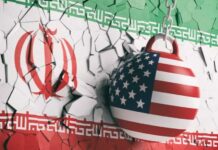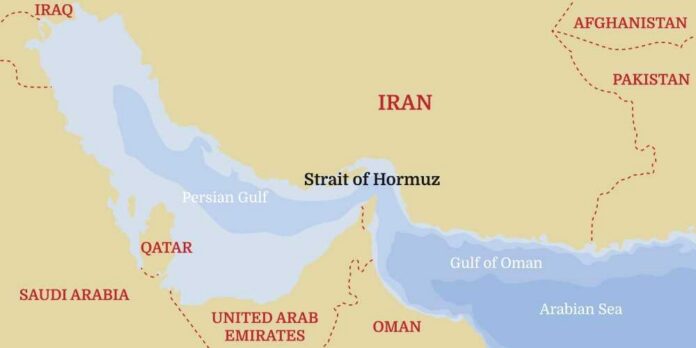
A naval blockade can look airtight on a Pentagon map and still leak in the real world—especially when the “gate” is the Strait of Hormuz.
Quick Take
- CENTCOM says no ship entered or exited Iranian ports during the first 24 hours of the new U.S. blockade, and six merchant vessels turned around after U.S. direction.
- The blockade targets Iranian port traffic, not every ship transiting the Strait of Hormuz to non-Iranian destinations, which matters for interpreting “no ships made it past.”
- Commercial tracking data and reporting suggest some Iran-linked vessels transited near the blockade’s start, fueling an early credibility fight over timing and definitions.
- China condemned the blockade and warned it could destabilize a fragile ceasefire window, raising the odds of a U.S.-China standoff by proxy at sea.
What the U.S. Claims After Day One: Compliance, Not Chaos
U.S. Central Command framed the first day as a clean opening act: no ships made it past the blockade to conduct trade with Iran, and six merchant vessels complied by turning around. The operational message was simple—this is enforcement, not theater.
The political message was sharper: Washington can impose pressure without “closing Hormuz” to the world, because transit to non-Iranian ports remains allowed.
US military says no ships made it past blockade in first dayhttps://t.co/nI8zidg6WP
— The Hill (@thehill) April 14, 2026
The phrasing matters because casual readers hear “blockade of Hormuz” and picture a full stop on global energy shipping. CENTCOM’s posture signals a narrower intent: choke Iranian port commerce while preserving freedom of navigation for everyone else.
That distinction becomes the hinge for every argument that follows—whether a ship’s route counts as a breach depends on where it’s coming from, where it’s going, and when the rules truly snapped into place.
Hormuz Is the World’s Tightest Valve, and Iran Knows It
The Strait of Hormuz doesn’t need to be “closed” to be weaponized. Iran’s prior month-long restrictions reportedly forced ships to seek approval—sometimes by payment, sometimes by permission—creating a slow-motion choke that rattled insurers, charter rates, and nerves.
Add sea-mine threats and the memory of vessels already halted, and you get the logic behind the U.S. move: if Tehran can squeeze traffic informally, Washington can squeeze Tehran’s port economy formally.
That’s also where common sense and conservative instincts converge: deterrence works when consequences show up fast and predictably. A blockade that is selective—focused on Iranian ports—aims to avoid punishing neutral commerce while still raising the cost of Iranian brinkmanship.
The open question is whether selective enforcement stays selective once the first confrontation happens in bad weather, at night, with a captain who claims confusion.
The Early Contradiction: Shipping Trackers Versus Official Statements
Commercial tracking and reporting quickly complicated the victory lap. Some data indicated a small number of Iran-linked vessels transited around the blockade’s start, including a methanol carrier previously associated with Iranian port activity and other ships tied to sanctioned entities.
That does not automatically equal a post-enforcement violation; timing could place those transits in a “grace” window, or they could be lawful Hormuz transits not destined for Iranian ports.
Credibility fights in maritime operations rarely hinge on one dramatic incident; they hinge on definitions and timestamps. “No ships made it past” can mean no ship ran the blockade after the enforcement line went active, not that no hull moved in the region.
Tracking data can show movement without proving intent, cargo legality, or final port calls. The public, however, hears dueling absolutes—and that gap becomes its own strategic vulnerability.
How a Blockade Actually Works When the Ocean Won’t Cooperate
The U.S. operation reportedly involves more than 10,000 personnel with warships and aircraft, but early coverage also suggests the initial surface presence may be lighter than many assume, with reinforcements moving in.
That is not a knock on capability; it reflects the reality of global commitments and transit time. A blockade is less a wall than a filter: identify, hail, query, shadow, and—only if necessary—interdict.
That filter has adversaries. Evasion can mean false flags, last-minute route changes, paperwork games, ship-to-ship transfers, or “I’m just transiting” claims that become hard to disprove in real time.
Maritime intelligence firms have long documented fragmented responses: some ships push through, some deviate, some pause, some gamble. The first 24 hours therefore tell you less about permanence and more about whether captains believe U.S. warnings carry immediate consequences.
China’s Objection Isn’t Just Diplomacy; It’s Leverage
China condemned the blockade as dangerous and irresponsible, and that reaction tracks with Beijing’s core interest: stable sea lanes for trade and predictable rules for its commercial fleet. Add reports of Chinese-linked shipping and sanctioned corporate ties in the region, and the stakes climb.
A blockade that pressures Iran can also snag China indirectly, creating a slow-burn “collision course” where every boarding or diversion becomes a test of resolve.
The ceasefire backdrop makes this more combustible. A two-week pause, reportedly brokered with Chinese involvement, leaves little room for maritime miscalculation.
If Iran views the blockade as a humiliation during a truce, it may look for asymmetric responses that stay under the threshold of open war—mines, drones, deniable harassment. If the U.S. responds decisively, escalation can outrun diplomacy before negotiators even get to the table.
The next week becomes the real story. Either the blockade settles into a predictable pattern—captains comply, insurers adapt, Iran absorbs economic pain—or the first contested interception forces Washington to prove it will enforce rules consistently, not rhetorically.
The administration’s challenge is to keep the mission narrow, the message clear, and the enforcement credible without sliding into a wider conflict no one can schedule.
Sources:
Ships passed through U.S. Navy blockade reports