
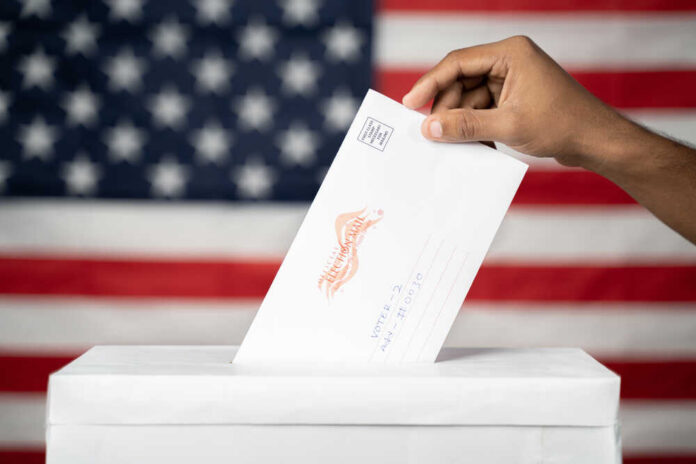
A locked thumb drive from the Justice Department landed in Los Angeles with names the federal government says likely got mail ballots despite not being citizens—along with a 48-hour clock.
Story Snapshot
- Justice Department sent California a password-protected list to verify possible noncitizens who got mail ballots.
- Officials were told to segregate, not cancel, any ballots linked to those names while checks are pending.
- Los Angeles County confirmed it received the thumb drive and handwritten password note.
- County and state leaders raised data security and verification concerns, and asked for time.
What the Justice Department Demanded, And How
Acting Deputy Attorney General R. Trent McCotter sent letters dated October 13, 2026, to California Secretary of State Shirley Weber and Los Angeles County Registrar-Recorder Dean Logan. The letters said the federal government had a list of people it believed were likely noncitizens who still got vote-by-mail ballots. The letters ordered a 48-hour review and told officials to segregate, not cancel, related ballots until they could verify citizenship. The demand warned that legal action could follow if the checks did not proceed.
Los Angeles County confirmed the shipment arrived with a physical thumb drive and a handwritten note with a password. That detail matters. It shows the request was not a vague press claim but a tangible, testable dataset. The Department of Justice framed its ask as targeted. It did not seek mass cancellations. It asked for temporary segregation while county and state officials verified citizenship one person at a time. That posture tracks with common-sense fairness and due process.
How California Officials Responded Under the Clock
Los Angeles County said it had not accessed the drive because of data-privacy and security protocols. Dean Logan called the device an insecure medium and said any removal must rest on verifiable information, not unconfirmed data matching. The county also said the letter did not state how many people were on the list or describe the records in detail, limiting an assessment of scale. Secretary of State Shirley Weber said her office did not receive the list, constraining a statewide review.
Those points are procedural, but they are not trivial. A 48-hour deadline demands speed. Secure handling demands caution. Both can be true at once. The Justice Department pressed urgency to protect election integrity. The county pressed safeguards to protect voter rights and data. The clean way through is direct: open the data in a secure environment, log each step, and document outcomes. That protects the voting process and every person on the list.
What We Know, What We Do Not, And What Matters Most
The public record does not show the list size, the matching method, or the error rate. Those details decide whether this is a handful of records or a larger operational problem. The reports focus on people who may have received ballots, not proven cases of unlawful votes cast and counted. That gap is crucial. Receiving a ballot is not the same as casting an illegal vote. Until verified, the list reflects flags, not final findings.
Base rates show why careful verification is wise. Past reviews often found very small numbers of confirmed noncitizen votes compared to total ballots cast. Data-matching errors can mislabel citizens, especially when databases use different fields or lag on status changes. Those realities do not excuse real problems. They explain why precision beats speed when dealing with voter lists. Precision protects both election integrity and citizens’ rights.
The Conservative Case for Both Security and Due Process
Election integrity starts with lawful rolls and accurate ballots. The Department of Justice is right to press for verification when credible flags appear. Segregating, not canceling, flagged ballots respects voters while facts are checked. That is the rule-of-law path. California officials are right to insist on a secure chain of custody and verifiable evidence before changing a voter’s status. That is also the rule-of-law path. The two aims can, and should, align.
JUST IN: California just got 48 hours.
The Justice Department wants election officials to review suspected noncitizen voters and set aside their mail ballots until citizenship is confirmed.
If the prescribed course of action wasn’t followed by Oct. 15 at noon ET, the letter…
— The Epoch Times (@EpochTimes) October 15, 2026
Here is the straightforward fix. First, load the list in a secure, auditable environment that meets county policy. Second, check each name against authoritative records, and log the source and result for every case. Third, report counts in three buckets: confirmed citizens, confirmed noncitizens, and unresolved. Fourth, disclose the matching rules and error rates, redact personal data, and keep methods clear. A simple ledger of facts will settle this faster than any press release.
Sources:
cbsnews.com, yahoo.com, nbcnews.com, cnn.com, axios.com, molawyersmedia.com, reuters.com