
Six unnamed Americans, a deadly virus strain with no approved vaccine, and a global health bureaucracy saying “low risk” while quietly arranging withdrawals—this is how modern outbreak politics really works.
Story Snapshot
- Reports say at least six Americans in Congo were exposed to Ebola’s Bundibugyo strain, with one reportedly symptomatic. [1][3]
- The World Health Organization declared the Congo–Uganda outbreak a public health emergency of international concern. [2]
- United States officials stress “low risk” at home while declining to confirm who was exposed abroad. [3]
- The episode exposes how anonymous leaks, cautious bureaucrats, and jittery media shape what Americans hear in the first hours of a crisis. [1][3]
What We Actually Know About The “Six Americans”
CBS News reported that at least six Americans in the Democratic Republic of Congo were believed to have been exposed to Ebola, three with high-risk contact and one showing symptoms. [1]
STAT News echoed the same number and described them as having exposure to suspected cases, with no test results yet available. [3]
A Times Now summary amplified the claim as the story ricocheted across global media. None of these outlets named the Americans, their employers, or precise roles on the ground. [1][3]
The Centers for Disease Control and Prevention (CDC) did not publicly verify the “six,” but its own briefing confirmed the broad picture: reports of exposures among Americans in Congo, and active planning to withdraw a small number of those directly affected by the outbreak. [3]
That phrasing matches the press accounts without repeating their headline number. Health officials clearly signaled that some Americans were close enough to the virus to warrant special handling, even if infection was unproven. [3]
A Dangerous Outbreak With A Rare, Poorly Armed-For Strain
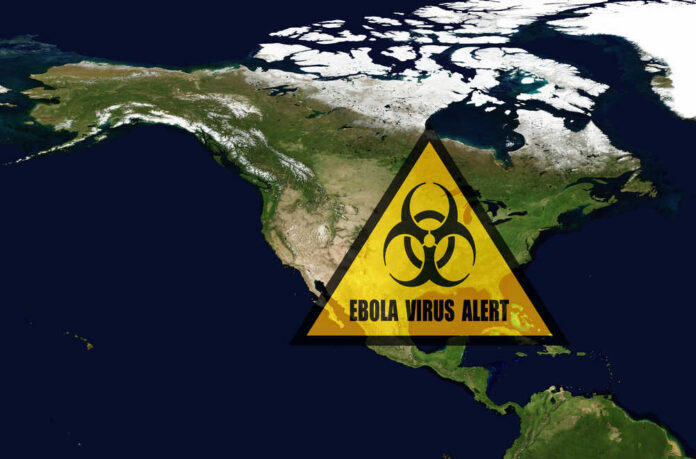
The outbreak driving these concerns sits in Ituri province in eastern Congo and has spilled into neighboring Uganda. [2] The World Health Organization declared it a “public health emergency of international concern,” its strongest alarm for cross-border health threats. [2]
Cases include at least ten confirmed infections and hundreds of suspected ones, with dozens of deaths. [3][2] The culprit is the Bundibugyo strain of Ebola, a rarer variant for which there is no Food and Drug Administration–approved vaccine or targeted treatment. [3]
That lack of specific tools matters. Past Ebola scares often relied on the existence of vaccines or experimental drugs to calm public nerves. Bundibugyo strips away that talking point. Patients instead receive supportive care: fluids, blood pressure management, and aggressive infection control. [3] Ebola spreads through direct contact with bodily fluids, not casual contact or routine air travel. [3]
That biology strongly limits its ability to sweep across a modern, geographically spread-out country like the United States, even while it devastates poorly resourced, tightly knit communities in Central Africa. [3][2]
Officials Say “Low Risk” While Keeping Details Close
The CDC’s public line has been deliberate and disciplined. Spokespersons emphasized that “the risk to the American public remains low,” even as they acknowledged exposures and described the activation of the agency’s emergency response center. [3]
The CDC laid out an aggressive support posture in Congo and Uganda, including surveillance, lab diagnostics, infection control, border health activities, and community engagement. [3]
The United States Embassy in Kinshasa issued health alerts about the outbreak and the World Health Organization declaration, but did not confirm any American infections.
When pressed on the “six Americans,” the CDC declined to say whether any Americans in Congo had been exposed or infected, citing ongoing assessment and coordination with the embassy. That refusal is not surprising; medical privacy, diplomatic sensitivity, and operational security all push bureaucrats toward silence.
Still, from a perspective, there is a problem: the same government that once assured the public that “fifteen days to slow the spread” would solve a pandemic now expects automatic trust while withholding specifics about a deadly virus and American citizens overseas.
Media Hype, Real Danger, And A Public Stuck In The Middle
This clash between anonymous sources and official caution fits a well-worn pattern in outbreak reporting. Early in a crisis, journalists race to surface anything they can: exposure counts, evacuation rumors, unconfirmed symptoms. [1][3]
Public health institutions, burned by earlier politicized controversies, lean the other way, revealing as little as possible until every fact survives a committee.
The result is a lopsided information environment where the most dramatic framing hits first and the sober clarifications dribble out later—if they arrive at all. [1][3]
🚨 POTENTIAL EBOLA EXPOSURE IN DRC 🇨🇩
At least six US CITIZENS have reportedly been exposed to EBOLA in the DEMOCRATIC REPUBLIC OF CONGO with one person currently showing SYMPTOMS. Authorities are likely tracking movements to contain any further spread of the virus. …
— OSN – Observer Security Network (@OSN_Reports) May 18, 2026
A prudent citizen does not blindly accept either extreme. On one hand, exposure is not infection; six Americans being monitored is not the same as Ebola rampaging through Atlanta.
On the other hand, dismissing the story because officials repeatedly call it “low risk” ignores that these exposures occurred during an outbreak bad enough to warrant a global emergency declaration and that the Bundibugyo strain offers fewer medical off-ramps. [2][3] The responsible posture is calm vigilance, not panic and not complacency.
What This Episode Reveals About Outbreak Power And Responsibility
The most revealing sentence in the CDC material may be the quiet admission that it is coordinating “the safe withdrawal of a small number of Americans who are directly affected by this outbreak.” [3]
That line, almost an aside, confirms the existence of Americans close enough to the virus to require extraction and special monitoring.
When combined with multiple outlets reporting at least six exposures, including one symptomatic person, the balance of evidence leans toward the core claim being substantially accurate, even if the exact count remains unverified. [1][3]
That means frank communication about exposures, transparent accounting of who was evacuated and why, and serious scrutiny of how many Americans are placed in high-risk zones under United States auspices.
It also means remembering that “low risk” is not the same as “no risk,” especially when the stakes are measured in hemorrhagic fever rather than political embarrassment.
Sources:
[1] Web – At least 6 Americans in Congo were exposed to Ebola virus, sources …
[2] YouTube – Ebola: Americans reported exposed, DRC boosts control efforts
[3] Web – Ebola outbreak: Americans in Congo believed to have had exposure …